
Cajun Spice Mix
Louisiana's Cajun blackening blend: paprika, cayenne, garlic powder, onion powder, oregano and thyme.
Overview
Cajun spice mix is the heart of Louisiana cooking, a blend that speaks to the region's agricultural traditions and Spanish, African, and French influences. Unlike hotter blends, Cajun spicing emphasizes oregano, thyme, and paprika for earthy warmth. The blend is complex and slightly savory, designed for proteins and vegetables that will simmer for hours. This is cooking with soul and history.
Ingredients
Base Vegetables (Finely Chopped)
- 1 onion (medium, finely chopped)
- 2 garlic cloves (finely chopped)
Whole Spices to Roast
- 1 teaspoon black peppercorns
- 1 teaspoon cumin seeds
- 1 teaspoon white mustard seeds
Ground & Dried Spices to Add After Roasting
- 2 teaspoons paprika
- 1 teaspoon chilli powder (or cayenne for extra heat)
- 1 teaspoon dried oregano
- 2 teaspoons dried thyme
- 1 ½ teaspoons fine sea salt
Method
Stage 1 - Dry Roast Seeds
- Place a heavy-bottomed frying pan over medium heat with no oil.
- Add the black peppercorns, cumin seeds, and white mustard seeds.
- Continuously stir and toss for 2-3 minutes as they heat.
- Watch carefully, they'll begin popping and release fragrance. Remove when pungent.
- Do not let them burn; that creates bitterness rather than aroma.
- Transfer to a mortar and allow to cool completely.
Stage 2 - Grind Roasted Spices
- Grind the cooled roasted spices in a mortar to a fine powder.
- If your mortar is small, keep this ground powder separate for now.
Stage 3 - Prepare Aromatics
- Finely chop the onion and garlic cloves.
- Place in a food processor (if using processor method) or prepare for blending.
Stage 4 - Combine Spices
- In a bowl, combine the ground roasted spice powder with paprika, chilli powder, oregano, thyme, and salt.
- Mix very thoroughly for 1-2 minutes to blend evenly.
Stage 5 - Blend with Aromatics
- Add the chopped onion and garlic to the spice mixture.
- If using a food processor, pulse until well combined, creating a slightly wet spice paste.
- If blending by hand, mix thoroughly with a spoon until evenly distributed.
Stage 6 - Use or Store
- Use immediately in gumbo, jambalaya, or other dishes.
- If storing, transfer to airtight container in cool, dark place.
- Can be refrigerated in a sealed jar for up to 2 weeks, or frozen for 3 months.
Notes
- Fresh Aromatics: Unlike dry spice blends, this includes fresh onion and garlic, making it a paste rather than a powder. This is authentic.
- Peppercorn Roasting: True Cajun style requires roasting for peppercorn character. Don't skip this step.
- Heat Adjustment: Use chilli powder for traditional; substitute cayenne for extra kick.
- Storage: Because of fresh components, this requires refrigeration or freezing. Fresh is best; use within 1-2 weeks.
- Thyme vs. Oregano Balance: The 2:1 ratio of thyme to oregano is traditional; adjust to preference.
Variations
Spicier: Use cayenne instead of chilli powder, or increase to 1 ½ teaspoons. Extra Herbaceous: Add 1 teaspoon fresh parsley or dried basil. Thicker Paste: Add 1 tablespoon vegetable oil to create a smoother consistency. For Blackening Fish: Keep proportions but reduce salt (as it will be used as a coating), and add 2 teaspoons smoked paprika.
Serving
Use in: Gumbo, jambalaya, Creole stews, blackened meats and fish, cajun rice dishes Typical ratio: 2-3 tablespoons per large pot of stew (serves 6-8) Application: Add early in cooking with vegetables and aromatics for flavor integration Temperature: Works best in longer-cooked dishes where flavors have time to meld
Storage
- Refrigerate in airtight jar for up to 2 weeks (due to fresh onion and garlic)
- Freeze in ice-cube trays or small containers for 3 months
- Does not keep at room temperature due to fresh components
- Thaw in refrigerator before use
- Check for mold or off odors before using after 2 weeks
- Fresh-made is significantly better than stored; make in batches as needed
This iconic Cajun spice mix is famous in Louisiana classics such as gumbo and jambalaya. It also works beautifully in stews, thick soups, blackened fish, and any dish requiring bold, earthy, warming spices.
More like this
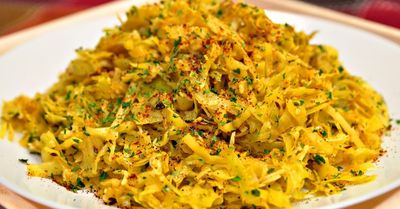
Cabbage Foogath
A foogath is the Goan version of a coconut-stir-fry vegetable: a temper of mustard seeds, dried red chilli, urad dal and curry leaves in coconut oil, sliced onion and garlic cooked briefly, then the vegetable tossed in over high heat. Fresh grated coconut is folded through at the end. The cabbage keeps a slight crunch and gets a nutty-sweet finish.
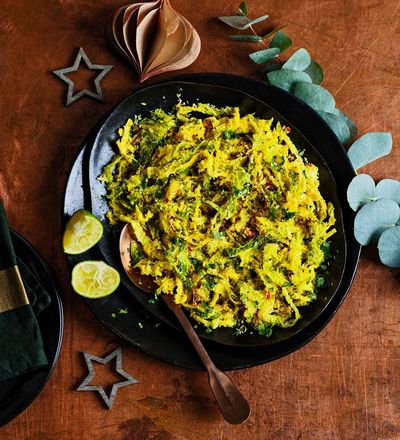
Cabbage Thoran
Cabbage is finely shredded into ribbons. A temper of mustard seeds, urad dal, dried red chilli and curry leaves is bloomed in coconut oil, the shredded cabbage tossed in over high heat, and a coconut paste of fresh coconut, green chilli, garlic and cumin folded through. The dish stays dry and the cabbage retains a slight crunch.
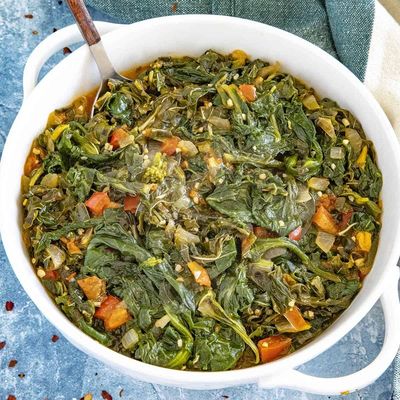
Callaloo
Onion, garlic and tomato cook in oil until softened. Callaloo (or spinach) goes in by the handful; thyme and scotch bonnet add. Everything covers and steam-cooks until the greens are tender. Salt, pepper, a splash of water if needed; finish quickly so the colour stays vivid.
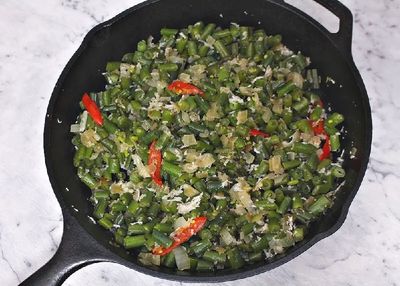
French Bean Foogath
French beans are trimmed and chopped into 1 cm pieces. A temper of mustard seeds, urad dal, dried red chilli and curry leaves is bloomed in coconut oil, sliced onion is softened briefly, and the beans are tossed in with a splash of water to steam-cook them through. Fresh grated coconut is folded through at the end with a finishing pinch of green chilli.