Tant Pour Tant
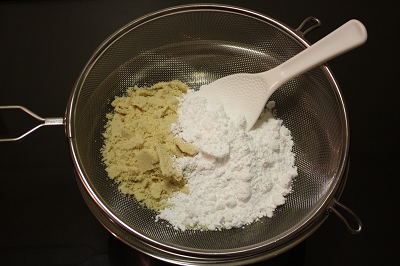
Tant pour tant (French for "half and half") is equal parts almond meal and icing sugar ground together to create a fine, uniform powder. This foundation is essential in French pastry work, used in macarons, sponges, and fine cakes.
Overview
Tant pour tant is a prepared dry ingredient combining ground almonds and superfine icing sugar in precise 1:1 ratio by weight. The icing sugar helps grind the almonds to a powder while simultaneously absorbing the natural oils released during grinding, creating a uniform, dry powder. This is a foundation ingredient in French pastry, indispensable for macarons, Gênoise sponges, and almond cakes. The quality of your tant pour tant directly affects the final texture of delicate French pastries.
Ingredients
- 100 grams ground almonds (almond meal, not almond flour)
- 100 grams icing sugar (confectioner's sugar, finely powdered)
- Water (none needed)
Method
Stage 1 - Combine Dry Ingredients
- Measure equal weights of ground almonds and icing sugar (using a scale is essential for precision).
- Pour both into a food processor fitted with a steel blade.
- Pulse several times to begin combining the ingredients.
Stage 2 - Process to Fine Powder
- Continue processing with steady pulses (not continuous grinding) for 2-3 minutes.
- The friction will release natural oils from the almonds.
- The icing sugar will absorb these oils, creating a uniform, dry mixture.
- Process until the mixture resembles fine breadcrumbs or sand, completely uniform with no visible almond pieces.
Stage 3 - Sift Twice
- Pass the processed mixture through a fine sieve (or finest sieve you have) into a clean bowl.
- Discard any large almond particles that remain in the sieve; these indicate incomplete grinding.
- Pour the sifted mixture back into the sieve and sift again (a second sift is essential for macarons).
- The goal is the finest possible powder without any grit.
Stage 4 - Storage
- Store in an airtight container at room temperature.
- Use within 2 weeks for best results (almond oils can oxidize over time).
Notes
- Weight Precision: Use a scale, not volume; icing sugar and almonds have different densities.
- Almond Meal vs. Flour: Almond meal is coarser; use it, not pre-sifted almond flour. The grinding process is part of the creation.
- Double Sift Importance: Critical for macarons; a second sift removes large particles that disrupt macaron structure.
- Oil Release: The friction during processing releases almond oils, which is why the mixture stays dry, the sugar absorbs them.
- Freshness: Oxidized oils from old tant pour tant create off-flavors and dense results; always use freshly prepared or very recent batches.
Variations
Praline Tant pour Tant: Replace half the almonds with ground praline paste for deeper almond flavor. Pistachio Version: Replace almonds with ground pistachios (1:1 with icing sugar). Hazelnut: Use equal parts ground hazelnuts and icing sugar by weight.
Serving
Use in: Macaron shells, Gênoise sponge, almond-based cakes, entremets, pastry creams with almond Temperature: Room temperature (use dry, not moistened) Amount: Per specific recipe (typically 100-150g tant pour tant per macaron or dessert recipe)
Storage
- Store in an airtight container at room temperature for up to 2 weeks
- Can be refrigerated for up to 4 weeks (bring to room temperature before use)
- Do not freeze; thawing introduces moisture
- For longer storage, freeze the separated ingredients (almonds and icing sugar) individually, then make tant pour tant fresh as needed
More like this
Ajad
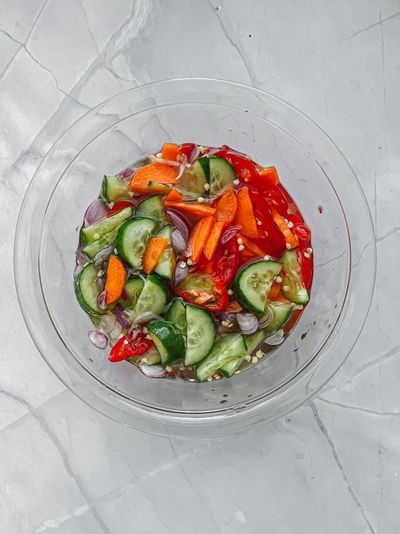
A simple syrup of rice vinegar, palm sugar, water and salt is brought to a gentle simmer to dissolve the sugar, then cooled. Cucumber, shallot and chilli are sliced thin and combined in a small bowl. The cooled syrup is poured over. Rested for 10-15 minutes for the vegetables to wilt slightly into the dressing. Served in small individual ramekins as a dip, OR in a larger bowl as a side, with peanuts sprinkled on top.
Charoset
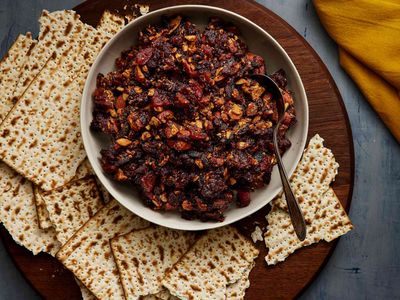
The Ashkenazi version, simplest and most common in northern Europe and the United States: tart apples chopped fine, walnuts crushed coarse, cinnamon, a little brown sugar, and sweet kosher red wine to bind. Stirred together and left for the flavours to meld. Some households add a pinch of ground ginger or a squeeze of lemon. There are dozens of regional variants (Sephardi versions use dates and figs); this one is the most familiar at a North American seder.
Coconut Chutney
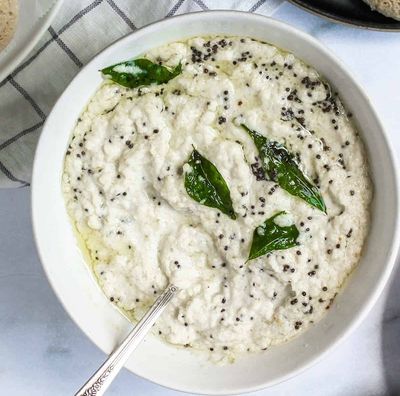
Fresh coconut is ground with green chilli, ginger, roasted gram and a small splash of water into a smooth paste. The chutney is finished with a tempering of mustard seeds, dried red chilli, curry leaves and asafoetida in hot oil, poured over the white chutney for a striking visual and aromatic contrast.
Jhal Muri
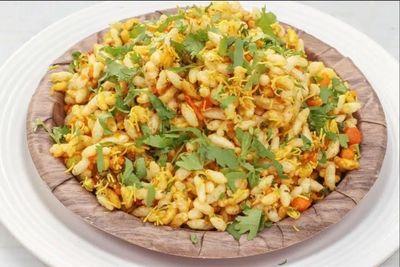
Jhal muri (literally "spicy puffed rice") is the most democratic snack in Bengal: assembled in seconds from a tin trunk by a muriwala, tipped into a rolled-newspaper cone, and eaten standing on a pavement for the price of a few rupees. The base is muri (puffed rice), and everything else is built around the principle of contrast. Raw mustard oil is the soul of the dish, sharp and nasal and slightly bitter; without it you have a salad, not jhal muri. The vegetables stay raw and crunchy, onion, green chilli, cucumber, tomato, chopped into tiny dice so each spoonful gets one of each. Peanuts and chana chur (or sev) add fat and crunch; black salt and chaat masala add the funky-tangy depth that makes Indian street snacks addictive. The lime goes in last so the puffs don't soften. This is a dish where technique matters less than ingredient quality: muri must be crisp (refresh in a dry pan if it's gone soft), mustard oil must be the proper pungent kind, and the lime must be fresh. It is everywhere in Bengal, tea-time at home, train platforms, the Maidan on a winter afternoon, and there is no recipe in any cookbook that quite captures the feel of it being mixed in front of you in a paper cone.