In season

May produce

Tap any item to find recipes that use it.

Chilli oil

Chilli oil

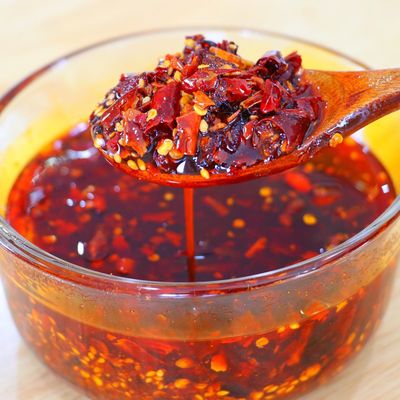
Two-stage flavour build: first a spice infusion (whole spices soaked briefly in water, then simmered slowly in vegetable oil with spring onion and ginger), then a sizzle (the hot strained oil poured over a heat-proof bowl of chilli flakes, smoked paprika, soy and Chinese vinegar). Cooling. Mixing in the textural elements: caster sugar, salt, chicken stock powder, crispy fried shallots and crispy fried garlic. Jarred, rested 24 hours so the flavours marry, stirred vigorously before each use because the oil and solids separate.

Snacks 25 hours 20 minutes Serves1
Kung Pao Shrimp

Kung Pao Shrimp

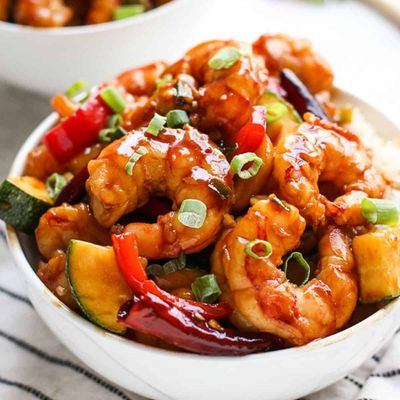
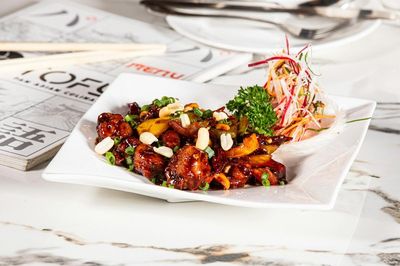
Kung pao (gongbao) shrimp is the seafood cousin of the classic Sichuan gongbao jiding, named for the 19th-century governor-general Ding Baozhen whose title was Gong Bao. Where the chicken version uses diced meat, the shrimp version keeps the prawns whole or halved so they curl into bright pink commas around the chillies and peanuts. The flavour profile is the signature Sichuan "lychee" balance: a touch of sweetness from sugar, sourness from black vinegar, salt and umami from soy, and the warm tingle (ma la) of toasted Sichuan peppercorn paired with the smoky bite of dried er jing tiao chillies. This is a fast dish, fundamentally a wok exercise: every ingredient must be prepped and lined up before the heat goes on, because once the chillies hit the oil you have maybe ninety seconds before everything is overcooked. Difficulty is moderate for a home cook with a working wok and high burner; the trick is keeping the chillies dark red and fragrant without scorching them black, and pulling the shrimp out the moment they curl. Served over plain rice it is one of the most rewarding ten-minute meals in the repertoire.

Chinese 28 minutes Serves3-4
Mouthwatering Chicken (Kou Shui Ji)

Mouthwatering Chicken (Kou Shui Ji)

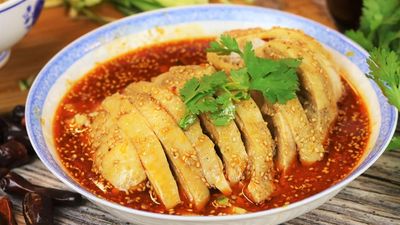
Kou shui ji is one of the great cold appetisers of Sichuan cuisine, a benchmark by which any aspiring Sichuanese cook is judged. It belongs to the broader family of cold chicken dishes (liang ban ji) that also includes bobo ji and bang bang ji, but kou shui ji is set apart by its sauce: not just spicy, but a complex layering of mala (numbing-hot) Sichuan pepper oil, fragrant chilli oil with its crisp sediment, deep aged black vinegar, sweet stone-ground sesame paste, and the concentrated chicken essence captured from steaming. The dish is uncooked at the assembly stage, which makes ingredient quality non-negotiable: cheap supermarket chilli oil and tahini will produce a sad, muddy version. Difficulty for a home cook is low if you have the right pantry; the only technical step is the gentle steaming, which yields more flavourful meat and crucial savoury juices than poaching does. The visual is striking, pale chicken slices half-submerged in a pool of red oil, scattered with chopped peanuts, sesame seeds and bright green scallion tops. Serve as a starter, on rice, or over cold noodles; the leftover sauce is too good to waste.

Chinese 40 minutes Serves2-4
Roujiamo (Xi'an Chinese Hamburger)

Roujiamo (Xi'an Chinese Hamburger)

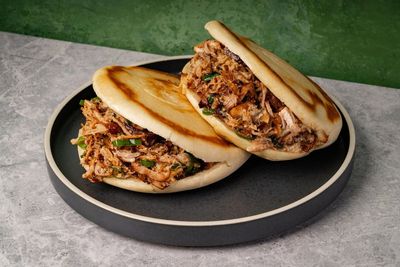
Roujiamo is often, lazily, called the Chinese hamburger, but it is older than the burger by perhaps a thousand years and structurally quite different. The bread is a flat, lightly leavened, sometimes laminated wheat round, with the layered Tongguan style (flaky and croissant-like) considered superior to the softer baijimo. The filling is rich braised pork, shoulder or belly, simmered with rock sugar, soy and warming spice until it shreds under a knife, then chopped fine on a board with raw onion and cilantro and a spoonful of its own dark cooking liquid. The whole assembly is then crammed inside the freshly fried-and-baked bun while everything is still hot. Roujiamo is a quintessentially Xi'an dish, the product of a city that for centuries sat at the eastern terminus of the Silk Road; the bread tradition comes from the Hui and Uyghur Muslim communities of the northwest, while the braised pork belongs to the Han Chinese kitchen. Difficulty for a home cook is moderate to high, the lamination of the bread takes practice, and there are multiple components on timed tracks, but the result is one of the great street foods of China, and the buns and meat can both be made ahead.
Chinese 5 hours Serves4