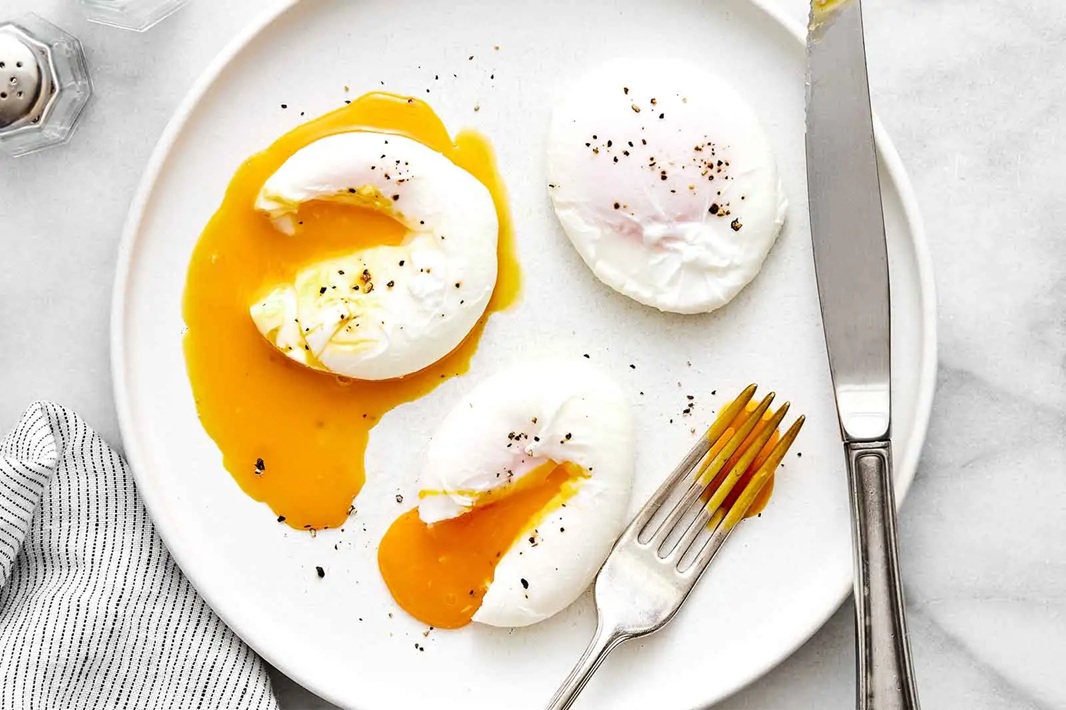
Boiled and Poached Eggs
Two of the simplest things you can do with an egg, and two that home cooks rarely get quite right. The boil is mostly a question of timing. The poach is mostly a question of nerve. We'll cover both, plus the small tricks (vinegar in the water, ice bath afterwards) that make the difference.
Overview
Boiled and poached eggs sit at opposite extremes of the simple-egg spectrum, but they share one principle: heat-controlled coagulation. Both rely on hitting a specific protein-set temperature in the egg's interior and stopping at exactly the right moment.
For boiled, the egg cooks inside the shell. Timing is everything; the shell shields you from seeing what's happening inside.
For poached, the egg cooks without the shell. The white sets around the yolk if you handle the water gently; the yolk stays liquid.
Both are easy once you have a clock and a thermometer. Both are infuriating until you do.
Boiled Eggs
The Method (Cold-Water Start)
- Place eggs in a small saucepan. Cover with cold water by 2 cm.
- Bring to a rolling boil over high heat.
- The moment the water boils, start a timer.
- Reduce heat to a gentle simmer (vigorous boil cracks shells).
- Time as below.
- Drain. Plunge into iced water for 1 minute to stop the cook and tighten the shell membrane (makes peeling easier).
Cold-water start gives consistent results: the egg heats with the water, so the cook time is independent of egg size and starting temperature.
Timing Chart (from the boil)
| Time | Result |
|---|---|
| 4 min | White just set, yolk fully liquid (the dippy egg) |
| 6 min | White firm, yolk soft and jammy in the middle |
| 7 min | White firm, yolk thick but slightly creamy at centre |
| 8 min | Yolk fully set, slightly creamy |
| 10 min | Hard-boiled, yolk crumbly |
| 12 min | Hard-boiled, yolk dry and chalky (overcooked) |
Times are for room-temperature medium (50 g) eggs. Add 30 seconds for cold-from-fridge; add 30 seconds for large eggs.
The Method (Boiling-Water Start)
The hot-water start is faster (skip the heating phase) but trickier; the eggs go straight into already-boiling water, which gives you more consistent results once you know your timing, but cracks more shells.
- Bring a pan of water to a rolling boil.
- Lower eggs in with a slotted spoon, gently.
- Start the timer immediately.
- Time below.
Timing chart (boiling-water start):
| Time | Result |
|---|---|
| 6 min | Soft (jammy yolk) |
| 7 min | Medium |
| 8 min | Medium-hard |
| 9 min | Hard |
| 10 min | Hard, drier |
Peeling
Old eggs (1-2 weeks) peel easier than fresh ones. The shell membrane loosens with age.
After the ice bath, tap the egg gently on a hard surface all over to crack the shell. Roll under your palm to crackle. Peel under running cold water; the water gets under the membrane and lifts the shell.
Soft Boil (Dippy Egg)
The British/Continental breakfast standard. 4-5 minutes from boiling. White just set, yolk fully liquid. Serve in an egg cup; tap the top off; dip toast soldiers.
Jammy Egg (Onsen, Ramen Egg)
6-7 minutes from boil, then ice bath. The Japanese ramen egg (ajitsuke tamago) takes this further: peel, then marinate in soy sauce, mirin and dashi for several hours. The yolk stays jammy and creamy through the marination.
Hard Boil
10 minutes max. Past 12 minutes the white turns rubbery and the yolk develops a grey-green ring around its perimeter (iron-sulfur reaction). Both are signs of overcooking.
Poached Eggs
The Method
- Bring a wide saucepan or deep frying pan of water to a slow simmer (small bubbles breaking the surface, not a rolling boil).
- Add 1 tablespoon white wine vinegar (helps the white coagulate fast).
- Crack each egg into a separate ramekin (gives you control over delivery; reduces the chance of breaking a yolk).
- Stir the water gently with a slotted spoon to create a soft whirlpool.
- Lower the ramekin to the surface; tip the egg in gently. The whirlpool wraps the white around the yolk.
- Cook 2 minutes 30 seconds for runny yolk; 3 minutes for firm white still with runny centre; 4 minutes for fully cooked.
- Lift out with the slotted spoon. Touch the egg lightly with a finger; the white should bounce back firm, the yolk should give like a water balloon.
- Drain on a folded paper towel for 5 seconds.
Critical Rules for Poaching
- Water at a slow simmer. Not a boil; not still. Hard boiling tears the white apart; still water doesn't set the surface fast enough.
- Vinegar matters. 1-2 tablespoons per litre of water. It speeds white-set. Don't use balsamic (too sweet, will tint the egg).
- One egg at a time until you're confident. Two at a time once you have rhythm.
- Crack into a ramekin first. Lets you check for shell fragments and gives a smoother tip-in.
- Use the freshest eggs you can find. Older eggs have runny whites that scatter into wisps in the water.
Batch Poaching
For brunch service: poach the eggs ahead, immediately plunge into ice water to stop cooking. Hold in cold water in the fridge up to 2 days. To serve, reheat by lowering into simmering water for 30 seconds.
Sous-Vide Eggs
The modern technique: drop whole eggs (in shell) into a 64 C water bath for 45 minutes. Crack onto a plate; the white is just set, the yolk is custardy. The "onsen" egg, served over rice or as a topping for ramen. Consistent every time; requires sous-vide gear.
Common Mistakes
Boiled
The shell cracked during cooking. Water boiled too vigorously, or eggs went straight from cold fridge into hot water. Bring eggs to room temperature first; simmer not boil.
The yolk is grey-green at the edge. Overcooked. The iron in the yolk reacts with sulfur in the white. Pull at 10 minutes max; cool immediately.
The egg is hard to peel. Too fresh. Eggs at least 1 week old peel much easier. Or: skip peeling entirely; just slice the boiled egg with the shell still on and scoop out.
The egg cracked from cold-to-hot shock. Take eggs out of the fridge 20 minutes before cooking; or use the cold-water-start method.
Poached
The white scattered in wisps. Eggs were too old, or water was too hot. Buy fresh; use a gentle simmer.
The yolk broke. Cracked the egg too hard; or tipped from too high. Crack into a ramekin and lower to the water surface before tipping.
Multiple eggs stuck together. Added too close in time. Wait 30 seconds between additions; they fly apart less.
The egg is undercooked. Less than 2 min 30 sec in simmering water gives a raw runny white. Wait the full time.
The water turned cloudy. Vinegar too aggressive; older eggs with thinner whites. Both fine; the egg will still be good. Replace the water if you're doing many in a row.
Where Next
- Scrambled and Omelette: the next preparation up the temperature ladder.
- Custards: more delicate egg-coagulation control.
- Eggs Course landing: back to the main course.
More like this
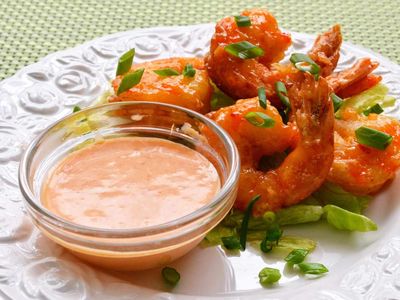
Bang Bang Sauce
A no-cook three-ingredient sauce. Mayo gives body, sweet chilli sauce brings the sweet-tart-mild-spice base, sriracha tops the heat to whatever level you want. Stirred together, ready immediately. Keeps for weeks in the fridge.
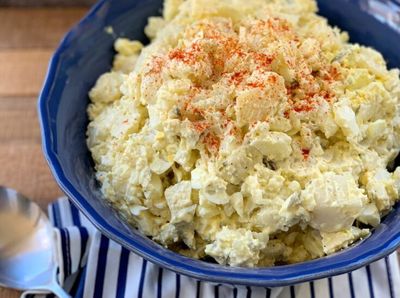
Classic American Potato Salad
Few dishes feel as woven into American summer as potato salad. It appears at backyard barbecues, church potlucks, and Fourth of July tables from Maine to Texas, and although every family insists their version is the only correct one, the bones are reassuringly consistent: waxy potatoes, hard-boiled eggs, a generous slick of mayonnaise, and the bright bite of mustard and pickle. The taste is creamy and cool, savoury with a gentle sweet-sour tang, punctuated by crisp celery and the sting of raw onion. It smells faintly of vinegar and paprika, like a 1950s deli counter on a hot afternoon. The texture is the real prize. Potatoes should be tender enough to yield to a fork but still hold their shape, so the salad reads as chunky rather than mashed. Difficulty is low, which is part of its charm. The only real technique is seasoning the warm potatoes so they drink in the vinegar before the mayo goes on, a small step that separates a flat salad from a great one. Make it the day before if you can. A night in the fridge lets the flavours marry, the onion mellow, and the dressing settle into every crevice, which is exactly what you want when you pull it out alongside burgers, pulled pork, or grilled chicken.
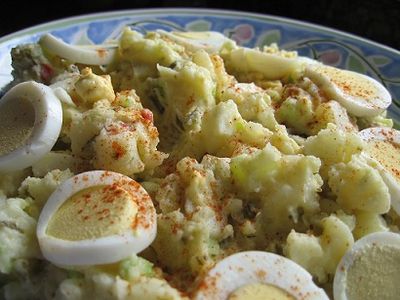
Hot Cajun Potato Salad
A fiery Cajun-spiced potato salad, the kind of side dish that lifts a barbecue plate from good to memorable. You boil potatoes until just tender, then toss them while still warm in a mayo-based dressing built around Cajun heat: cumin, cayenne, smoked paprika, garlic and a measured spoon of garam masala for a deeper round-out. Hard-boiled eggs go in halved or quartered, sliced spring onions add a fresh allium note, and diced green chilli runs the heat across the back of the palate. Fresh herbs (parsley, dill or coriander) lift the lot. The salad sits best after an hour in the fridge for the flavours to settle. Eaten alongside grilled meat, fried chicken or a bowl of gumbo, with cold beer on the side.
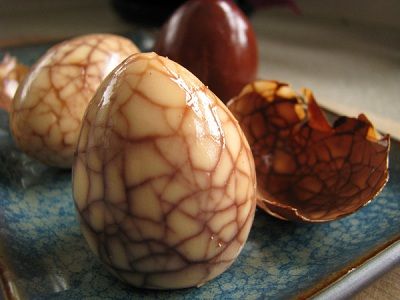
Marbled Tea Eggs
Marbled tea eggs are a classic Chinese preparation in which hard-boiled eggs are cracked and simmered in a spiced black tea broth, creating a striking web-like pattern on the surface once peeled. The soy sauce, cinnamon, and star anise infuse the eggs with a deep, aromatic flavour that complements their visual appeal. They are traditionally served cold and make an elegant garnish or snack alongside other cold dishes.