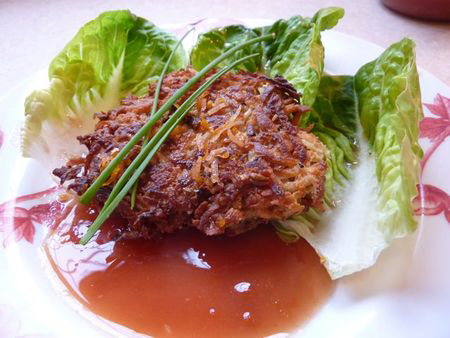
Cumberland Sauce
This is a lovely accompaniment to cold meats and terrines. Serve it cold with galantines and ballotines, pork pies or any cold poultry and game. It tastes even better the day after it is made.
Overview
A jewel-coloured relish with punchy acidity balanced by fruity herbs and spice. This cold sauce adds sophistication to charcuterie boards and game terrines, with sharp pepper notes and port-wine richness that develops over time as flavours meld.
Ingredients
Base
- 1 shallot (medium, finely chopped)
- 4 tablespoons red wine vinegar
- 12 white peppercorns (crushed)
- 100 ml Veal stock
- 50 ml ruby port
Finishing
- 2 tablespoons redcurrant jelly
- 1 teaspoon Worcestershire sauce
- one orange (juice)
- one lemon (finely pared, zest)
- salt
Method
Stage 1 - Reduce vinegar
- Combine the shallot, wine vinegar and crushed peppercorns in a small saucepan.
- Place over a high heat and let bubble to reduce by two-thirds.
Stage 2 - Build sauce
- Add the veal stock, port, redcurrant jelly, Worcestershire sauce and orange juice.
- Quickly bring to the boil, then lower the heat and simmer gently for 20 minutes.
- Season with salt to taste.
Stage 3 - Finish and chill
- Pass the sauce through a fine-meshed conical sieve into a bowl.
- Set aside to cool, then cover and chill in the refrigerator.
- Blanch the lemon zest in boiling water for 1 minute, then drain and cut into fine julienne.
- Stir into the sauce just before serving.
Notes
- Make ahead: Prepare this sauce 1 day ahead; flavours develop and meld beautifully overnight.
- Redcurrant jelly: Essential for authentic taste; it provides both sweetness and pectin body to the sauce.
- Lemon zest: Blanching removes bitterness; add it just before serving to maintain brightness and texture.
Serving
Serve chilled alongside cold cuts, terrines, pâtés, and cold roasted game. Also excellent with cheese selections on a charcuterie board.
Storage
- Keeps refrigerated for 5-7 days in an airtight container.
- Freezes well for up to 3 months (freeze without lemon zest; add when thawed).
- Best eaten chilled, directly from the refrigerator.
More like this
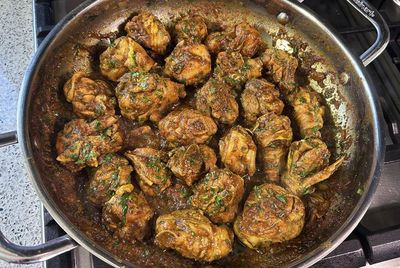
Bunjay-Style Curry Chicken
A dry curry rather than a saucy one, "bunjay" is Trinidadian patois for "fry-down", the technique of cooking meat in its own juices until the gravy completely disappears and the spices coat the surface of the meat in a sticky, glaze-like crust. The flavour is concentrated rather than diluted; nothing's been thinned with water or coconut milk, so what you taste is bone-in chicken, rendered chicken fat, and toasted spice. The spice mix is the East Indian Trinidadian signature: turmeric for colour and earth, roasted geera (toasted cumin, ground) for nuttiness, anchar masala for tang, regular curry powder for breadth. The pan oil splits and separates around the chicken at the end, which is the visual cue you're looking for. Smell when the curry powder hits hot oil is deeply aromatic, almost incense-like. Not difficult but it requires attention during the cook-down phase; if you walk away the curry burns onto the bottom of the pan. A Trinidadian household staple, eaten across the country with white rice and dhal, and a clean example of how Indian indentured labourers' descendants in the Caribbean evolved a distinct curry tradition over 150 years.
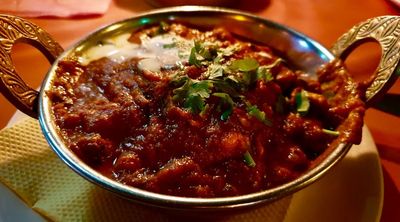
Chicken Pathia
A British-Indian pathia curry with a sweet-and-sour profile, tuned for balanced acidity and a hint of chilli warmth. The recipe uses lemon, mango chutney and sugar for tang/sweetness, with optional red food colouring for the classic curry-house appearance.
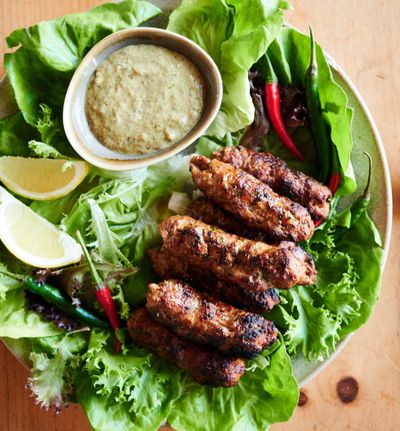
Lamb Seekh Kebab
Seekh kebab is restaurant-quality barbecue. Unlike simple meatballs, seekh kebab is defined by its fine, dense, bound texture achieved through vigorous kneading. The spice profile is warm and aromatic without aggression. When charred over hot coals, the exterior develops a smoky, charred, visible "lace" pattern while the interior stays succulent. This is elegant Indian street food made at home, served with yoghurt and lemon.

Pasteis de Bacalhau
These are the little salt-cod fritters you'd order at a marble counter in Lisbon, sitting with a glass of vinho verde while the bartender slides a plate across with no ceremony. The recipe itself is simple, dry mashed potato through flaked bacalhau with onion, garlic, parsley and egg, then a brief fry, but it does start the day before because the salt cod wants 24 to 36 hours of cold water soaks to draw the salt out. That step is the one thing you cannot shortcut. Once the cod is desalted, everything else is an afternoon's work: simmer the cod, flake it through warm potato, shape into the three-sided football "quenelles" that are the Portuguese signature, and fry until amber. Eat them warm with a wedge of lemon and a dish of piri-piri on the side.