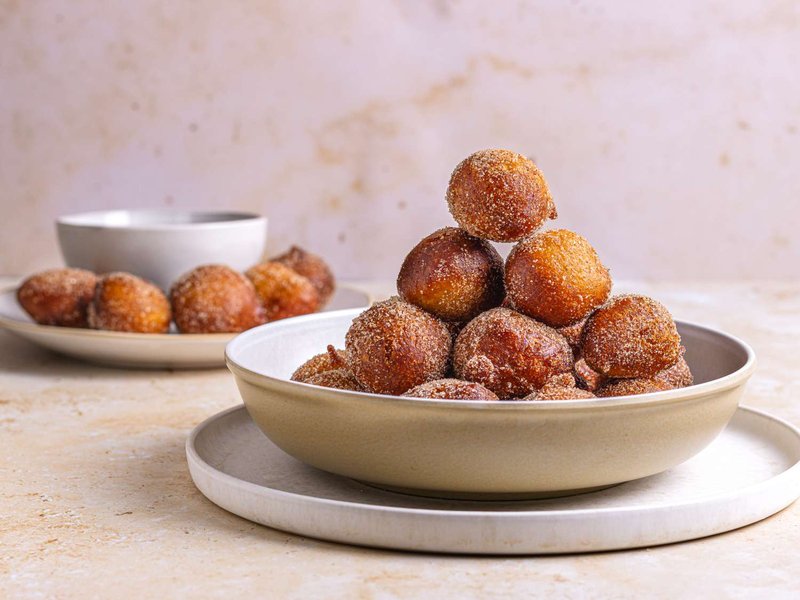
Puff Puff
West Africa's fried dough ball: sweet, fluffy, slightly stretchy yeasted batter deep-fried golden. Eaten warm at children's parties and naming ceremonies.
Overview
A loose, slightly slack yeasted batter (no kneading) rises until bubbly. Hot vegetable oil receives small balls scooped with wet hands or a spoon, they puff and turn themselves over as they fry, golden in 3-4 minutes. Drained briefly; eaten warm. The classic Nigerian version is faintly nutmeggy.
Ingredients
- 500 g plain flour
- 2 tablespoons caster sugar (more for sweet teeth)
- 1 sachet (7 g) fast-action yeast
- 1 teaspoon salt
- ½ teaspoon ground nutmeg
- 350 ml warm water (approximately)
- Vegetable oil for deep-frying (about 1 litre)
To finish (optional)
- Caster sugar, for rolling
- Or: spiced sugar (caster sugar + ground cinnamon + nutmeg)
Method
Stage 1 - Batter
- Whisk the flour, sugar, yeast, salt and nutmeg in a wide bowl.
- Add the warm water gradually, mixing with a wooden spoon to a thick, sticky batter - looser than dough, thicker than pancake batter. Stop before it becomes runny.
Stage 2 - Rise
- Cover with cling film or a clean damp tea towel.
- Rest in a warm spot 1-1 ½ hours until visibly bubbly and almost doubled.
Stage 3 - Heat the oil
- Heat 5 cm of vegetable oil in a wide deep pan to 175°C.
- A small drop of batter should bubble vigorously and float without browning instantly.
Stage 4 - Fry
- Wet your hand (the batter won't stick).
- Scoop a generous tablespoon of batter; squeeze through your thumb-and-forefinger fist into the hot oil - the squeeze releases a roughly round ball.
- Or: use a spoon, dipped in water between scoops.
- Fry 6-8 puff puff at a time; they should puff and turn themselves in the oil.
- Cook 3-4 minutes total, turning if needed, until deep golden all around.
- Lift onto kitchen paper.
Stage 5 - Finish
- While still hot, roll in caster sugar (or spiced sugar) if using. Or eat plain.
Stage 6 - Serve
- Eat warm.
- Pass at the table with sweet tea or hot chocolate.
Notes
- Sticky batter is correct: Stiffer batter gives dense, dry puff puff. The looseness is what creates the airy interior.
- Hand-squeeze technique: Takes practice but gives the most uniform shape. Two-spoon scooping works fine - wet the spoons.
- 175°C oil: Hotter and they brown before cooking through; cooler and they soak up oil. A thermometer or a digital probe takes the guesswork out.
Storage
- Best fresh. Refrigerate 2 days at most; re-crisp at 180°C for 4 minutes - but they're never as good as fresh.
- Don't freeze (the texture goes spongy).
More like this
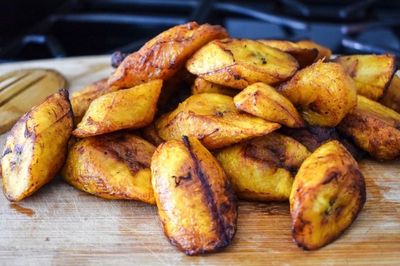
Dodo
Very ripe plantains (mostly black-skinned) slice on the diagonal at 1 ½ cm thick. Vegetable oil heats hot in a wide pan; the slices fry in a single layer until each side is deep golden with caramelised, almost-burnt edges. Drained briefly, salted lightly, eaten right away.
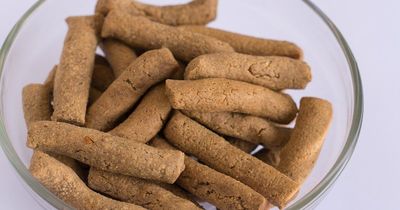
Kuli-Kuli (Roasted Peanut Sticks)
Raw peanuts toast in a dry pan 10 min till deep gold and fragrant; skins rub off. The roasted peanuts pulse to a coarse paste, then a fine paste, eventually the oil starts to release. The paste squeezes hard in clean cloths to extract the oil; the de-oiled paste tightens into a clay-like dough seasoned with salt, ground chilli, ground ginger. Shapes into thin sticks or small rings. Deep-fries in vegetable oil 3-4 minutes till deep gold.
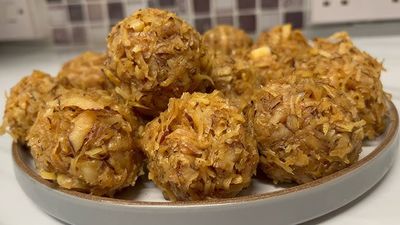
Nigerian Coconut Candy
Fresh coconut grates (or cubes if making the chunky version). Sugar dissolves in water in a heavy wide pan; coconut goes in; cooks over medium heat 20 minutes until the water evaporates and the sugar caramelises around the coconut to a deep amber colour. Tips immediately onto greased parchment; spreads with a spatula; cools to set.
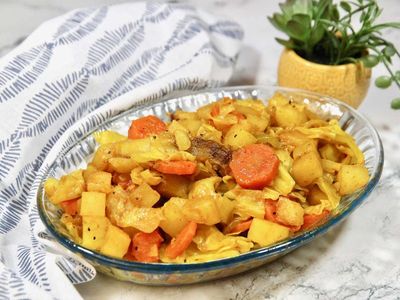
Atakilt Wat
Ethiopia's spiced cabbage stew, the gentle vegetable side that sits between the fiercer berbere-loaded curries on a shared platter and cools whoever's eating against the heat. You soften onions in oil with turmeric until they're pale gold, then bloom garlic, ginger and a small amount of berbere in the same fat - small because this is the mellow dish, not the fierce one. Carrots and potatoes go in first to soften; cabbage joins later. Cover, drop the heat, and let the lot steam-cook for forty minutes until the volume has halved, the vegetables have melted into each other, and the cabbage has almost disappeared into the sauce. Eaten with injera and a few spoonfuls of doro wat or misir wat alongside for contrast.