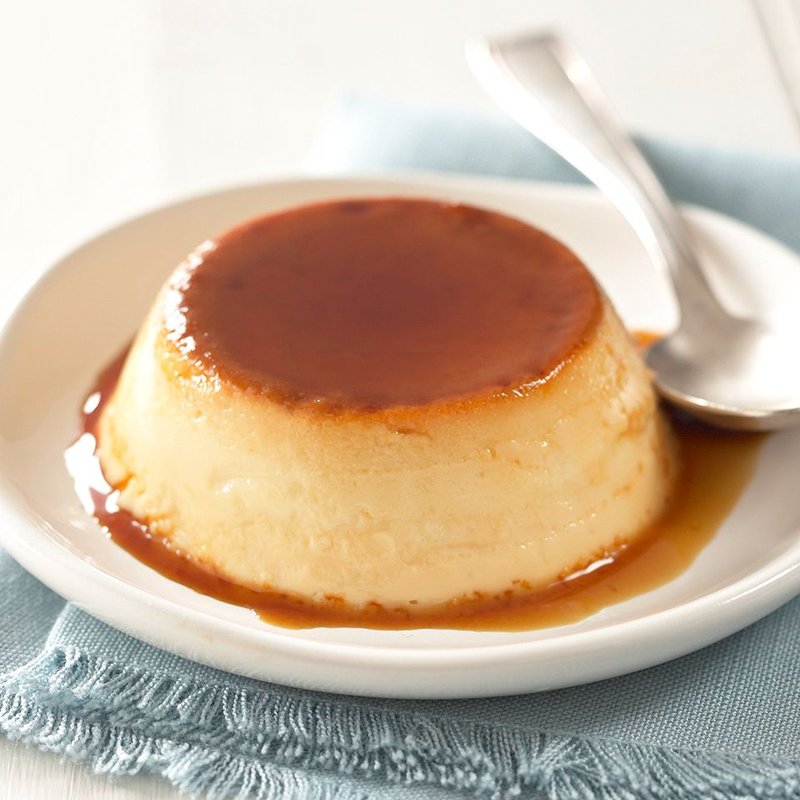
Flan Mexicano
Mexico's defining dessert: a silky baked custard sitting in a pool of bittersweet caramel, inverted so the syrup runs down the dome.
Overview
Caramel cooks dry: sugar melts in a hot pan to a dark amber syrup; poured into a 22 cm round cake tin (or 8 individual ramekins) where it solidifies. Custard: eggs blend with sweetened condensed milk, evaporated milk, whole milk, vanilla and a pinch of salt (no fresh cream, the milk trio is what makes Mexican flan distinct). Strained for smoothness; poured over the set caramel; baked in a water bath at 160°C for 60-75 minutes until just set but with the slightest jiggle in the centre. Cooled fully; refrigerated overnight. Inverted onto a plate the next day; the caramel pools around the dome.
Ingredients
Caramel
- 200 g caster sugar
- 3 tablespoons water (helps the start)
Custard
- 4 eggs (large, room temperature)
- 1 (397 g) tin sweetened condensed milk
- 1 (410 g) tin evaporated milk (NOT condensed; the unsweetened kind)
- 200 ml whole milk
- 2 teaspoons vanilla extract (or use a scraped pod for the seeds)
- A pinch of salt
- 1 tablespoon rum (or brandy, optional, traditional)
Equipment
- 1 round cake tin (22 cm, NOT springform - needs to be solid-bottomed; ideally 8 cm deep)
- OR 8 ramekins (180 ml each)
- A large roasting tin (to act as a bain-marie)
- Boiling water
Method
Stage 1 - Make the caramel
- Place sugar and water in a heavy saucepan (light-coloured base so you can see the caramel colour).
- Heat over medium-low until the sugar dissolves; swirl the pan occasionally.
- Once the syrup is clear, increase heat to medium-high.
- Cook 5-8 minutes without stirring (swirling occasionally) until the syrup darkens to a deep amber - like a strong espresso. Watch carefully; it goes from amber to burnt-black in 30 seconds.
- Immediately pour into your cake tin (or distribute among ramekins).
- Tilt to coat the base and 1 cm up the sides.
- The caramel sets and hardens within a minute - that's fine.
- Set aside.
Stage 2 - Make the custard
- Heat oven to 160°C (140°C fan).
- Bring a kettle of water to a boil.
- In a wide bowl, gently whisk eggs (don't whip - you don't want foam) until just combined.
- Whisk in the condensed milk, evaporated milk, whole milk, vanilla, salt and rum (if using).
- Strain the custard through a fine sieve into a measuring jug - twice if you're a perfectionist.
- Skim any foam from the surface (foam gives a pocked finish on the bottom of the flan when unmoulded).
Stage 3 - Bain-marie
- Place the caramel-lined cake tin (or ramekins) in a large roasting tin.
- Pour the custard into the cake tin over the set caramel.
- Pour boiling water into the roasting tin around the cake tin to come halfway up its sides.
- Carefully transfer to the oven on the middle rack.
Stage 4 - Bake
- Bake 60-75 minutes (35-40 minutes for ramekins).
- The flan is done when:
- The edges are set firm
- The centre has a slight jiggle when the tin is tapped (but doesn't slosh)
- A skewer inserted comes out almost clean (a slight wet sheen is fine; the flan firms more as it cools)
- Lift the cake tin out of the water bath.
Stage 5 - Cool and chill
- Cool to room temperature on a rack (1-2 hours).
- Cover with cling film; refrigerate at least 6 hours, ideally overnight.
- The flan firms fully and the caramel partially dissolves into a syrup at the base.
Stage 6 - Unmould
- Run a thin knife around the edge.
- Place a large flat serving plate (one with a slight lip is ideal - to catch the caramel) over the cake tin.
- Invert with confidence - flip it over completely.
- Gently lift the tin off - the flan slides down onto the plate; the caramel pours over it.
Stage 7 - Serve
- Slice into 8 wedges.
- Spoon caramel from the plate over each slice as you serve.
Notes
- Caramel colour matters: Pale caramel gives sweet syrup without depth; burnt caramel is bitter. Deep amber (espresso-coloured) is the target - bittersweet, deeply caramelised, slight smokiness.
- The milk trio is the Mexican signature: Condensed milk (sweetness + body), evaporated milk (richness without sugar), whole milk (lightening). Substituting fresh cream gives a less authentic, richer-but-flatter flan.
- Bain-marie is non-negotiable: Direct oven heat overcooks the edges before the centre sets, giving a curdled rubbery flan. The water bath surrounds the tin in gentle moist heat that cooks the custard evenly to a silky texture.
Storage
- Refrigerated, covered, in its tin (not unmoulded): 4 days.
- Once unmoulded, eat within 2 days.
- Doesn't freeze well - the custard texture separates on thaw.
More like this
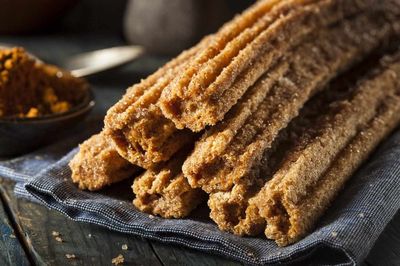
Churros Mexicanos
A choux-like dough cooks on the stovetop: water, butter, sugar, salt and a touch of vanilla bring to a boil; flour is dumped in all at once; cooked for 2 minutes stirring vigorously until the dough comes together as a ball that pulls away from the pan. Cooled slightly, eggs whisk in one at a time to a smooth thick pipe-able dough. Transferred to a piping bag with a star nozzle (1 ½ cm star tip). Heat oil to 175°C. Pipe directly into the oil, cutting each churro to 12-15 cm length with scissors. Fry for 90 seconds per side until amber. Drain on paper. Roll immediately in cinnamon sugar. Serve warm with hot chocolate.
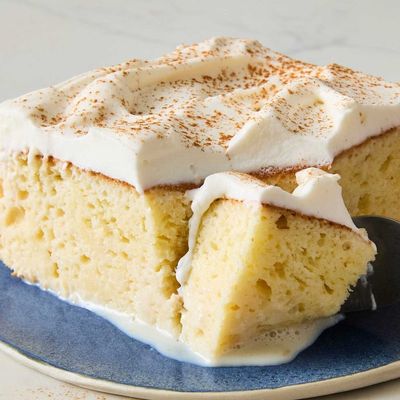
Tres Leches Cake
A sponge cake separates yolks and whites; the whites whip with sugar to stiff peaks; the yolks fold with sugar, milk, vanilla, flour and baking powder. The two mixtures fold together carefully (don't deflate the whites). Baked at 175°C for 25-30 minutes until golden and just-springy. While still slightly warm, the top is pricked all over with a skewer to make absorption channels. The "tres leches", evaporated milk + condensed milk + double cream whisked together, pours over the warm cake, slowly. The cake drinks the milk; rests in the fridge at least 4 hours (overnight ideal). Topped with whipped cream and a dusting of cinnamon just before serving.
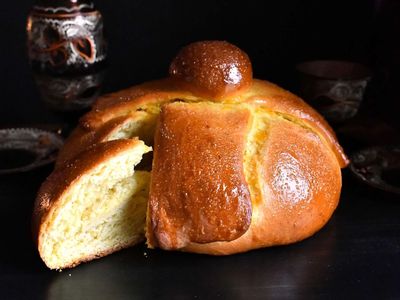
Pan de Muerto
A rich yeasted dough enriched with butter, eggs and sugar, perfumed with orange zest, anise seed and a splash of orange-flower water. The dough is divided: a large ball for the body, four thin strips rolled to look like crossed bones, and a small ball for the centre. After a second rise it goes into a hot oven, then brushed with melted butter and rolled in sugar while still warm. The crust is golden, the crumb is soft and pulls apart in tender threads.
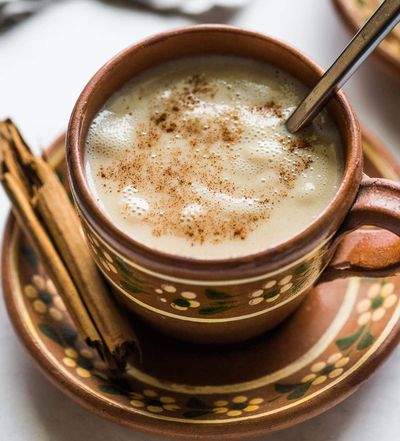
Atole
A pre-Hispanic drink that pre-dates Spanish dairy and chocolate by centuries: masa harina, water, and a sweetener. The modern household version uses milk for richness, piloncillo for the smoky-caramel sweetness, a cinnamon stick for warmth and vanilla for the perfume. Whisked over a low heat until the masa thickens the liquid to the consistency of warm pouring custard. Served in mugs, drunk hot.