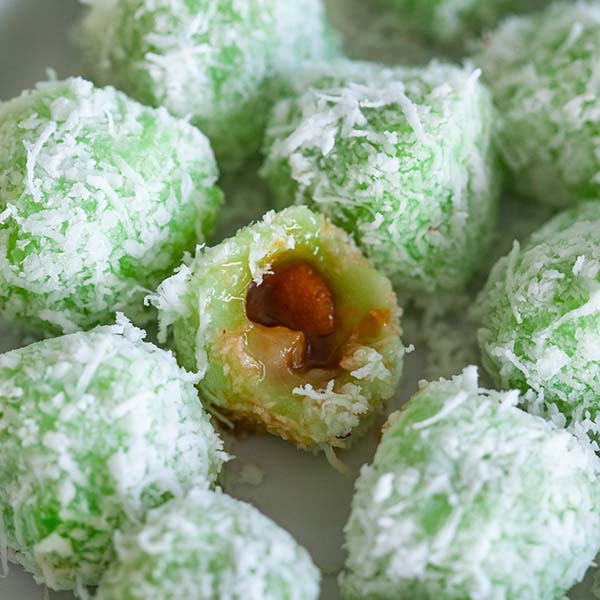
Onde-Onde
Malaysia's tea-time sweet: green pandan glutinous rice balls hiding a molten gula melaka centre, rolled in salted grated coconut.
Overview
A two-flour glutinous rice dough is coloured with pandan, wrapped around chips of gula melaka, then dropped into boiling water until the balls float to the surface. Each one is rolled while still warm in a generous drift of salt-seasoned grated coconut. Three textures in one bite, springy dough, sweet liquid centre, soft coconut crust.
Ingredients
Dough
- 200 grams glutinous rice flour
- 1 tablespoon rice flour
- 2 teaspoons pandan paste, or 100 ml strained fresh pandan juice (see Notes)
- 150 ml warm water (slightly less if using pandan juice)
- ¼ teaspoon fine sea salt
Filling
- 80 grams gula melaka (palm sugar), finely chopped into small chips, or soft dark brown sugar
Coconut Coating
- 120 grams fresh (or frozen grated coconut), defrosted (or 90 grams desiccated coconut moistened with 3 tablespoons hot water)
- ¼ teaspoon fine sea salt
- 1 pandan leaf, torn (optional, for steaming)
Method
Stage 1 - Prepare the Coconut Coating
- Place the grated coconut in a heatproof bowl and toss with the salt. If using moistened desiccated coconut, mix in the water at this stage.
- Sit the bowl over a saucepan of simmering water (with the pandan leaf tucked in the water if using) and steam for 5 minutes.
- Remove and spread on a plate to cool.
Stage 2 - Make the Dough
- Combine the glutinous rice flour, rice flour and salt in a mixing bowl.
- Stir in the pandan paste (or pandan juice) and most of the warm water.
- Knead by hand for 2 to 3 minutes until you have a smooth, soft dough that holds together but is not sticky. Add a splash more water or a dusting of flour to adjust.
- Cover with a damp tea towel and rest for 5 minutes.
Stage 3 - Shape the Balls
- Pinch off pieces of dough about the size of a small walnut, around 18 grams each. You should get about 18 balls.
- Flatten each piece between your palms into a thick disc about 4 cm across.
- Place ¼ teaspoon of chopped gula melaka in the centre, gather the edges up over the filling, and pinch to seal completely.
- Roll between your palms into a smooth ball. Set aside on a tray dusted lightly with rice flour. Cover with a damp cloth so they don't dry out.
Stage 4 - Cook the Balls
- Bring a wide saucepan of water to a rolling boil.
- Drop in the balls in batches of 6 to 8 so they don't crowd.
- They will sink at first; cook for 1 minute after they float to the surface, around 3 to 4 minutes total.
- Lift out with a slotted spoon and let them drip dry for a few seconds.
Stage 5 - Coat & Serve
- Working while the balls are still warm and tacky, roll each one in the steamed grated coconut, pressing gently so the coconut clings all over.
- Arrange on a plate or banana leaf and serve within an hour, while the centres are still molten.
Notes
- Pandan juice: For fresh pandan juice, blend 6 pandan leaves with 100 ml water for 1 minute and strain through a fine sieve. The colour is more muted than paste but the flavour is true. Pandan paste from a bottle is a perfectly acceptable substitute.
- Gula melaka: The smoky palm sugar is what makes onde-onde sing. Look for it in solid blocks at Asian grocers (sometimes labelled gula jawa). Chip it small enough to fit into the dough but big enough to hold its shape; if it dissolves into the dough you lose the burst. Soft dark brown sugar is a workable substitute.
- Sealing the filling: The most common failure point. If the seam is not fully pinched closed, the sugar leaks into the cooking water. Press firmly and check each ball for cracks before boiling.
- Coconut: Frozen grated coconut from Asian grocers gives the best texture. If using desiccated, the steam and water rehydration is essential, otherwise the coating tastes dry and sandy.
Variations
Klepon ketan hitam: Replace half the glutinous rice flour with black glutinous rice flour for a deeper, nuttier dough (Indonesian style). Sweet potato onde-onde: Substitute 80 grams of the glutinous rice flour with 100 grams of cooked mashed orange sweet potato. The dough is softer and slightly sweeter.
Serving
Serve with: A small cup of strong black coffee or kopi-o, the bitterness balances the palm sugar Garnish with: A few extra strands of grated coconut on top of each ball
Storage
- Best eaten within 4 hours of cooking, while the centres are still liquid
- Keeps 1 day at room temperature in a sealed container; the dough firms up but the flavour holds
- Do not refrigerate, the dough turns hard and grainy; gently steam to revive
More like this
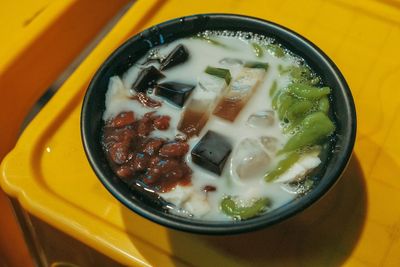
Cendol
A three-part dessert: bright green pandan-flavoured rice flour jellies, a glossy gula melaka syrup, and a generous pour of salted coconut milk, all heaped over shaved or finely crushed ice. The contrast is the point, the sweet coconut and the smoky molasses-like syrup, the cold ice and the chewy jellies. Often served with a spoonful of sweetened red kidney beans for body.
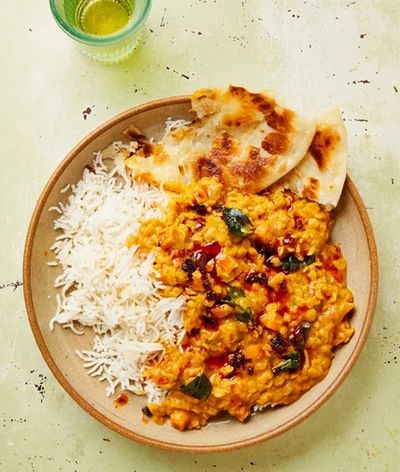
Malaysian Dhal Curry
Yellow split peas (chana dal) simmer with onion, turmeric and tomato until very soft. The lentils break down into a thick soup. Right at the end, a tempering of mustard seeds, curry leaves, dried red chillies, garlic and shallots is poured sizzling-hot over the surface. The aromatic oil seeps through; the dish transforms.
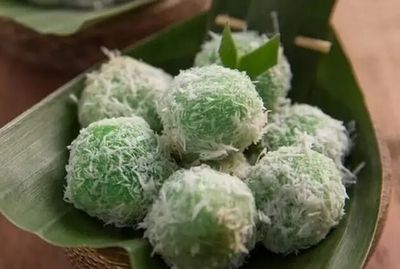
Klepon
Glutinous rice flour mixes with hot pandan-tinted water to a smooth dough; rests for 10 minutes. Palm sugar chops fine. A small ball of dough flattens between palms; a teaspoon of palm sugar nestles in; the dough closes over and rolls to a smooth sphere. Boils briefly in water until they bob to the surface and feel done (about 3 minutes). Drains; rolls in salted fresh grated coconut. Eats cool.
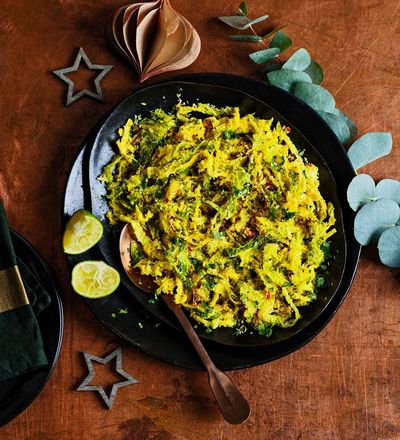
Cabbage Thoran
Cabbage is finely shredded into ribbons. A temper of mustard seeds, urad dal, dried red chilli and curry leaves is bloomed in coconut oil, the shredded cabbage tossed in over high heat, and a coconut paste of fresh coconut, green chilli, garlic and cumin folded through. The dish stays dry and the cabbage retains a slight crunch.