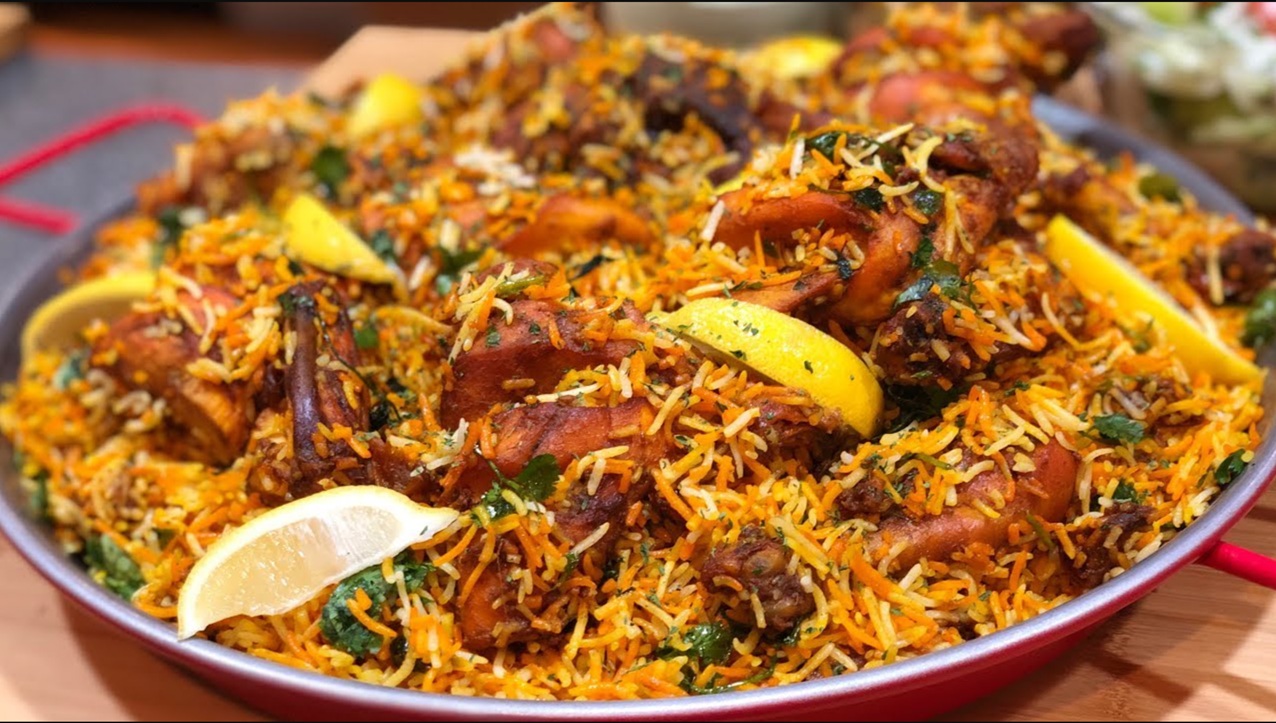
Lahori Mutton Biryani
Lahori-style mutton biryani: bone-in mutton cooked in a slow-simmered masala, layered with parboiled saffron rice and finished under dum until the rice picks up the spice perfume. Heavier and meatier than Hyderabadi; distinct in its use of plums and kewra.
Overview
Mutton is marinated overnight in yogurt with browned onion, ginger-garlic, Kashmiri chilli, garam masala and dried plums (aloo bukhara, a Lahori signature). The marinated meat is slow-cooked in its marinade until tender and the masala has reduced to a thick, oil-slicked gravy. Basmati is parboiled in salted water with a sachet of whole spices. The biryani is built in layers: meat, rice, fried onion, saffron milk, mint, repeated; sealed under a tight lid for the dum.
Ingredients
Mutton marinade
- 1 kg mutton (or lamb shoulder, on the bone, cut into 8 cm chunks)
- 250 g natural yogurt (thick)
- 2 tablespoons ginger-garlic paste
- 2 tablespoons Kashmiri chilli powder
- 1 tablespoon Garam Masala
- 1 teaspoon ground turmeric
- 1 teaspoon ground coriander
- 1 teaspoon black pepper
- 8 dried aloo bukhara (sour plums; soaked 30 min)
- 1 tablespoon crushed kasuri methi
- 2 teaspoons salt
Cooking
- 4 tablespoons ghee
- 2 onions (thinly sliced and fried until deep gold; reserve the cooking ghee)
- 4 green chillies (slit)
- 2 ripe tomatoes (chopped)
Rice
- 600 g aged basmati rice (rinsed)
- 3 litres water
- 2 tablespoons salt
- 2 bay leaves
- 1 cinnamon stick (small)
- 6 cloves
- 6 green cardamom pods (lightly crushed)
- 2 black cardamom pods
- 1 teaspoon cumin seeds
Layering
- ¼ teaspoon saffron threads
- 3 tablespoons warm milk
- 2 tablespoons kewra water (or rose water; both are Lahori traditional)
- A handful of fresh mint leaves (chopped)
- A handful of fresh coriander (chopped)
- 2 tablespoons melted ghee
Method
Stage 1 - Marinate
- In a large bowl, combine the yogurt, ginger-garlic paste, all the ground spices, the soaked aloo bukhara (pitted), kasuri methi and salt.
- Add the mutton and toss to coat.
- Cover and refrigerate for at least 4 hours, ideally overnight.
Stage 2 - Brown the onion and cook the meat
- Heat 4 tablespoons of ghee in a wide heavy pot over medium-high heat.
- Add the sliced onion and a pinch of salt; fry for 12-15 minutes until deep golden.
- Lift about a third of the onion out with a slotted spoon and reserve.
- Add the marinated mutton (with all the marinade) to the remaining onion.
- Cook for 12-15 minutes over medium-high heat, stirring, until the meat is browned and the marinade has tightened to a thick paste.
- Add the chopped tomatoes and slit green chillies; cook for 5 minutes.
- Pour in 400 ml of hot water; bring to a simmer.
- Cover and cook for 1 hour to 1 hour 15 minutes over low heat, until the mutton is fork-tender and the gravy has reduced to a thick masala (very little liquid should remain).
Stage 3 - Parboil the rice
- Bring 3 litres of water to a hard boil with the 2 tablespoons of salt, the bay leaves and all the whole spices.
- Add the rinsed rice.
- Cook for 5-6 minutes, until the grains are 70% cooked (firm at the centre, soft outside).
- Drain immediately in a colander.
Stage 4 - Bloom the saffron
- Crumble the saffron into the warm milk; rest for 10 minutes.
Stage 5 - Layer
- Spread half the parboiled rice over the cooked mutton.
- Scatter half the fried onion, half the mint and coriander.
- Drizzle half the saffron milk and half the kewra water over.
- Add the second layer of rice; top with the remaining fried onion, mint, coriander, saffron milk and kewra.
- Drizzle the 2 tablespoons of melted ghee over the top.
Stage 6 - Dum
- Cover the pot tightly with a sheet of foil pressed onto the rice.
- Press the lid down on top.
- Place over high heat for 3 minutes.
- Reduce to the lowest heat (use a heat diffuser) and cook for 35 minutes.
- Pull from the heat and rest, sealed, for 15 more minutes.
Stage 7 - Serve
- Lift the lid and gently fold the layers from the bottom up so the mutton comes through the rice.
- Serve with raita and a fresh tomato-onion salad.
Notes
- Aloo bukhara is the Lahori touch: Sour dried plums in the marinade. They dissolve into the masala and give the biryani its distinct sweet-sour Lahori flavour. Prunes are a workable substitute.
- Kewra and saffron: Kewra water (pandan flower extract) is the perfume that distinguishes Lahori biryani from Indian counterparts. Find it in any South Asian grocer.
- Don't over-parboil: 70% is the target. Overcooked at the parboil stage means mush after the dum.
Storage
- Refrigerate up to 3 days; reheat covered with a splash of water.
- Freezes well in portions for 2 months.
More like this
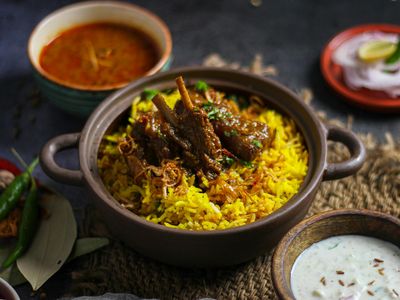
Lahori Mutton Yakhni Pulao
Bone-in mutton (or lamb shoulder, preferably with marrow bones) is simmered for two hours with onion, ginger, garlic, a spice pouch (coriander, fennel, cardamom, cinnamon, peppercorns, cumin) and salt, until the meat is fork-tender and the stock has reduced to a deep, fragrant yakhni. The stock is strained and measured. Basmati is soaked and added to a base of fried onion, whole spices, ginger and the cooked meat; the exact volume of yakhni is poured in, and the rice steams under a tight lid. The bone marrow ends up dispersed through the rice; the smell is unmistakable.
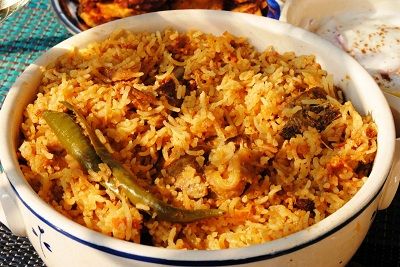
Biryani
Biryani represents the height of Indian culinary technique: multiple components prepared separately with precision, then assembled in layers where flavors permeate through steam cooking. This isn't a one-step rice dish; rather, it's an architectural construction where yogurt-marinated lamb develops tenderization and flavor, then cooks slowly with warm spices and tomato, while basmati rice is independently flavored with saffron infusion and whole spices. Upon assembly, the two elements marry through steam, creating a unified dish where lamb and rice are inseparable in flavor. Traditionally cooked during festivals and royal celebrations, biryani requires patience and multiple steps but rewards with sophistication.
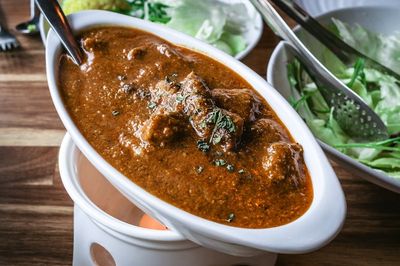
Lamb Achari
A Punjabi-inspired achari curry featuring pickle spices like panch poran and dried chillies, balanced with sweet mango chutney and tangy lime pickle. This dish captures the essence of Indian pickles in a rich, flavorful lamb curry.
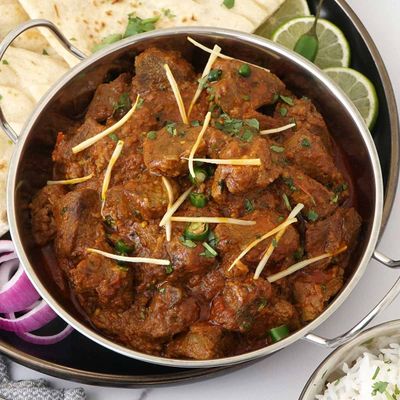
Lamb Karahi
Cooked in a karahi (two-handled wok-like pan) over high heat: lamb chunks simmer with tomatoes, fresh ginger matchsticks and green chillies, with cracked black pepper and ground cumin going in late. No onion in the sauce. Punjabi origin, fiercely fresh-tasting, the antithesis of long-cooked British curry-house style.