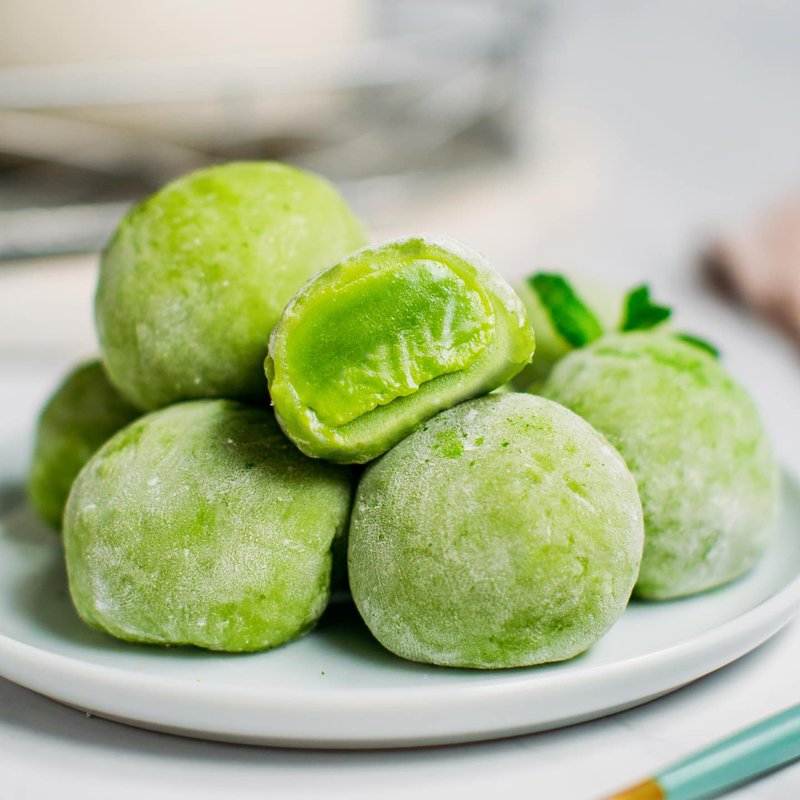
Matcha Mochi
Japan's bright-green mochi: chewy glutinous rice cakes flavoured with matcha, sometimes filled with sweet bean paste. Dusted with starch.
Overview
A mochi dough is made from glutinous rice flour (mochiko / shiratamako), water, sugar and matcha powder, microwaved or steamed until thick and elastic. While still hot, the mochi tips onto a surface dusted with potato starch (katakuriko) + matcha powder to prevent sticking; quickly worked into a thick log. Sweet red bean paste is rolled into 12 small balls and chilled. The mochi log divides into 12 pieces; each piece flattens in a heavily-starched palm; a bean-paste ball sits in the centre; the mochi folds up around to enclose; pinched at the bottom. The smooth side becomes the top. Dusted with extra matcha-and-starch mixture; eaten within a day at room temperature.
Ingredients
Mochi dough
- 200 g glutinous rice flour (mochiko / shiratamako / sweet rice flour - sold at Asian / Japanese shops)
- 80 g caster sugar
- 1 tablespoon matcha powder (good quality culinary matcha - bright vibrant green)
- 280 ml water
Filling (optional)
- 200 g sweet red bean paste (anko - sold at Japanese / Asian shops)
To prevent sticking
- 100 g potato starch (katakuriko - sold at Asian shops; or substitute cornstarch)
- 1 teaspoon matcha powder (for dusting alongside the starch)
Method
Stage 1 - Filling balls
- Divide the red bean paste into 12 portions (about 17 g each).
- Roll each into a small ball.
- Refrigerate 20 minutes (firm balls are easier to enclose).
Stage 2 - Mix the dough
- In a microwave-safe bowl, whisk glutinous rice flour, sugar and matcha.
- Gradually pour in the water, whisking smoothly to avoid lumps.
- The mixture should be smooth and slightly thick - like double cream.
Stage 3 - Cook the dough
- Microwave method: cover the bowl loosely with cling film. Microwave on high 1 minute. Stir vigorously with a damp wooden spoon or silicone spatula. Microwave another 1 minute; stir again. Microwave a final 1 minute. The mochi should be thick, glossy, translucent, and very elastic - it pulls away from the bowl in stretchy strands.
- Steam method: cover the bowl with cling film with a few pierced holes. Place in a steamer over boiling water; steam 15 minutes, stirring at the 7-minute mark.
- The cooked mochi is extremely hot - let it cool 2 minutes before handling, but don't let it cool completely (it gets too firm to shape).
Stage 4 - Prep the work surface
- Mix the 100 g potato starch with 1 teaspoon matcha in a wide bowl.
- Dust a large flat surface (board or tray) heavily with this mixture.
- Have additional starch nearby for your hands.
Stage 5 - Shape
- Tip the hot mochi onto the dusted surface.
- Dust the top with more starch.
- With heavily-starched hands, gently shape into a thick log about 30 cm long.
- Working quickly (mochi firms as it cools), use a sharp knife dusted with starch to cut the log into 12 equal pieces.
Stage 6 - Fill and form
- Take one mochi piece; flatten in a heavily-starched palm into a disc 6-7 cm across.
- Place a chilled bean-paste ball in the centre.
- Bring the edges of the mochi up and around the filling.
- Pinch the seam firmly closed at the top.
- Roll between palms to smooth and form a round ball.
- Place pinched-side DOWN on a tray (the smooth side becomes the top).
- Repeat for all 12.
Stage 7 - Dust and rest
- Brush off any excess starch from the surface (a small dry pastry brush helps).
- Optional: dust the tops with extra matcha for a more vivid green finish.
- Let stand at room temperature 30 minutes - the mochi firms slightly and the flavours settle.
Stage 8 - Serve
- Plate 2 per person.
- Eat at room temperature, with green tea.
- Bite gently - the mochi is stretchy and the filling sweet.
Notes
- Glutinous rice flour, not regular rice flour: Glutinous (sticky / sweet) rice flour gives the chewy stretch that defines mochi. Regular rice flour gives a brittle, crumbly result. They're sold side-by-side; check the packet says "glutinous", "sweet" or "mochiko/shiratamako".
- Microwave is genuinely easier than steaming: Despite being un-traditional, microwave-cooked mochi is the most reliable home method. The texture is identical to steamed when done correctly, and the timing is more controllable.
- Don't let the mochi cool before shaping: Hot mochi is pliable; cool mochi is firm and won't enclose filling. Work quickly. If a batch firms before you've finished shaping, microwave the remaining pieces for 10 seconds to soften.
Storage
- Best within 24 hours of making, at room temperature.
- Don't refrigerate - chilled mochi hardens unappealingly.
- Wrap individually in cling film and freeze 1 month; defrost at room temperature 30 minutes before eating (don't microwave from frozen).
More like this
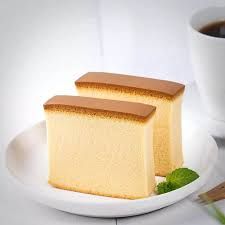
Kasutera
Eggs whisk with sugar over a warm-water bath to ribbon stage, pale, thick, and tripled in volume. This is the most important step and what gives kasutera its fine crumb without baking powder. Honey-and-water-and-mirin warm together; whisk into the eggs. Bread flour (the higher protein gives the right slightly-chewy texture) sifts in and folds gently, no over-mixing. Poured into a tall narrow loaf tin lined with baking paper; a tray of hot water sits below in the oven for moist heat. Baked for 50 minutes at 160°C. As soon as it's out of the oven, the cake is dropped from a height (a small ritual that prevents collapse) and turned upside down onto cling film, wrapped tightly while still warm, and rested overnight. The next day, sliced into rectangles.
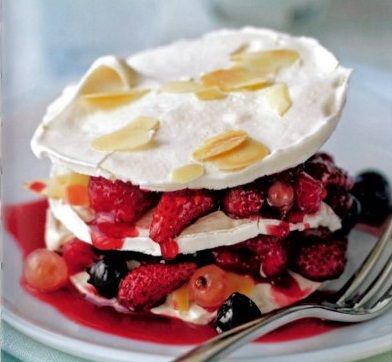
Meringue and Red Berry Layers
An impressive three-layer dessert built with crispy French meringue rounds interspersed with poached berries and their brilliant ruby coulis. This sophisticated construction offers multiple textural contrasts and celebratory visual appeal, perfect for special occasions when simple elegance impresses most.
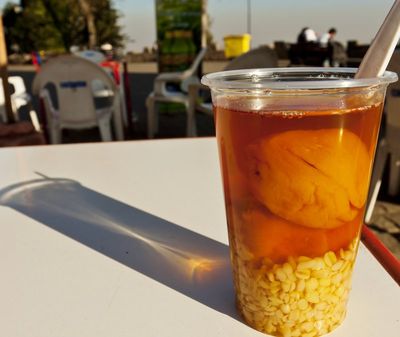
Mote Con Huesillos
Chile's summer drink-dessert, the cold glass that street vendors carry across Santiago in heatwaves and that arrives on every patio table in January. You soak dried peaches overnight to soften them, then simmer with sugar, cinnamon and cloves into a deep amber syrup. Husked wheat (mote, or pearled wheat as a substitute) cooks separately in plain water until tender. Both chill thoroughly. Served in tall glasses with a big spoonful of cooked wheat at the bottom, two peach halves balanced on top, and the cold spiced syrup poured over. You drink it first - the syrup is the reward of a hot afternoon - then spoon up the soft peaches and the wheat at the bottom. A summer ritual.
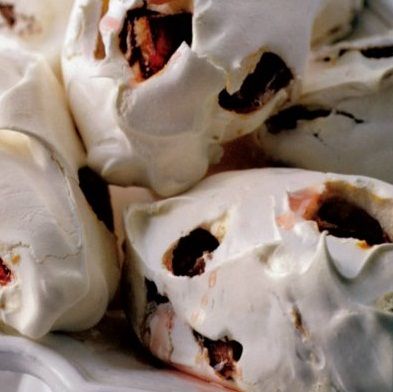
Plum Meringues
Large, soft meringues studded with plums, creating a beautiful contrast between glossy poached fruit and fluffy meringue that softens into the plums. These rustic yet elegant individual showpieces celebrate the simplicity of fresh plums combined with light, delicate meringue.