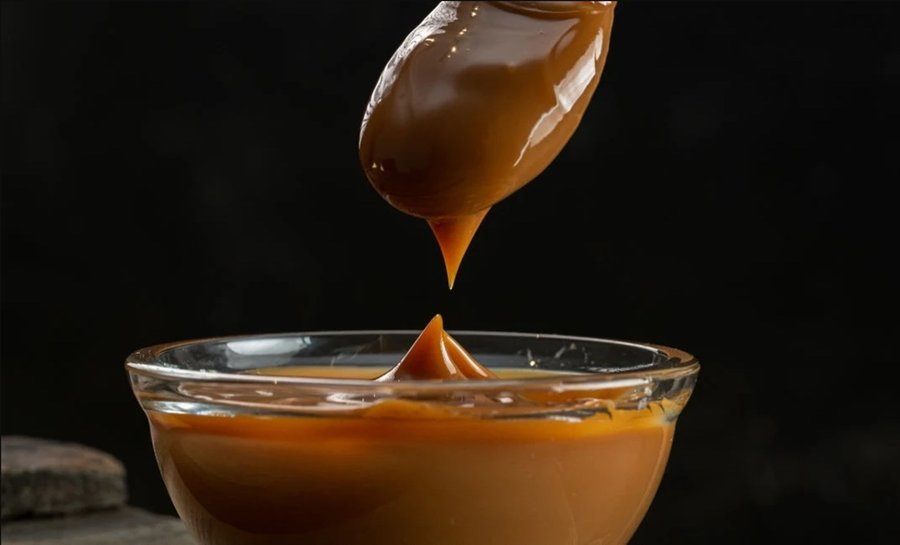
Manjar (Chilean Dulce de Leche)
Chile's dulce de leche: whole milk and sugar slow-simmered with a vanilla pod and a pinch of bicarb until it reduces to a thick, glossy caramel spread.
Overview
Chile's version of dulce de leche, the slow-simmered milk caramel that turns up in alfajores, kuchen fillings and the breakfast spread on a thick slice of bread. You combine whole milk, sugar, a split vanilla pod and a pinch of bicarbonate of soda in a heavy wide pan, then simmer slowly for two to three hours, stirring more frequently as the mixture thickens. The bicarb is the trick - it accelerates the Maillard reaction and is what gives manjar its iconic deep brown colour, where unaided dulce de leche stays paler. You're done when the mixture has reduced by two-thirds and turned the colour of dark caramel. Cool, store in a jar. Spread on toast, sandwich in alfajores, or eat by the spoonful when nobody's looking.
Ingredients
- 2 litres whole milk
- 500 g caster sugar
- 1 vanilla pod (split lengthways)
- ½ teaspoon bicarbonate of soda
- A pinch of salt
Method
Stage 1 - Combine
- In a wide heavy-bottomed saucepan (a Dutch oven works), combine the milk, sugar, split vanilla pod, bicarbonate of soda and salt.
- Place over medium heat; whisk until the sugar dissolves.
Stage 2 - Slow simmer
- Bring to a gentle simmer; reduce heat to low.
- Cook uncovered, stirring occasionally, for the first hour.
- As the mixture thickens (after about 90 minutes), stir more frequently to prevent it scorching at the bottom.
- Continue simmering until the mixture has reduced by about two-thirds and turned a deep caramel-amber colour - total 2-3 hours.
Stage 3 - Test
- Drop a teaspoon on a cold plate; let it cool 30 seconds.
- Run your finger through; the manjar should hold a clear line.
- If too runny, cook another 10 minutes; if too thick, whisk in a splash of warm milk off the heat.
Stage 4 - Finish
- Remove the vanilla pod (scrape any seeds out and stir them back in).
- Pour into clean jars while still warm.
- Cool to room temperature; seal; refrigerate.
Notes
- Wide heavy pan: narrow pans don't evaporate efficiently and you'll cook for hours longer. A wide-mouth Dutch oven is ideal.
- Bicarb is the colour trick: without it the manjar stays pale; with it the Maillard reaction goes faster and you get the iconic deep caramel.
- Stir constantly in the last 30 minutes: the sugar concentration is high enough to scorch easily. Use a long wooden spoon and scrape the bottom corners.
- Don't rush with high heat: boiling instead of simmering breaks the milk proteins and gives a grainy result.
Storage
- Keeps 6 weeks refrigerated in a sealed jar.
- Spreads colder; warm gently to make pourable.
- Doesn't freeze well - texture goes grainy.
- Use as filling for alfajores, layer cakes, panqueques (Chilean crepes), or just spread on toast.
More like this
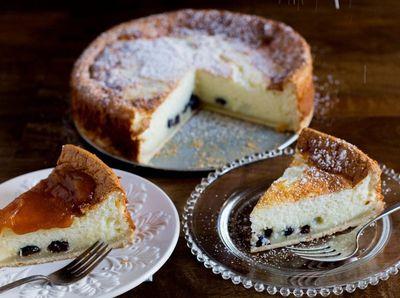
Kuchen Alemán
The German-Chilean fruit cake from the country's Lakes Region, where 19th-century German immigrants brought their baking traditions and adapted them to local fruit. You cream butter with sugar for the base, beat in eggs one at a time, fold in flour and baking powder, and spread the batter into a 23 cm tin. Sliced apples or stoned plums press into the surface (whatever's in season - cherries, peaches and strawberries all work). A streusel topping of flour, butter, sugar and cinnamon crumbles over the top. Forty-five minutes at 180°C until the topping is gold and a skewer comes out clean. A dust of icing sugar before serving. Eaten with afternoon coffee on a Lakes Region veranda, or any Sunday wherever you happen to be.
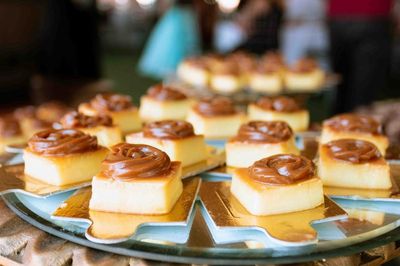
Leche Asada
Chile's homely flan, the simpler cousin of crème caramel that turns up on every household table without ceremony. You whisk eggs gently with sugar and vanilla so you don't beat air in, then drizzle warm milk in slowly to temper. Strain through a fine sieve into an oven dish to catch any cooked egg threads. Forty-five minutes at 180°C and the surface has gone deep gold and the centre wobbles only slightly. Unlike a French crème caramel, leche asada uses no water bath and no caramel sauce. The iconic browned crust comes from direct heat, and the custard underneath stays silky soft. Cools to room temperature, then chills. Sliced into wedges and eaten plain or with a spoon of fresh fruit on the side.
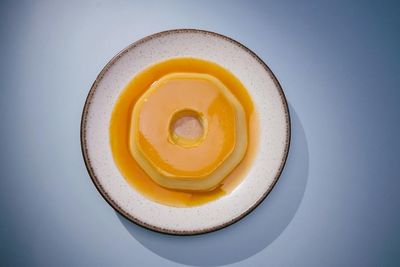
Bánh Flan
A simple custard of whole eggs, condensed milk and evaporated milk is poured over a hard caramel base and baked in a bain-marie at low temperature for a silken set. The caramel melts into a sauce as the flan chills overnight in the fridge. Tipped out onto a plate, the dark caramel runs down the sides and pools at the base.
Bastani Sonnati
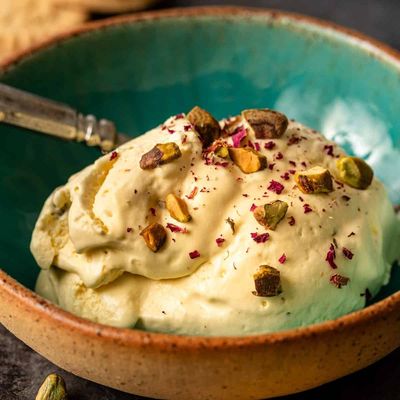
Milk and cream warm with sugar; saffron blooms in milk separately; egg yolks whisk with sugar to ribbons. The hot milk tempers into the yolks; the custard cooks back to coat-the-spoon thickness; off the heat, rosewater, saffron-milk and a pinch of mastic powder fold in. Cooled custard goes into the ice cream churn. As it freezes, ribbons of separately-frozen cream and chopped pistachios fold through.