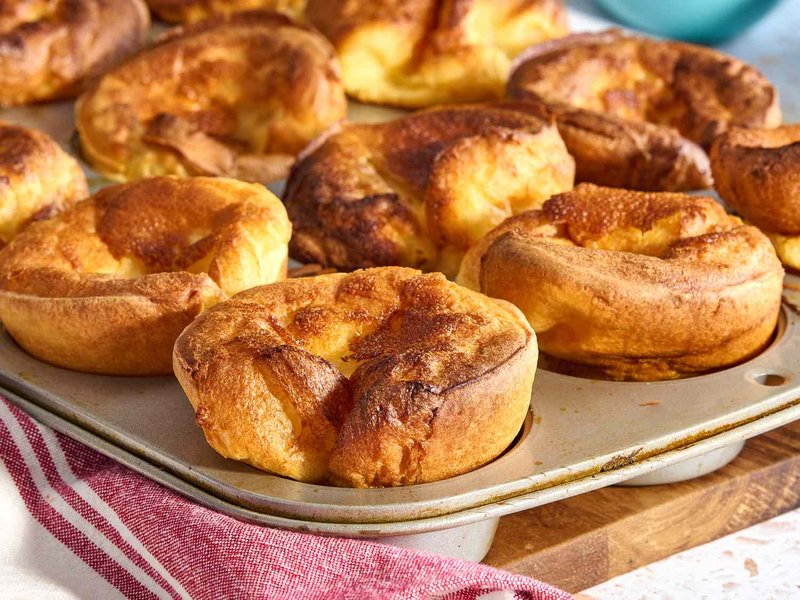
Yorkshire Puddings
The Sunday-roast side: puffed-up batter cups baked in beef-dripping tins, hollow inside, ready to hold a flood of gravy.
Overview
A batter of equal volumes of plain flour, eggs and whole milk (and a pinch of salt) is whisked to a smooth thin consistency, like single cream. Rested for 30 minutes (overnight is even better). A muffin tin or pudding tin is given a teaspoon of beef dripping (or vegetable oil) in each well; the tin goes into a screaming-hot 230°C oven for 8 minutes until the fat is smoking. The batter is poured into the smoking-hot fat, it should hiss and bubble immediately. Back in the oven for 22 minutes, undisturbed (never OPEN THE DOOR). The Yorkshires rise dramatically into puffed golden cups. Served immediately, they collapse as they cool.
Ingredients
- 140 g plain flour
- ½ teaspoon fine salt
- 4 eggs (large, at room temperature)
- 200 ml whole milk
- 50 ml cold water
- 8 teaspoons beef dripping (best - taken from the roast) OR vegetable oil (sunflower works; olive oil burns)
Method
Stage 1 - Batter
- In a wide bowl, whisk flour and salt.
- Make a well; crack in the eggs.
- Whisk the eggs into the flour, gradually drawing in the surrounding flour, until you have a thick paste with no lumps.
- Gradually whisk in the milk, then the water, until you have a thin smooth batter the consistency of single cream.
- (Alternative: blender the lot for 30 seconds; pour into a jug; strain through a sieve into a measuring jug for total smoothness.)
- Rest 30 minutes minimum at room temperature (or up to 12 hours refrigerated).
Stage 2 - Heat the oven (and the fat)
- Heat oven to 230°C (210°C fan).
- Put 1 teaspoon of dripping (or oil) in each well of an 8-cup muffin tin (or in 8 small pudding tins).
- Place the tin on the top rack of the oven.
- Heat 8-10 minutes - the fat should be smoking when you pull the tin out.
Stage 3 - Pour
- Stir the rested batter; pour into a jug.
- Pull the smoking-hot tin out of the oven (oven mitts!).
- Pour the batter into each well to about two-thirds full. The fat should hiss and bubble dramatically as the batter hits it - that's the right temperature.
- Speed matters: pour all 8 wells in under 30 seconds before the fat cools.
Stage 4 - Bake (NO peeking)
- Slide the tin back onto the top rack of the oven.
- Bake 18-22 minutes - DO NOT OPEN THE DOOR for the first 18 minutes. Opening lets cold air in; the puddings collapse.
- After 18 minutes, check through the door window: the Yorkshires should be deep golden brown, puffed dramatically up the sides, with a hollow centre. If pale, bake 2-3 minutes more.
Stage 5 - Serve
- Lift the tin out; release each Yorkshire from its well with a thin knife or fork.
- Serve immediately on the roast plate.
- Top with gravy at the table - pour it directly into the hollow centre.
Notes
- Three equal volumes: The classic recipe rule is equal volumes of flour, eggs and milk. Measure by volume (a teacup of each works), not by weight. The batter should be just thicker than double cream.
- Smoking-hot fat is non-negotiable: Cold-fat Yorkshires don't rise. The fat MUST be smoking when the batter goes in. Pre-heat the tin in the oven for the full 8-10 minutes.
- Don't open the door: Yorkshires rise on steam. Opening the oven door before 18 minutes releases the steam and the puddings collapse. Have faith.
- Resting the batter: Some debates rage about whether resting matters. The case for: hydration of the flour, less foam, better rise. The case against: makes no difference. The compromise: 30 minutes minimum, overnight if you can - never hurts.
Storage
- Eat immediately. Yorkshires collapse as they cool.
- Leftover cooked Yorkshires: reheat at 200°C 5 minutes to puff back up; they won't be as good as fresh but are still edible.
- The batter keeps refrigerated 12 hours.
More like this
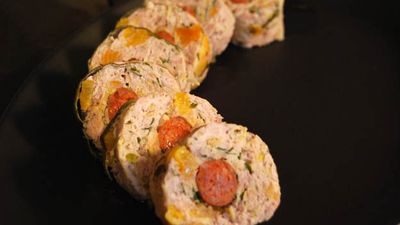
Pork, Apricot and Pistachio Stuffing
This richly flavoured stuffing combines pork sausage meat with sweet dried apricots, crunchy pistachios, and aromatic herbs, with nuggets of pan-fried chorizo tucked into each stuffing ball for a smoky surprise. It is designed to complement roasted game birds such as chicken, poussin, or turkey, providing both a cavity stuffing and individual balls for serving alongside. The combination of textures and sweet-savoury flavours makes it a standout element of a roast dinner.
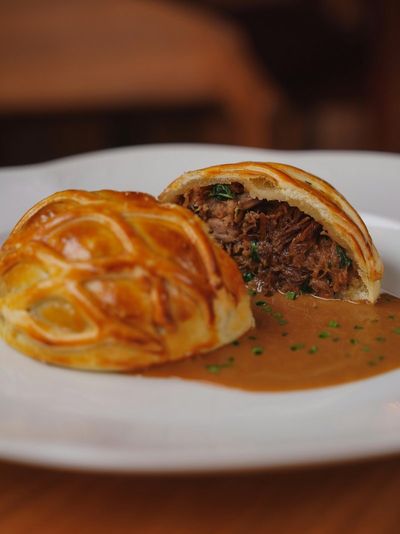
Beef Wellington
The defining British dinner-party showpiece, somewhere between French haute cuisine and English roast tradition, made famous in the modern era by Gordon Ramsay even if the Iron Duke himself probably never ate it. You sear a centre-cut beef fillet hard for colour, smear it with English mustard, wrap it in a tight blanket of mushroom duxelles and prosciutto, then encase the lot in all-butter puff pastry and roast at high heat. The pastry insulates the beef so it cooks gently to medium-rare while the crust crisps to deep mahogany above. The one technical trick the recipe insists on is drying the duxelles thoroughly so the pastry stays crisp underneath rather than going soggy from leaking mushroom water. Sliced at the table into thick rosy rounds, with a red-wine jus and roasted root vegetables on the side, the kind of plate that makes the evening feel like a special occasion before anyone says it.
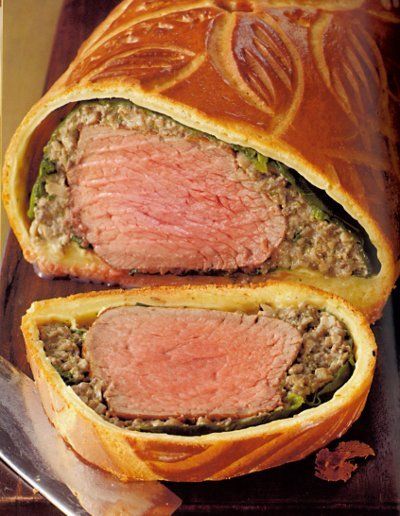
Beef Wellington en Brioche
A showstopping dish featuring a rare beef tenderloin encased in layers of mushroom duxelles, spinach, herb crêpes, and a golden, crispy pastry crust. Each slice reveals a beautiful cross-section of perfectly cooked beef, creamy mushroom filling, and elegant layers. This is fine dining on a plate, impressive enough for the most important dinner party.
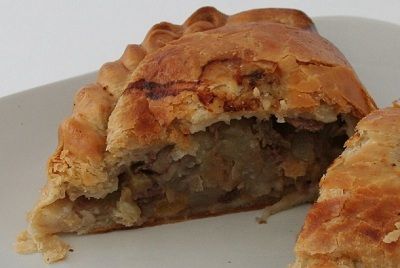
Lamb Pasties
A Cornish-inspired pastry parcel filled with seasoned lamb, tender vegetables, and a rich, savory gravy. These hand-held pastries are perfect for portable meals, picnics, or as a sophisticated starter. The flaky shortcrust pastry encloses a deeply flavorful filling, a British classic that's remarkably easy to prepare at home.