Pecan Nut Pastry Plait
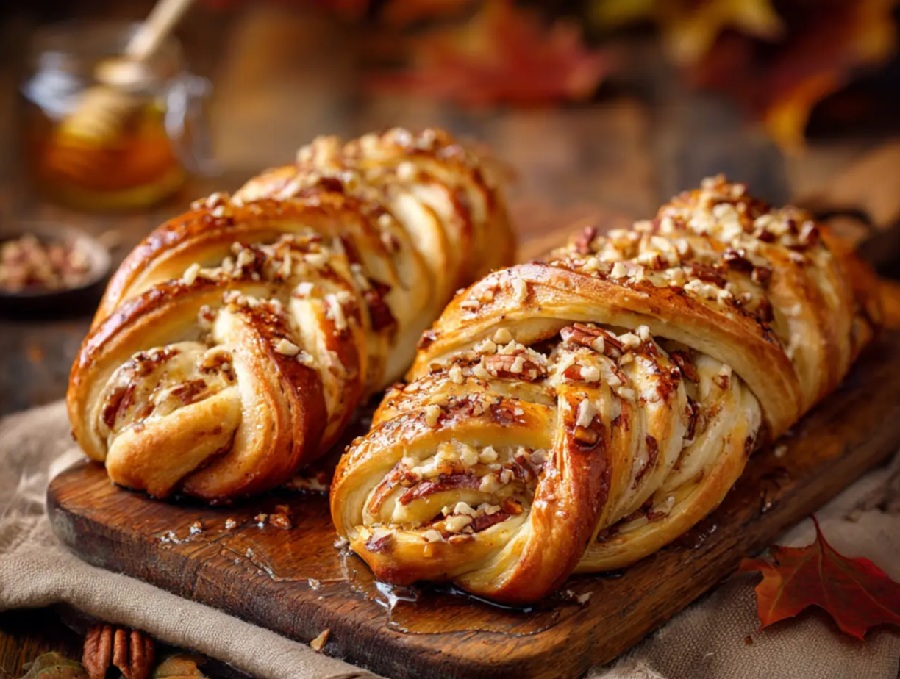
The bakery-window pastry plait, filled with a buttery pecan-and-brown-sugar paste, glazed with apricot jam straight from the oven and finished with a thin water icing drizzle. Cut into slices, eaten with mid-morning coffee.
Overview
A puff-pastry plait built around a thick pecan filling - chopped pecans bound with brown sugar, melted butter, golden syrup, egg yolk and a splash of bourbon. The pastry is rolled into a long rectangle, the filling spread down the centre third, the sides cut into diagonal strips and folded over alternately to form the plaited top. Egg-washed, baked until deep golden, glazed with warm sieved apricot jam to set the colour, drizzled with a thin water icing across the centre.
Ingredients
The pastry
- 500 g all-butter puff pastry (one block or two ready-rolled sheets)
- Plain flour (for dusting)
- 1 egg (beaten, for the wash)
The pecan filling
- 250 g pecan halves (toasted and roughly chopped)
- 80 g soft dark brown sugar
- 80 g unsalted butter (melted)
- 2 tablespoons golden syrup
- 1 large egg yolk
- 1 tablespoon bourbon (or dark rum, or 1 teaspoon vanilla extract)
- ½ teaspoon ground cinnamon
- A pinch of fine sea salt
To finish
- 3 tablespoons apricot jam (sieved)
- 1 tablespoon water
- 80 g icing sugar (sifted)
- 1-2 teaspoons whole milk
Method
Stage 1 - Toast and prep the pecans
- Heat the oven to 180°C fan / 200°C / 400°F. Scatter the pecans on a tray and toast for 5 minutes, until fragrant. Cool and roughly chop - leave some pieces chunky, take the rest to coarse crumbs.
- Set aside 30 g of the chunkiest pieces for the top of the plait.
Stage 2 - Make the filling
- In a wide bowl, combine the toasted pecans (minus the reserved 30 g), brown sugar, melted butter, golden syrup, egg yolk, bourbon, cinnamon and salt.
- Stir until uniformly combined - the mixture should hold together like wet sand. Chill in the fridge for 20 minutes while you prepare the pastry; this firms the filling so it doesn't ooze during baking.
Stage 3 - Roll the pastry
- On a lightly floured surface, roll the pastry into a rectangle about 35 x 28 cm and 3-4 mm thick. (If using ready-rolled sheets, lap them together with a seam and roll briefly to weld.)
- Lift onto a baking-paper-lined tray. Visually divide the rectangle into thirds lengthways with the back of a butter knife (just press lightly - don't cut through).
Stage 4 - Shape the plait
- Spoon the pecan filling down the centre third in an even mound about 2 cm thick. Leave a 2 cm border at the top and bottom of the rectangle.
- With a sharp knife, cut the two side panels into diagonal strips about 2 cm wide, angled towards the bottom of the tray. Each side should have 10-12 strips.
- Fold the top and bottom borders up over the filling first.
- Now fold the strips alternately from left and right, crossing them over the filling like a plait. Each new strip slightly overlaps the previous on the opposite side. The finished plait should look like a fishtail braid.
- Press the ends down to seal.
Stage 5 - Wash and bake
- Brush the entire plait with beaten egg, getting into the strip seams.
- Scatter the reserved 30 g of chunky pecans across the top.
- Bake for 25-30 minutes, until deeply golden, crisp at the edges, and risen visibly. The pastry will have puffed and the filling should be bubbling slightly at the joints.
Stage 6 - Glaze and ice
- While the plait is in its last 5 minutes, warm the sieved apricot jam with the water in a small pan, stirring until smooth and pourable.
- Take the plait out of the oven. Brush the warm apricot glaze immediately over the surface (avoiding the pecans on top - keep them visible). Let cool on the tray for 10 minutes.
- Whisk the icing sugar with 1 teaspoon of milk to start; add more drop by drop until you have a thin pourable icing that flows from the spoon in a continuous ribbon.
- Drizzle the icing back and forth in zigzag lines across the cooled plait. It will set in 10-15 minutes to a soft sheen.
Stage 7 - Slice
- Cool to barely warm before slicing - too hot and the filling slumps; cold and the pastry shatters.
- Cut diagonally across the plait into 8 slices.
Notes
- All-butter puff pastry: the flavour difference between butter puff and standard puff is significant for this kind of bake. Worth the extra cost. Frozen block puff works; ready-rolled sheets save the rolling step.
- Pecan grade: pecan halves toasted briefly and chopped at home give the deepest flavour. Pre-chopped pecan pieces work but stale faster.
- Bourbon alternative: dark rum, brandy, or 1 teaspoon of vanilla extract all work. The alcohol cooks off; the flavour stays.
- Make-ahead: shape the plait through Stage 4, then refrigerate (covered) for up to 8 hours before egg-washing and baking. Add 5 minutes to the bake from cold.
Serving
Warm or at room temperature, cut into slices. Excellent with strong coffee mid-morning. Stretched as a buffet centrepiece by leaving the plait whole and letting people break sections off.
Storage
- In an airtight tin at room temperature for 2 days. The pastry softens slightly overnight; refresh in a 150°C oven for 5 minutes.
- Freezes well after baking, before glazing - wrap tightly, freeze for up to 2 months, defrost in the fridge overnight, refresh and glaze fresh.
More like this
Autumn Fruit Crumble
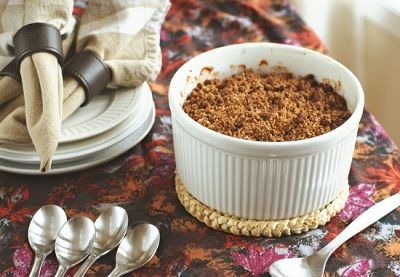
A generous and warming autumnal crumble featuring tart cranberry, fragrant quince, and sweet apples, crowned with a buttery almond crumble topping studded with toasted flaked almonds. This deeply flavored dessert showcases the subtle flavors of fall fruits balanced with sweet spices and served warm for maximum comfort.
Cinnamon Swirl Buns
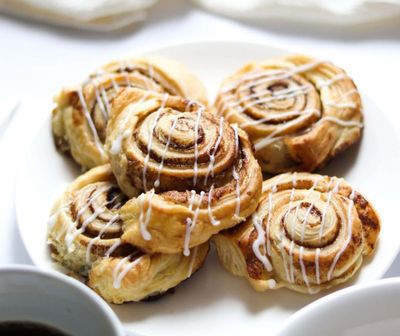
A milk-and-butter enriched dough, kneaded long enough to develop the gluten that gives the buns their pillow-pull texture. Rolled into a rectangle, brushed with melted butter, scattered with a brown sugar-cinnamon-salt mix. Rolled into a tight log, sliced into 12 equal spirals, set in a buttered tin with a small gap between each (so they rise into each other to give the soft pull-apart edge). Risen until puffy, brushed with egg wash, baked. The sugar inside the spiral half-melts into a soft caramel ribbon. Brushed with a warm syrup glaze as they leave the oven and dusted with icing sugar (or topped with a thick water icing) for the bakery-window finish.
Rocky Road Tiffin
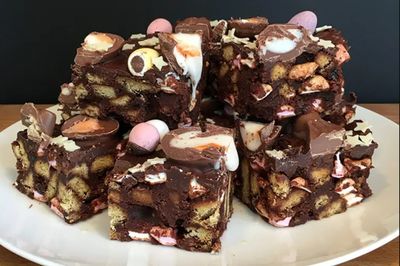
A hybrid: the no-bake biscuit base from a classic Scottish tiffin meets the marshmallow-and-nut load of an American rocky road. The base is digestives crushed mostly fine with some chunkier pieces, melted into butter-cocoa-syrup, mixed with mini marshmallows, glace cherries (optional), chopped pecans or hazelnuts, and chunks of fudge or honeycomb. Pressed into a tin, capped with milk chocolate, criss-crossed with white-chocolate drizzle. The chocolate top sets fast in the fridge; the marshmallows give the bake its characteristic uneven, rocky-looking surface where they push up against the chocolate.
Beef Wellington
The defining British dinner-party showpiece, somewhere between French haute cuisine and English roast tradition, made famous in the modern era by Gordon Ramsay even if the Iron Duke himself probably never ate it. You sear a centre-cut beef fillet hard for colour, smear it with English mustard, wrap it in a tight blanket of mushroom duxelles and prosciutto, then encase the lot in all-butter puff pastry and roast at high heat. The pastry insulates the beef so it cooks gently to medium-rare while the crust crisps to deep mahogany above. The one technical trick the recipe insists on is drying the duxelles thoroughly so the pastry stays crisp underneath rather than going soggy from leaking mushroom water. Sliced at the table into thick rosy rounds, with a red-wine jus and roasted root vegetables on the side, the kind of plate that makes the evening feel like a special occasion before anyone says it.