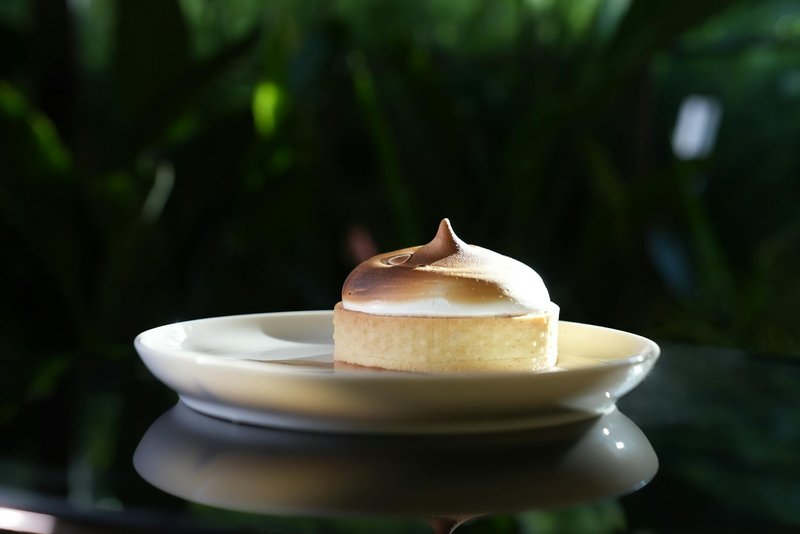
Baked Alaska
To warm the meringue, you can brown it in a very hot oven at 250°C for a minute, instead of using a cook's blowtorch. This gives a lovely contrast to the frozen ice cream.
Overview
A spectacular show-stopping frozen dessert featuring vanilla and coffee ice cream inside a sponge case, completely encased in Italian meringue and briefly torched or baked until golden. This impressive historic dessert creates drama at the table as a frozen filling remains cold while the exterior turns warm and golden.
Ingredients
- 1 vanilla pod (split length-ways)
- 1 tablespoon instant coffee (dissolved in 1 tablespoon warm water)
- 4 tablespoons Grand Marnier
For the sponge
- 4 eggs (separated)
- 3 egg yolks
- 85 grams caster sugar
- 35 grams plain flour
- 40 grams potato flour
- 100 grams icing sugar (sifted)
For the crème anglaise
- 250 ml milk
- 250 ml double cream
- 125 grams caster sugar
- 1 vanilla pod (split length-ways)
- 6 egg yolks
For the meringue Italienne
- 360 grams caster sugar
- 30 grams liquid glucose
- 6 egg whites
Method
For the sponge
- Preheat the oven to 180°C.
- In a bowl, whisk the 7 egg yolks with two-thirds of the caster sugar until you have a ribbon consistency.
- In a separate bowl, whisk the egg whites to soft peaks, then whisk in the remaining caster sugar until the mixture holds firm peaks.
- Carefully fold one-thirds of the whisked whites into the yolks until evenly combined, then gently fold in the rest of the whisked whites, taking care not to overwork it.
- Sift the two flours together over the mixture and gently fold in, stopping stirring as soon as the mixture becomes smooth.
- Spread the sponge mixture in a non-stick loaf tin, 20 - 22 cm long, to two-thirds full.
- Bake for 25 minutes.
- Leave in the tin for 5 minutes, then turn out on to a wire rack to cool.
- Cut a 2 cm slice off the top for the 'lid'.
- Using a knife and a spoon, hollow out the inside of the sponge to create a large cavity.
For the meringue Italienne
- Put 80 ml of water into a heavy-based pan, and add the sugar and glucose.
- Bring to the boil over a medium heat, stirring with a skimmer.
- Skim off any scum and brush down any crystals forming on the side of the pan using a brush dipped in cold water.
- Increase the heat and put a sugar thermometer in the pan.
- When the temperature reaches 110°, start to beat the egg whites in a clean bowl, using an electric whisk, or by hand.
- Keep an eye on the sugar syrup, and remove from the heat the moment it reaches 121°C.
- When the egg whites form stiff peaks, slowly pour in the sugar syrup in a thin, steady stream, whisking constantly as you do so.
- Continue beating on a low speed for about 15 minutes, until the mixture has cooled to about 30°C.
For the crème anglaise
- Scrape the seeds out of the vanilla pod and put them in to the milk.
- Put the milk, cream, two thirds of the sugar and the vanilla pod into a heavy-based saucepan and slowly bring to the boil.
- Meanwhile, whisk the egg yolks and remaining sugar together in a heatproof bowl.
- Continue to whisk until the mixture becomes pale and has a light ribbon consistency.
- Pour the boiling milk on to the egg yolks, whisking continuously, then pour the mixture back in to the saucepan.
- Cook over a very low heat, stirring with a wooden spatula.
- Do not let the mixture boil or it will curdle.
- The crème anglaise is ready when it has thickened slightly - just enough to coat the back of the spatula.
- Immediately take off the heat.
- Unless you are serving the crème anglaise warm, strain through a fine sieve into a bowl set over crushed ice to cool, stirring occasionally to prevent a skin forming.
For the ice cream
- Divide the crème anglaise between 2 bowls.
- Scrape the vanilla seeds into one bowl and whisk to incorporate.
- Add the coffee to the second bowl, whisking to mix well.
- Churn the vanilla ice cream in an ice cream machine for 15 - 20 minutes, then freeze in a suitable container.
- Churn the coffee ice cream in an ice cream machine for 15 - 20 minutes, then freeze in a suitable container.
To assemble
- Brush the Grand Marnier over the inside of the hollowed-out sponge, and over the lid.
- Place the sponge base on a large piece of cling film and fill with alternate scoops of vanilla and coffee ice cream, so that the ice cream comes at least 2 - 3 cm above the top of the sponge.
- Put the lid on top, then bring up the sides of the cling film and wrap the whole dessert.
- Place in the freezer for 1 - 2 hours.
To serve
- Remove the cling film and place the dessert on a heat-proof serving tray.
- Put the meringue into a piping bag fatted with a 1 ½ - 2 cm fluted nozzle and pipe over the top and sides of the dessert to cover it completely.
- With a cook's blowtorch, lightly brown the meringue all over.
- Serve at once, cutting the baked alaska into slices with a very sharp knife dipped in hot water between each slice.
Notes
- The sponge must be completely cooled before hollowing and filling, or the ice cream will melt from contact with residual heat
- Italian meringue made with hot sugar syrup (121°C) is crucial for food safety and proper texture; it's more stable than French meringue when torched or baked
- The ice cream must be frozen solid before adding the meringue coating; any soft spots will cause collapse and melting during warming
- Wrap the filled and coated cake immediately after assembly in cling film to protect it and prevent the meringue from absorbing freezer odors
Serving
Trimmed and torched (or baked) baked Alaska should be served immediately while the meringue exterior is warm and golden and the ice cream inside remains frozen. Serve on elegant plates with a warm chocolate or fruit sauce alongside for luxury and celebration. This is a truly showstopping dessert.
Storage
The individual components can be prepared ahead: the sponge 1-2 days before, the ice cream made ahead and frozen, the Italian meringue made 2-3 hours ahead and kept at room temperature (do not refrigerate). Assemble, wrap, and freeze for at least 2 hours (or up to overnight). Torch or bake only when ready to serve, as the finished baked Alaska does not hold well after warming.
More like this
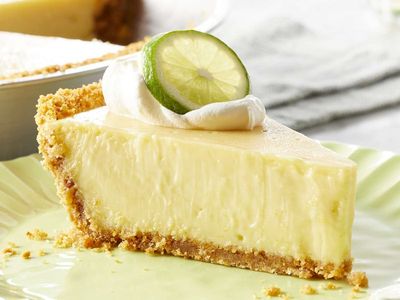
Key Lime Pie
Graham crackers (or digestive biscuits) crush fine, mix with melted butter and sugar, press into a 23 cm pie tin. Bakes for 10 minutes till set. Filling: 4 egg yolks whisk with sweetened condensed milk for 3 minutes till pale and thick. Lime juice (lots, about 150 ml) and zest whisk in. The lime acid begins setting the filling immediately. Pour into the crust; bake for 15 minutes till the filling has just-set with a tiny wobble. Chills for 4 hours. Whipped cream tops at service.
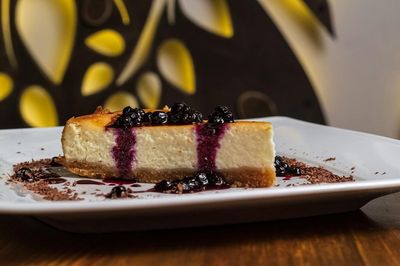
New York Cheesecake
A graham-cracker base is pressed into a 23 cm springform tin and pre-baked for 10 minutes. Filling: cream cheese is softened to room temperature (cold cream cheese gives lumpy batter), then beaten with sugar, eggs one at a time, sour cream, vanilla and lemon. The tin is wrapped in foil so the water bath doesn't seep in. Baked at 160°C in a water bath for 60-75 minutes until the edges are set but the centre wobbles a 7 cm circle. Cooled in the oven with the door cracked for 1 hour (avoids cracks). Chilled overnight. Served chilled.
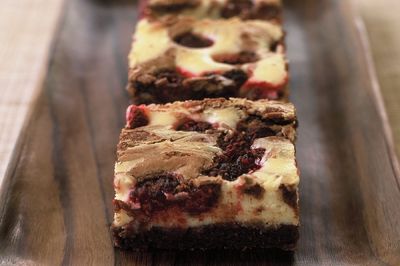
Cheesecake Brownies
Two mixtures, one tin. The brownie batter goes in first: dark chocolate and butter melted, sugar and eggs whisked light, folded together with flour and cocoa. The cheesecake topping is full-fat cream cheese beaten with sugar, an egg yolk, vanilla and a squeeze of lemon - the lemon keeps the white layer bright against the brown. Spooned over the brownie in dollops, then dragged through with a knife to make figure-eight ribbons. Baked low and slow so the cheesecake sets without browning much; cooled fully before slicing.
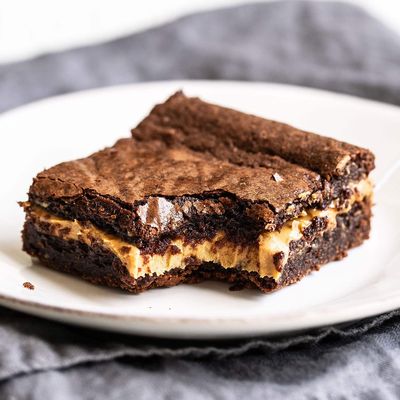
Peanut Butter Stuffed Brownies
The construction trick is the frozen peanut butter slab: 1 cup of commercial peanut butter spread (the firm processed kind, not natural) gets warmed, spread into a tin, frozen until solid. That slab tucks inside the brownie batter mid-tin. The frozen state stops the peanut butter from melting into the chocolate during the bake - it warms back to soft-set fudge texture by the time the brownie's done. Topped with a drizzle of more peanut butter swirled across the surface, baked until edges are set with a centre jiggle, cooled and chilled until sliceable.