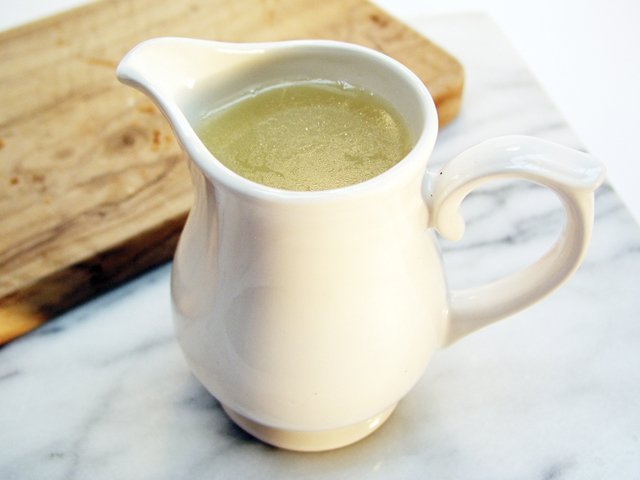
Fish Stock
Delicate and refined, fish stock (fumet de poisson) is the essential foundation for classical French fish sauces, bisques, and fish-based preparations requiring subtle aquatic flavor.
Overview
Fish stock (fumet de poisson) is fundamentally different from meat stocks in technique and timing. The key distinction is speed: fish stock cooks for only 25 minutes (versus longer for meat stocks). Extended cooking produces bitter, unpleasant flavors. The correct technique begins with rinsed fish bones, gently sweated aromatics in butter (not roasted), a wine reduction for acidity balance, followed by brief simmering with lemon and bouquet garni. The result is a delicate, refined stock with subtle seafood character perfect for fish sauces, bisques, and elegant preparations. Success depends on using truly fresh fish bones, precise timing (25 minutes exactly), and maintaining a gentle simmer throughout.
Ingredients
Fish Bones & Trimmings
- 1 ½ kilograms fresh fish bones and trimmings (white fish preferred: sole, turbot, brill, avoid oily fish)
Fat Base
- 50 grams unsalted butter
Aromatics & Vegetables
- 2 leeks (white parts only, washed thoroughly, thinly sliced, approximately 200 grams)
- 75 grams onions (thinly sliced)
- 75 grams fresh button mushrooms (thinly sliced)
Liquid Base
- 200 millilitres dry white wine
- 2 ½ litres cold water
Aromatics & Seasoning
- 1 Bouquet Garni
- 2 slices fresh lemon (with peel)
- 8 white peppercorns (crushed and tied in muslin)
Method
Stage 1 - Prepare Fish Bones
- Rinse 1 ½ kilograms fresh fish bones thoroughly under cold running water.
- Remove scales, blood, viscera, and dark tissue.
- Rinse multiple times until water runs clear.
- Drain thoroughly.
Stage 2 - Sweat Aromatics in Butter
- Melt 50 grams unsalted butter in a large saucepan over low heat.
- Add 2 leeks (white parts only, thinly sliced) and 75 grams onions (thinly sliced).
- Stir to coat vegetables in butter.
- "Sweat" over low heat for approximately 3-4 minutes, stirring occasionally.
- Vegetables should soften without browning.
Stage 3 - Add Fish Bones
- Add the rinsed fish bones and trimmings to the pan.
- Stir gently to distribute bones among vegetables.
- Allow the bones to bubble gently for 2-3 minutes.
Stage 4 - Wine Reduction
- Pour 200 millilitres dry white wine over the bones and vegetables.
- Increase the heat to medium-high.
- Allow the wine to bubble and reduce for approximately 2-3 minutes.
- The volume should reduce by approximately two-thirds.
Stage 5 - Add Water & Initial Cooking
- Add 2 ½ litres cold water to the pan.
- Increase heat to high and bring just to a rolling boil (approximately 5 minutes).
- As soon as the water reaches a full boil, immediately lower the heat to very low.
- The surface should show a bare simmer.
- Using a large, flat spoon, skim the surface thoroughly (4-5 passes).
Stage 6 - Add Aromatic Ingredients & Continue Simmering
- Add 1 Bouquet garni, 2 slices fresh lemon, and 75 grams button mushrooms.
- Stir gently to distribute.
- Maintain a bare simmer.
- Simmer gently, uncovered, for exactly 25 minutes.
- At the 15-minute mark, add the muslin-wrapped 8 white peppercorns.
- Do not stir the stock during cooking.
Stage 7 - Final Straining
- Place a fine-meshed sieve over a clean bowl.
- Gently ladle the stock through the strainer.
- Allow the liquid to flow without forcing.
- Discard all solids.
Stage 8 - Cool & Store
- Allow strained stock to cool to room temperature (approximately 20-30 minutes).
- Prepare a bowl of ice water.
- Place the bowl with warm stock into the ice bath for approximately 15 minutes.
- Decant into storage containers.
Notes
- Fresh Fish Bones Essential: Fresh bones are critical; frozen or old bones produce unpleasant stock.
- White Fish Preferred: Use mild white fish (sole, turbot, brill). Avoid oily fish.
- Cooking Duration Critical: 25 minutes is exact; longer cooking produces bitter flavors.
- Wine Reduction Technique: Concentrates acidity before water addition.
- Butter Sweating: Used for flavor contribution; unsalted butter is essential.
- Stock Clarity: Should be clear and pale golden; cloudiness indicates improper skimming.
Variations
- Red Wine Fish Stock: Substitute dry red wine for white wine.
- Herb-Forward: Add 1-2 sprigs fresh tarragon or dill.
- Saffron Addition: Add ¼ teaspoon saffron (soaked first) 5 minutes before end.
Serving
- Primary Use: Base for classical fish sauces
- Secondary Use: Braising liquid for fish, poaching medium
- Temperature: Heat to steaming (85-90°C); avoid boiling
- Pairing: Delicate white fish, shellfish
Storage
- Refrigeration: 2-3 days in covered container
- Freezing: Up to 2 months
- Lemon Removal: Remove lemon before storing
- Reheating: Thaw in refrigerator, then reheat gently
- Smell Test: Always verify pleasant aroma before use
More like this
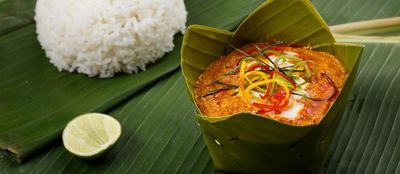
Amok Trey
Cambodia's national dish, the centrepiece of any Khmer feast and the proper-occasion food across the country. You start by pounding kroeung fresh in a mortar (the paste of lemongrass, galangal, turmeric, garlic, shallots, kaffir lime zest and coriander root that defines Khmer cooking, and that no shop-bought paste comes close to matching). The kroeung fries briefly to bloom its aromatics, coconut cream and stock loosen it, and eggs whisk in to set the eventual custard. Chunks of firm white fish fold through with chopped greens (traditionally noni leaves, with spinach or chard standing in), and the whole mix spoons into banana-leaf cups (or small ramekins). Twenty minutes in a steamer turns the custard just-set around the soft fish, and the banana leaves perfume everything. Served from the parcels with steamed rice and a wedge of lime.
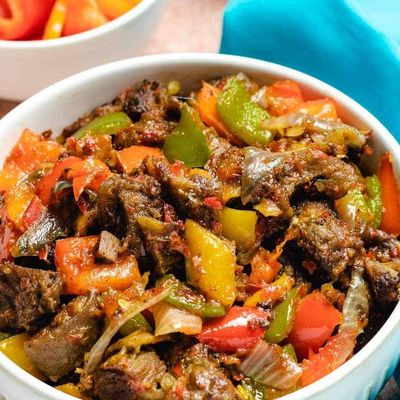
Asun (Spicy Smoky Goat Meat)
Goat meat (bone-in pieces, ideally) simmers in water with onion, garlic, bay, salt and bouillon till tender (45 min). Lifts out; pats dry; grills over high heat (or under a hot grill / on a griddle pan) till charred (8-10 min). Pepper base: scotch bonnet, red pepper, onion, garlic blitz to paste; sautés in oil with curry powder, thyme, ginger till fragrant. Charred meat tosses in the pepper paste; cooks for 5 minutes more; tops with fresh chopped onion. Eats hot.
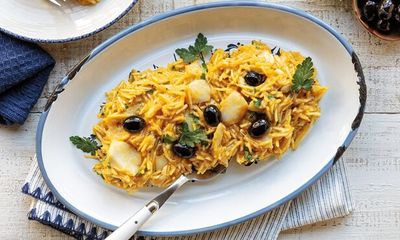
Bacalhau à Brás
Bacalhau à Brás is the dish Portugal turns to when the salt cod, the onions and the eggs all need to find their place in one pan: scrambled together with a tangle of fine matchstick chips so the whole thing reads as somewhere between a hash and a loose carbonara. The salt cod needs the usual day or two of cold soaks to draw the salt down, then a brief simmer to soften it; the onions take their time in olive oil with a few smashed garlic cloves until almost jam-like; the matchstick chips (palha) are fried separately so they stay crisp. Everything comes together in a wide pan, the eggs are whisked in over a low heat, and you stop the moment the eggs coat the cod and potato like a sauce. Never let them set firm. Olives, parsley and a wedge of lemon at the table.
Balachaung
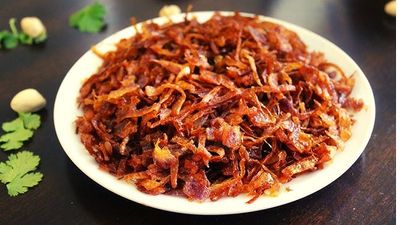
The Burmese dried-shrimp relish that sits in a jar in every Yangon kitchen, the seasoning you reach for to lift a plate of plain rice into something memorable. You pulse-grind dried shrimp to a coarse floss, then fry a pile of sliced garlic and shallot in oil until they're deep golden and crisp. The dried shrimp joins them and toasts to a fragrant rust colour. Chilli powder, fish sauce, tamarind, sugar and a splash of water turn the lot into a sticky red-brown relish. Cook until the oil clears (twelve to fifteen minutes), cool, store in a jar. Eat by the spoonful with rice, or as a side to grilled meat or fish.