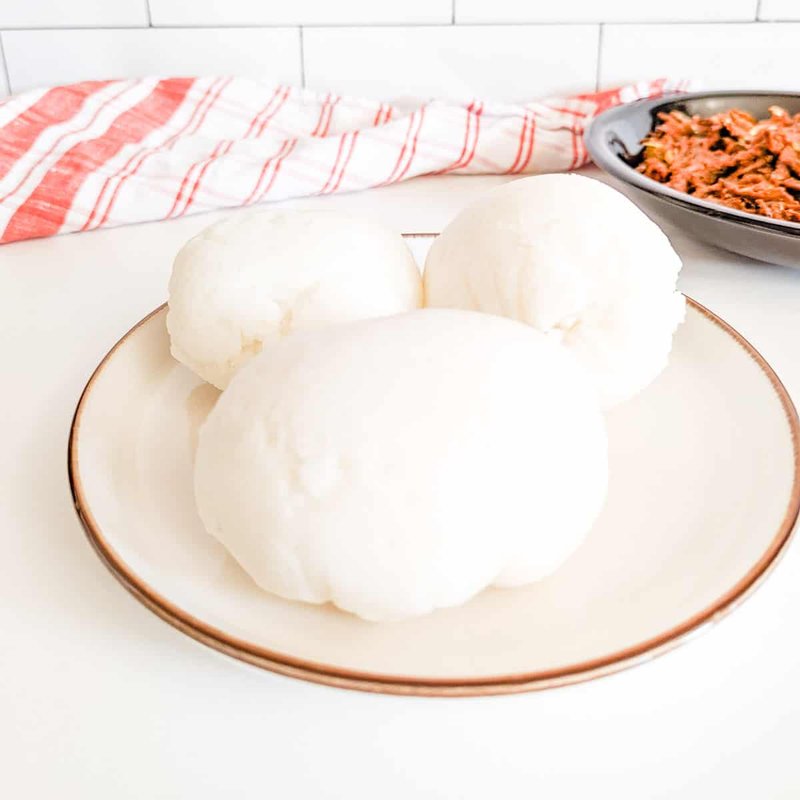
Sadza
Zimbabwe's staple: white-maize meal cooked with water into a stiff glossy porridge. Eaten with the right hand, rolled into a ball and used to scoop stew.
Overview
Cold water and a slurry of maize meal go into the pot first; the pot comes to a boil and thickens to a loose porridge (rapoko / first thickening). More dry meal is added in handfuls, stirred hard with a wooden mugoti (paddle), until the mixture is too thick to stir easily and pulls cleanly from the sides of the pot. The pot is covered and steamed for 5 minutes to finish.
Ingredients
- 500 g white maize meal (mealie meal)
- 1.2 litres water
- ¼ teaspoon salt (optional)
Method
Stage 1 - Slurry
- In a heavy-bottomed pot, whisk 150 g of the maize meal with 400 ml of the water to a smooth slurry (no lumps).
- Add the remaining 800 ml water; bring to a steady boil over medium-high heat, stirring often.
- Once boiling, reduce the heat to medium-low; stir constantly for 4-5 minutes until you have a thick, loose porridge (this is the first cook, sometimes eaten as porridge for breakfast).
Stage 2 - Build to sadza
- Begin adding the remaining maize meal a small handful at a time, stirring hard with a wooden spoon or paddle between each addition.
- After each handful the porridge stiffens; keep going until you've added about 300 g more (you may not use it all) and the sadza pulls clean from the sides when stirred and forms a smooth, dense mass.
Stage 3 - Steam
- Smooth the top; reduce heat to the lowest setting; cover tightly.
- Cook 5 minutes - the steam finishes the inside and removes any raw-meal taste.
- Stir once more to bring it together; turn out onto a wooden board or plate.
Stage 4 - Serve
- Cut into wedges or scoop into balls with a wet hand. Eat warm, scooping stew, dovi or muriwo.
Notes
- The slurry trick: Whisking the cold meal with cold water first prevents lumps. Tossing dry meal into boiling water guarantees them.
- Stir hard: Sadza is built by stirring, not heat. Underworked sadza is sticky and pale; well-worked sadza is glossy and pulls in clean ribbons.
- Mugoti: A flat wooden paddle is the right tool. A wooden spoon works if the handle is sturdy.
Storage
- Best fresh. Eats well cold (rolled into balls and fried in oil for breakfast the next day).
- Don't refrigerate longer than 24 hours - it dries out and reheats badly.
More like this
Maputi
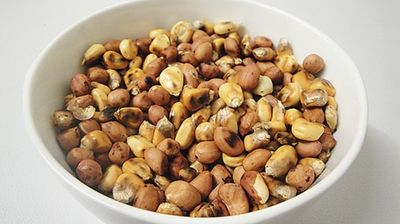
Dried white maize kernels (the same ones that grind into mealie meal) are heated in a heavy dry pan over medium heat. They crackle, jump and split open, some puff slightly, others stay whole and toasted. A pinch of oil keeps things moving; salt finishes. Faster than popcorn, denser, less puffy, more savoury.
Ajad
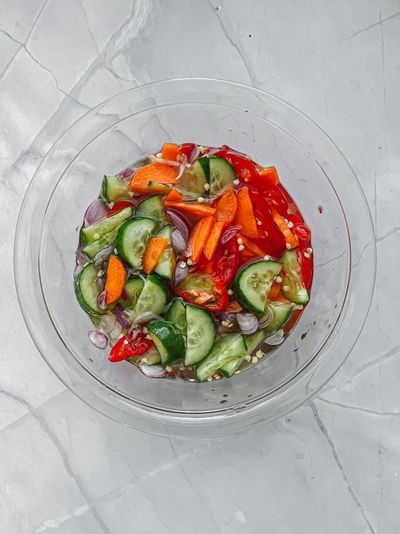
A simple syrup of rice vinegar, palm sugar, water and salt is brought to a gentle simmer to dissolve the sugar, then cooled. Cucumber, shallot and chilli are sliced thin and combined in a small bowl. The cooled syrup is poured over. Rested for 10-15 minutes for the vegetables to wilt slightly into the dressing. Served in small individual ramekins as a dip, OR in a larger bowl as a side, with peanuts sprinkled on top.
Charoset
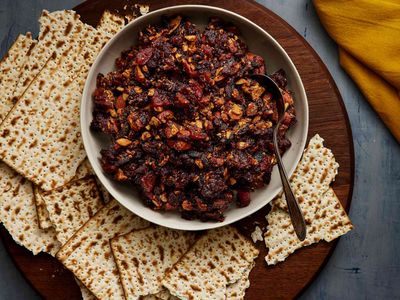
The Ashkenazi version, simplest and most common in northern Europe and the United States: tart apples chopped fine, walnuts crushed coarse, cinnamon, a little brown sugar, and sweet kosher red wine to bind. Stirred together and left for the flavours to meld. Some households add a pinch of ground ginger or a squeeze of lemon. There are dozens of regional variants (Sephardi versions use dates and figs); this one is the most familiar at a North American seder.
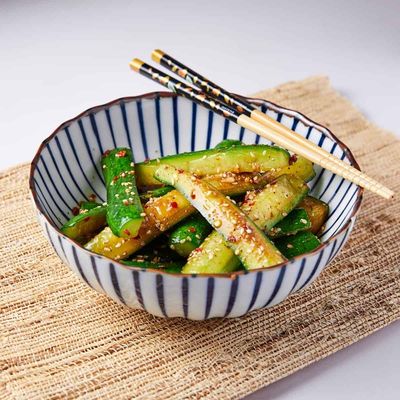
Chinese Pickled Cucumber
Cucumbers are cut into spears (or smashed-and-torn for a rougher texture), salted heavily in a colander 30 minutes to weep, then patted dry. A brine of rice vinegar, sugar, light soy, water, sliced ginger, Sichuan peppercorns and dried red chillies brings to a gentle simmer just to dissolve the sugar; cools to room temperature. The drained cucumber goes into a jar; the cooled brine pours over to submerge; refrigerated for 1 hour minimum (overnight ideal). Eats cold straight from the jar.