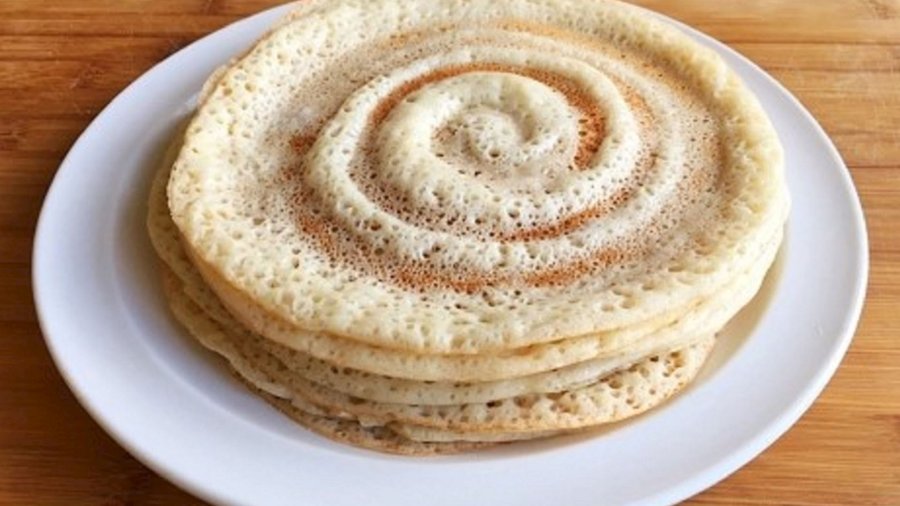
Anjero
Somalia's spongy fermented pancake - close cousin to Ethiopian injera, but smaller and softer. Fermented batter of sorghum or wheat flour pours onto a hot pan; bubbles burst across the top as it cooks; one side only, so the surface stays porous and lacy. Eaten with stews, tea and honey, or rolled around suqaar.
Overview
A simple batter of plain flour, semolina, yeast and warm water is left to ferment overnight; this gives anjero its characteristic sourness and the bubbles that make the texture. The next day, batter ladles onto a hot pan and cooks just on one side, the bottom turns golden, the top sets with a lattice of bubble-craters. Stack between cloths to steam soft.
Ingredients
- 350 g plain flour
- 100 g semolina (or fine cornmeal)
- 1 teaspoon active dry yeast
- 1 teaspoon sugar
- 1 teaspoon salt
- 700 ml warm water
- 1 tablespoon vegetable oil (for the pan; only the first pancake)
Method
Stage 1 - Ferment
- Whisk the flour, semolina, yeast, sugar and salt together.
- Whisk in the warm water gradually to a smooth, pourable batter - about the thickness of double cream.
- Cover with a clean cloth; rest 12-24 hours at room temperature. The batter will rise, fall back, and develop a faintly sour smell.
- Whisk briefly the next day; if too thick, add warm water to bring back to pancake-batter consistency.
Stage 2 - First pancake
- Heat a non-stick frying pan (24-26 cm) over medium heat.
- Brush with a thin film of oil for the first pancake only.
- Pour about 100 ml of batter into the centre; tilt the pan to spread (or, traditionally, leave it alone to spread on its own - anjero is poured thicker than crepes).
Stage 3 - Cook (one side only)
- Cook 90-120 seconds without flipping. Bubbles will rise across the top and burst, leaving a lattice of holes.
- The pancake is done when the top has gone from wet to set-but-spongy and the bottom is light golden.
- Lift onto a plate; cover with a clean tea towel to keep soft.
Stage 4 - Repeat
- Cook the rest, no oil needed after the first.
- Stack as you go, covered.
Stage 5 - Serve
- Eat warm with stew (suqaar, maraq), or with ghee and honey for breakfast.
Notes
- One side only: Flipping gives a flat, dense pancake. The whole charm is the lacy bubbled top contrasting with the smooth bottom.
- Fermentation time: 12 hours minimum; warmer kitchens are faster (8 hours possible). 24 hours gives more sourness.
- Sorghum flour: Traditional Somali anjero uses sorghum flour for some of the wheat. If you can find it, replace 150 g of the plain flour with sorghum.
Storage
- Best fresh. Stack between paper and refrigerate up to 2 days; reheat covered in a low oven.
- Freezes 2 months; thaw before reheating.
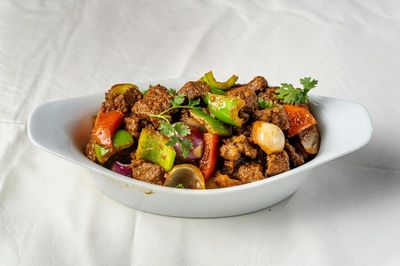
More like this

Sambusa
Spring roll wrappers fold around a filling of cooked lentils, peas, onion, garlic, ginger and a Somali spice mix (xawaash) of cumin, coriander, cardamom and cinnamon. Each is folded into a tight triangle, sealed with a flour-water paste, and deep-fried until golden.

Barszcz Czerwony
The brightest barszcz uses fermented beetroot kvas, beetroot, garlic and rye bread crust steeped in salted water for 24-48 hours, for the sour edge. Faster: simmer roasted beetroot, root vegetables and dried mushroom in vegetable stock with bay, peppercorns and allspice. Strain to clarity; finish with vinegar and a small amount of sugar to balance. Serve hot from a small bowl or mug.
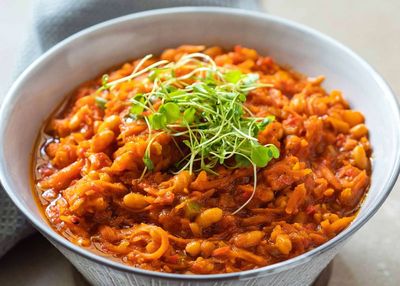
Chakalaka
Onion is softened in oil; garlic, ginger and curry powder bloom. Carrots cook briefly to tender-crisp. Peppers (red and green) and chillies join. Tomatoes simmer everything down. Tinned baked beans go in last with a splash of vinegar to balance. Eaten warm or at room temperature; tastes better the next day.
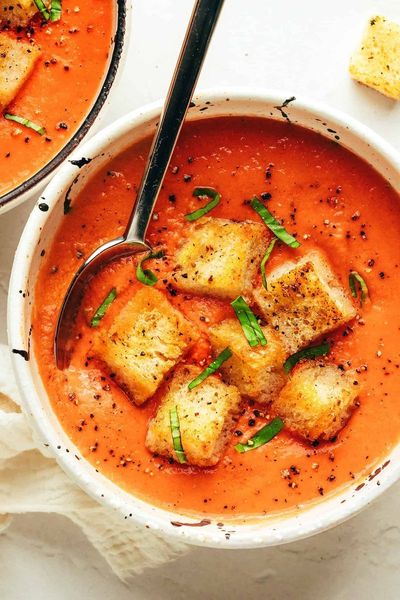
Gazpacho
Ripe tomatoes, cucumber, green pepper and stale bread soak in red wine vinegar with garlic, then blitz with olive oil into a smooth velvety soup. Strained for restaurant texture or left chunky for a more rustic version. Served very cold with a swirl of olive oil and finely diced vegetables on top.