
Barszcz Czerwony
Polish red beetroot broth, clear and brilliant, served at Christmas Eve and many other occasions. A classic Polish barszcz is more refined than Russian borscht - a strained, almost consommé-like broth, often poured over uszka (tiny dumplings) or sipped from a mug. Sour, earthy, lightly sweet.
Overview
The brightest barszcz uses fermented beetroot kvas, beetroot, garlic and rye bread crust steeped in salted water for 24-48 hours, for the sour edge. Faster: simmer roasted beetroot, root vegetables and dried mushroom in vegetable stock with bay, peppercorns and allspice. Strain to clarity; finish with vinegar and a small amount of sugar to balance. Serve hot from a small bowl or mug.
Ingredients
Broth
- 4 beetroots (medium, around 600 g; peeled and chopped)
- 1 onion (large, quartered)
- 2 carrots (chopped)
- 2 celery sticks (chopped)
- 4 garlic cloves (smashed)
- 20 g dried wild mushrooms (or porcini)
- 2 bay leaves
- 6 allspice berries
- 6 black peppercorns
- 1 ½ litres vegetable stock
- 2 tablespoons cider vinegar
- 1 tablespoon brown sugar
- 1 teaspoon salt
- A small bunch of fresh dill (chopped, to serve)
Method
Stage 1 - Build the broth
- Combine the beetroots, onion, carrots, celery, garlic, dried mushrooms, bay, allspice, peppercorns and stock in a large pot.
- Bring to the boil; reduce to a steady simmer.
- Cook 45-50 minutes uncovered until the broth has darkened to deep red and tastes intensely of beetroot.
Stage 2 - Strain
- Strain through a fine sieve lined with muslin (or a clean tea towel) into a clean pot.
- Press the solids gently - don't squeeze them through, you want clarity.
- Discard the solids.
Stage 3 - Balance
- Add the vinegar, sugar and salt.
- Bring back to a gentle simmer.
- Taste; adjust - should be sour-sweet with the beet earthiness behind. Add more vinegar for sharpness, more sugar to round out.
Stage 4 - Serve
- Ladle into small bowls or mugs (Polish barszcz is often served in a mug with a single dumpling).
- Top with chopped dill.
- Serve with uszka (small mushroom-filled dumplings) or pasztecik (savoury pastries) alongside.
Notes
- Clarity is the point: Polish barszcz is a clear broth, not a chunky soup like Russian borscht. Don't squeeze the solids through the sieve; let it drip naturally.
- Vinegar at the end: Adding it during the simmer mutes the colour. Add at the finish for the brightest red.
- Fermented kvas version: For the most authentic flavour, ferment chopped beetroot in salted water with garlic and a piece of dark rye bread crust for 24-48 hours, then strain and use as the souring liquid in place of vinegar. Worth doing once.
Storage
- Keeps 5 days refrigerated; freezes 3 months. Reheat to a simmer; don't boil hard.

More like this

Bigos
Pork shoulder, beef, smoked sausage and bacon all brown separately, then meet sauerkraut, fresh cabbage, dried porcini, prunes, tomato and red wine in a heavy pot. Simmers for 3 hours minimum; reheats over 2-3 days, getting better each round.
Beef Bourguignon (Boeuf Bourguignon)
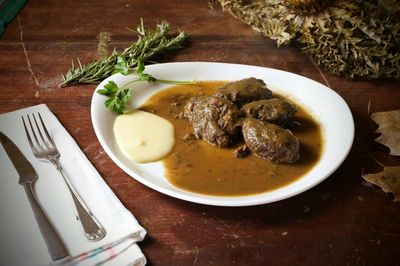
Beef Bourguignon is the quintessential French braise, tender beef cubes slow-cooked in a Burgundy wine sauce enriched with pearl onions, mushrooms, and lardons. The combination of wine, beef stock, and a delicate flour thickening creates a deeply savory sauce that clings to the meat. This dish exemplifies classic French technique: patient cooking, careful skimming, and the balance of richness with restraint.

Chakalaka
Onion is softened in oil; garlic, ginger and curry powder bloom. Carrots cook briefly to tender-crisp. Peppers (red and green) and chillies join. Tomatoes simmer everything down. Tinned baked beans go in last with a splash of vinegar to balance. Eaten warm or at room temperature; tastes better the next day.
Atchara
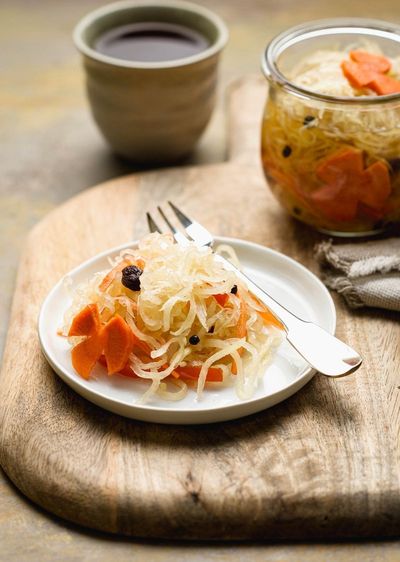
Green papaya is peeled, seeded and shredded on a coarse grater. Carrot, ginger, garlic, red pepper, onion and raisins are all prepared in matching shreds. The vegetables are salted and rested for 1 hour to draw water; rinsed and squeezed dry. A syrup of cane vinegar, sugar and whole peppercorns simmers for 5 minutes. Hot syrup is poured over the vegetables in a sterilised jar. The jar is sealed, cooled and refrigerated overnight before eating. Improves over the following week.