
Bansh
Mongolia's small boiled dumplings: thumb-sized parcels of unleavened dough around seasoned mutton, simmered in salted water or in mutton broth.
Overview
A wheat-flour-and-water dough rests for 30 minutes. Mutton mince mixes with onion, garlic and salt with a splash of water (for juiciness). Dough rolls into a long rope; cuts into small (15 g) pieces; rolls each into a thin disc. A teaspoon of filling sits on the disc; the edges pinch into a small money-pouch shape with a pleated top. Simmer in salted water 10 minutes or float in clear mutton broth.
Ingredients
Dough
- 350 g plain flour
- 200 ml warm water
- ½ teaspoon salt
Filling
- 400 g minced mutton (or fatty beef)
- 1 onion (small, very finely diced)
- 3 garlic cloves (crushed)
- 1 teaspoon salt
- ½ teaspoon black pepper
- 3 tablespoons cold water
To serve
- 1 tablespoon soy sauce
- 1 teaspoon chilli flakes
- 1 tablespoon vinegar (optional)
Optional broth (for bansh-tai-shul)
- 1 ½ litres mutton (or beef stock)
- 1 onion (small, sliced)
- Fresh dill (chopped, to scatter)
Method
Stage 1 - Dough
- Mix flour, salt and warm water to a stiff dough.
- Knead 8 minutes until smooth.
- Wrap; rest 30 minutes.
Stage 2 - Filling
- Combine mince, onion, garlic, salt and pepper.
- Mix in the cold water; knead with your hand for 2 minutes until the meat is sticky.
Stage 3 - Shape
- Divide the dough into 4 portions; keep 3 covered.
- Roll one portion into a long rope 1 ½ cm thick.
- Cut into 15 g pieces (about thumb-tip sized).
- Roll each piece into a thin disc 7-8 cm across.
- Spoon a heaped teaspoon of filling onto the centre.
- Gather the edges up and pinch them into pleats at the top, forming a small purse. Don't seal completely - bansh traditionally has a tiny opening at the top.
- Repeat with remaining dough and filling.
Stage 4 - Cook
- Boiled version: Bring a wide pot of well-salted water to a boil. Drop in bansh in batches (don't crowd). Simmer 8-10 minutes until they float and the dough is translucent.
- Broth version: Bring stock to a simmer with sliced onion and a pinch of salt. Drop bansh in; cook 8-10 minutes until they float.
- Lift out with a slotted spoon.
Stage 5 - Serve
- Boiled bansh: Pile into a bowl. Drizzle with soy, chilli flakes and a splash of vinegar.
- Broth bansh: Ladle into bowls with the broth; scatter dill.
Notes
- Bansh vs buuz: Bansh are smaller and boiled; buuz are bigger and steamed. Both are mutton mince in unleavened dough but the texture is quite different.
- The small opening at the top: Traditional bansh have a tiny gap to let the steam escape during cooking. Don't seal totally airtight.
- The water in the filling: Same trick as khuushuur - water makes the meat juice up inside the dumpling.
Storage
- Make filled raw bansh, freeze on a tray in a single layer, then bag - keeps 3 months. Cook from frozen, adding 3 minutes to the boil.
- Cooked bansh refrigerate 2 days; reheat in simmering water 2 minutes.
Recipes mentioned here

Buuz
A simple flour-and-water dough rests until pliable. The filling is finely chopped (or coarsely minced) lamb or beef mixed with very finely chopped onion, garlic, salt and pepper, minimal additional seasoning, since Mongolian buuz prizes the meat's own flavour. Each wrapper rolls thin in the centre, slightly thicker at the edges. A heaped spoon of filling sits in the middle; the edges pleat together to form a small purse with a hole at the top. Steamed for 15-18 minutes; the wrapper turns slightly translucent.

Khuushuur
A simple flour-water-salt dough rests for 30 minutes. Mutton (or beef) is minced finely with onion, garlic, salt and a splash of water (the water makes the filling steam-juicy inside). Dough is divided, rolled into thin 14 cm discs. A heaped tablespoon of filling sits on each disc; the edges are sealed by pinching and crimping into a flat half-moon. Deep-fried for 3 minutes a side in 180°C oil until blistered and gold.
More like this
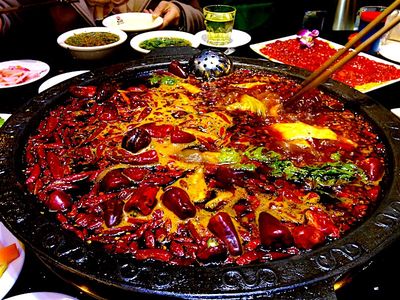
Sichuan Hot Pot
Two pots if you have them: a spicy red broth and a clear chicken broth. The red broth fries doubanjiang and chilli bean paste in beef tallow, adds Sichuan peppercorns, dried chillies, star anise, cassia, bay, ginger and garlic, then stock; simmers for 30 minutes. Diners cook their own ingredients in the simmering pot and dip in a small bowl of sesame oil + chopped garlic + coriander. The mala (numbing-hot) sensation comes from green Sichuan peppercorns + dried chilli together.

Thukpa
A simple wheat-flour dough rests while a clear, ginger-and-garlic-forward broth simmers with beef (standing in for yak), Sichuan peppercorn and a tomato. The dough is rolled and cut into thin noodles, or, if you prefer, store-bought egg noodles. Vegetables and greens go in at the end; fresh coriander and chilli on top. Honest, restorative, not fancy.
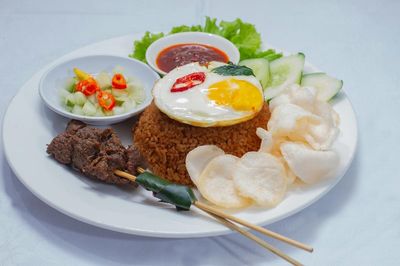
Beef Nasi Goreng
Indonesia's national fried rice, traditionally a way to put yesterday's leftovers to work and now a fixture from street stalls to weeknight kitchens. Beef mince keeps the cooking time short, while kecap manis, soy, shrimp paste and a crumbled stock cube layer the savouriness from four directions. The trick is pressing the rice into the wok and leaving it alone long enough to pick up a proper char before tossing.
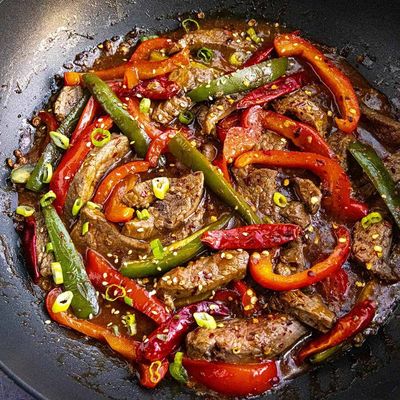
Beef Si Byan
A Burmese curry from the country's Indian-origin community, sitting somewhere between a Madras and a Burmese ohn-no in spice profile. You marinate chunks of beef chuck or shin in turmeric, fish sauce and salt while you fry onions in oil until they're deep brown - that long onion fry is the foundation. The beef browns in the same oil, then ginger-garlic paste, paprika and chilli powder go in, then tomato and water turn it into a stew. Two hours of slow simmer until the meat falls apart at a fork. The signature finish is the see byan, a deep red-orange oil slick that rises to the top of the curry as it reduces, which is what the dish is named for. Eaten with rice or paratha, and a small bowl of pickled vegetable on the side.