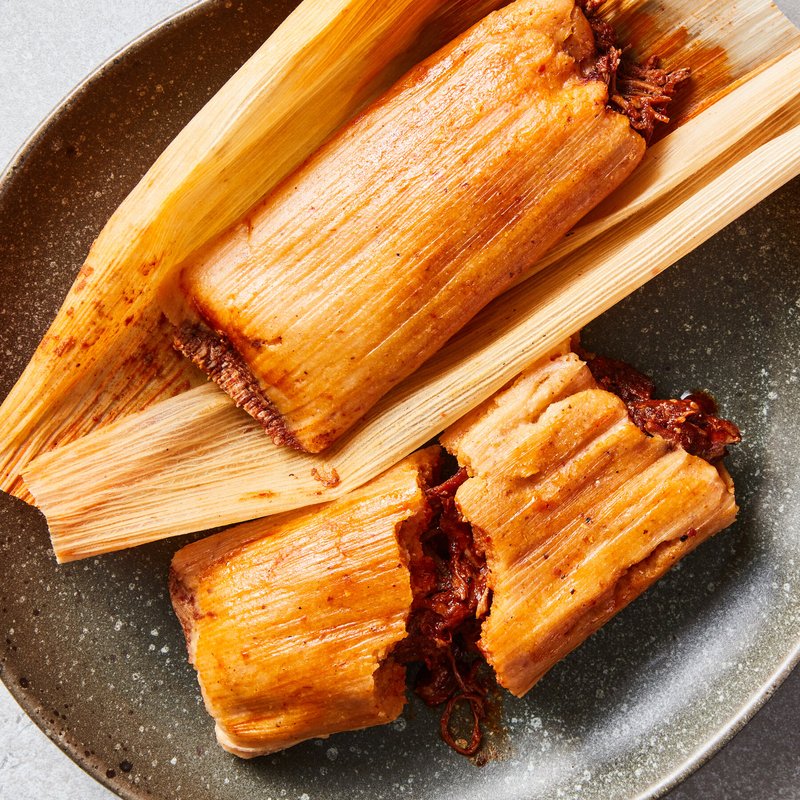
Pork Tamales
Steamed parcels of seasoned masa wrapped in corn husks: a base layer of fluffy corn dough holds a chilli-pork filling, all bound up and steamed for an hour. The labour-intensive Mexican Christmas dish; freezes brilliantly so a marathon batch lasts weeks.
Overview
Masa harina mixes with lard or butter, baking powder and stock into a fluffy dough. A red-chilli pork shoulder filling has been simmered separately. Soaked corn husks get a layer of dough, a spoon of filling, fold and tie. Steamed standing upright for an hour.
Ingredients
Pork filling
- 1 kg pork shoulder (cut into 4 cm pieces)
- 4 dried guajillo chillies (stems and seeds removed)
- 2 dried ancho chillies (stems and seeds removed)
- 4 garlic cloves
- 1 onion (halved)
- 1 teaspoon ground cumin
- 1 teaspoon dried oregano
- 1 teaspoon salt
- 600 ml water
Masa
- 500 g masa harina
- 200 g lard (room temperature) or unsalted butter
- 1 teaspoon baking powder
- 1 teaspoon salt
- 750 ml warm chicken stock (or pork cooking liquid)
Wrapping
- 30 dried corn husks (soaked in hot water 30 minutes until pliable)
Method
Stage 1 - Cook the pork
- Place the pork, halved onion, garlic and water in a heavy pot. Bring to a simmer.
- Cook 1 ½ hours until the pork is tender. Reserve the cooking liquid.
Stage 2 - Chilli sauce
- Toast the dried chillies in a dry pan for 30 seconds a side.
- Soak in just-boiled water for 15 minutes; drain.
- Blend with the cumin, oregano, 200 ml of pork cooking liquid and salt to a smooth sauce.
Stage 3 - Combine pork and sauce
- Shred the pork with two forks.
- Pour the chilli sauce over and stir to coat.
- Cook in a frying pan over medium heat for 5 minutes to thicken slightly. Set aside.
Stage 4 - Masa dough
- Beat the lard with a wooden spoon (or stand mixer) for 5 minutes until fluffy.
- Mix the masa harina, baking powder and salt; add to the lard with the warm stock.
- Beat for 5 minutes until the dough is fluffy enough that a small spoonful floats in cold water (test it).
Stage 5 - Assemble
- Place a soaked corn husk on the work surface, smooth side up, wide end at the top.
- Spread 2 tablespoons of masa across the upper centre of the husk in a 5 mm thick rectangle, leaving 2 cm clear at the top and sides.
- Spoon a tablespoon of pork filling along the centre of the dough.
- Fold the long sides of the husk to overlap; fold the pointed bottom up to seal (the top stays open).
- Tie the parcel with a strip of soaked husk if it doesn't hold its shape.
Stage 6 - Steam
- Stand the tamales open-end up in a large steamer.
- Pour water into the bottom (don't let it touch the tamales).
- Cover and steam for 1 ¼-1 ½ hours, topping up water as needed.
- Test by unwrapping one: the masa should pull cleanly away from the husk.
Stage 7 - Serve
- Serve hot in their husks; diners unwrap their own.
- Serve with extra salsa or chilli sauce on the side.
Notes
- Lard tastes traditional: Vegetable shortening or butter work; lard gives the classic flavour.
- Float test for the dough: Drop a half-teaspoon in cold water. Sinks = beat more; floats = ready.
- Corn husks need full soaking: Dry husks crack when folded; 30 minutes in hot water makes them pliable.
Storage
- Steamed tamales keep 3 days refrigerated; reheat by re-steaming for 15 minutes.
- Freeze (wrapped, after cooking) for 3 months. Steam from frozen for 30 minutes.
More like this
Cochinita Pibil
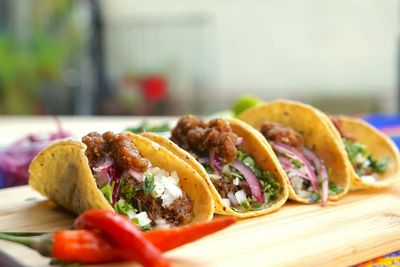
Pork shoulder is rubbed with a paste of achiote, orange and lime juices, garlic, oregano and warming spices, then left to marinate overnight. The pork is wrapped in banana leaves and roasted low and slow until it shreds with two forks. The pibil sits in its own bright red juices; warm corn tortillas and habanero-bright pickled red onions are the only accompaniments needed.
Birria
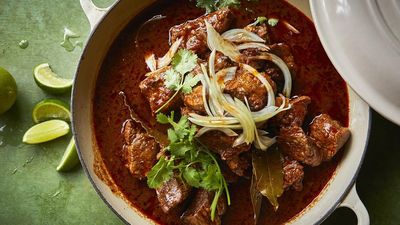
Birria is a Mexican braise of long, patient ambition. Originally a goat or lamb dish from Jalisco, it has long since adopted beef in much of Mexico and almost entirely in the popular taco version. The flavour comes from a layered chile base: guajillo for fruit and colour, ancho for raisin sweetness, pasilla for earthy depth, and a handful of arbol for a sharper heat. These are simmered with onion, garlic, cinnamon and peppercorns, blended smooth with chipotles in adobo and fire-roasted tomato, then poured over seared chuck and short rib for a long oven braise. Three hours later the meat is meltingly tender, sitting in a rust-red consomme that is the whole point: ladled over the shredded beef in a bowl, scattered with raw onion, cilantro and lime, or used to dip crisp taco shells for the now-iconic quesabirria. The recipe takes time but very little technique; almost everything happens unattended in the oven. Plan ahead and make it a day in advance so the flavours settle and the fat lifts cleanly off the top before you reheat.
Mixed Meat and Bean Chilli
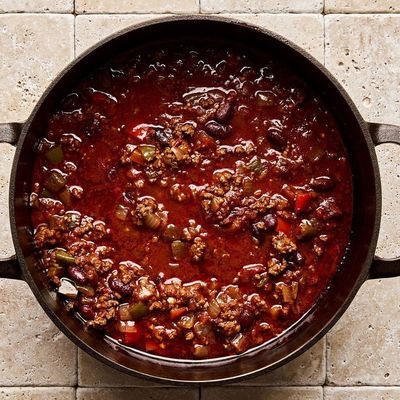
Chilli con carne is a hearty, flavour-packed stew that celebrates bold Mexican spicing combined with slow-cooked beef, beans, and tomatoes. This version builds deep, complex flavours through toasted whole spices, umami ingredients (marmite and soy sauce), and slow simmering. The result is a comforting, warming dish that improves with time and is perfect for feeding a crowd.
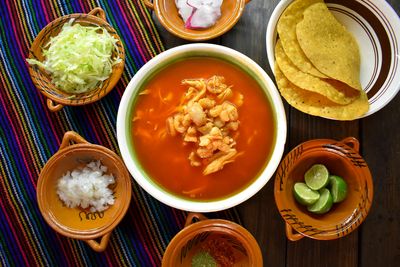
Pozole Rojo
Pork shoulder and pork ribs are simmered with onion, garlic and bay until tender, building a stock that becomes the soup base. Dried guajillo and ancho chillies are toasted, soaked and blended with the cooking stock, then strained back into the pot with cooked hominy and the shredded meat for a final simmer. The bowls are topped at the table with shredded cabbage, sliced radish, dried oregano, lime wedges and tostadas, so each diner finishes their own.