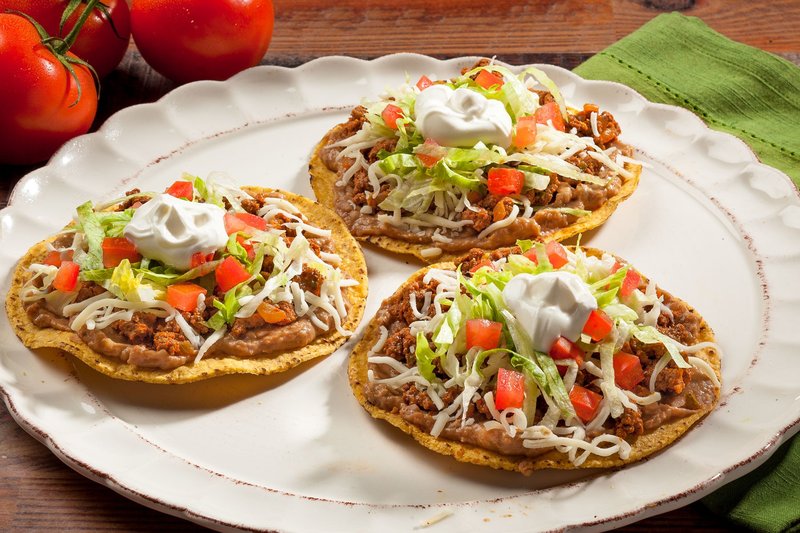
Tostadas
Mexico's crisp tortilla plate: fried-flat tortillas layered with refried beans, shredded chicken, lettuce, tomato, crema and cotija.
Overview
Corn tortillas are crisped: either deep-fried in 1 cm of oil at 180°C for 60 seconds per side, OR brushed with oil and baked at 200°C for 8-10 minutes (lower-fat option). Either way, the result is a flat crisp shell. Toppings build in layers: a base smear of refried beans, then a generous spoon of warm chicken tinga (or any seasoned protein), then cold fresh toppings, shredded lettuce, diced tomato, sliced red onion, sliced avocado, crumbled cotija. Crema drizzles over. Pickled jalapeño tops. Eat by hand (two-hand grip required).*
Ingredients
Tostada shells
- 8 corn tortillas (15 cm - bought, not made)
- 2 tablespoons vegetable oil (for baking) OR 300 ml oil (for frying)
- A pinch of salt
Chicken tinga (a quick seasoned-chicken topping)
- 400 g cooked shredded chicken (poached or rotisserie)
- 2 tablespoons vegetable oil
- 1 onion (small, sliced thin)
- 3 garlic cloves (sliced)
- 2 chipotles in adobo (chopped - plus 1 tablespoon of the adobo sauce)
- 1 (400 g) tin chopped tomatoes
- 1 teaspoon dried oregano
- 1 teaspoon ground cumin
- ½ teaspoon salt
- ½ teaspoon black pepper
To assemble (per tostada)
- 1 tablespoon warm refried beans (see refried-beans.md)
- 2 tablespoons chicken tinga
- A small handful shredded iceberg lettuce (about 20 g)
- 2 tablespoons diced tomato
- 1 tablespoon sliced red onion
- 2 slices avocado
- 1 tablespoon crumbled cotija cheese (or queso fresco, or feta)
- 1 tablespoon Mexican crema (or thinned sour cream)
- 2-3 slices pickled jalapeño
- A few coriander leaves
- A wedge of lime
Method
Stage 1 - Make tostada shells
- Fried version (the classic, crispiest): Heat 1 cm of oil in a wide pan to 180°C. Slide a tortilla into the oil; fry 30-60 seconds per side until golden and crisp; lift onto kitchen paper. Sprinkle with a pinch of salt. Repeat for all 8.
- Baked version (lighter): Heat oven to 200°C (180°C fan). Brush each tortilla on both sides with oil. Arrange on a baking tray in a single layer. Bake 8-10 minutes, flipping halfway, until golden, crisp, and slightly curled at the edges.
Stage 2 - Chicken tinga
- Heat oil in a wide pan over medium heat.
- Add sliced onion; cook 5 minutes until soft.
- Add garlic; cook 1 minute.
- Add chipotles, adobo sauce, chopped tomatoes, oregano, cumin, salt and pepper.
- Simmer 8 minutes, mashing the tomatoes with a wooden spoon, until reduced to a thick sauce.
- Stir in the shredded chicken; cook 3 minutes to warm through and coat.
- Taste; adjust salt.
Stage 3 - Prep the cold toppings
- Shred the lettuce.
- Dice the tomato; slice the onion thinly; slice avocado.
- Crumble the cheese.
- Thin the crema with a splash of milk if too thick.
Stage 4 - Assemble (just before serving - assembled tostadas go soggy)
- Lay tostada shells on a board or platter.
- Spread 1 tablespoon of warm refried beans on each.
- Top with 2 tablespoons of chicken tinga.
- Pile on shredded lettuce.
- Add diced tomato, sliced onion, avocado slices.
- Sprinkle crumbled cheese.
- Drizzle crema in a zigzag.
- Top with pickled jalapeño slices and a few coriander leaves.
Stage 5 - Serve
- Plate 2 tostadas per person; offer lime wedges on the side.
- Eat with hands, holding the tostada flat between thumb and fingers (the corners crack if you flex it - bite carefully).
Notes
- Crisp the shells well: Soggy shells are sad. Whether frying or baking, push for deep golden colour - the shells need to be crisp enough to hold the toppings without collapsing.
- Assemble at the last moment: Pre-assembled tostadas go soggy within 10 minutes. Lay out all the toppings; assemble at the table or just before serving.
- Toppings are flexible: Tinga is just one option. Pulled pork carnitas, refried beans alone (vegetarian), ceviche-marinated white fish, or grilled prawns all work. Tostada de tinga is the most common Mexican home version.
Storage
- Tostada shells, plain (no toppings): keep airtight at room temperature 1 week. Re-crisp at 200°C 3 minutes if they soften.
- Chicken tinga: refrigerate 4 days; reheats well; freezes 2 months.
- Don't assemble ahead.
Recipes mentioned here
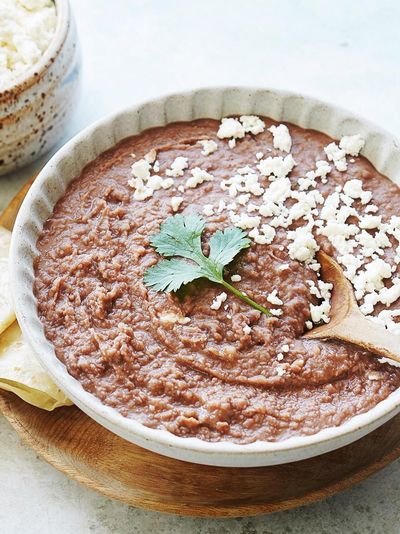
Refried Beans
Dried pinto beans soak overnight (or quick-soak: 1 hour after boiling). They simmer slowly with halved onion, garlic, bay leaves and a pork bone (or salt + epazote leaves) until very tender, about 1 ½ hours stovetop, 30 min pressure cooker. The cooking liquid is reserved. Lard (or bacon fat, or oil, but lard is traditional) melts in a wide pan; diced onion fries to deep gold; the cooked beans go in by spoon, with a ladle of cooking liquid. Mashed with a potato masher to a chunky paste (or pureed smooth, depending on preference). Cooked another 10-12 minutes, stirring, until the beans thicken and develop a slight crust at the edges of the pan. Cumin and salt to season. Topped with crumbled cotija or queso fresco, chopped coriander, sliced jalapeño.
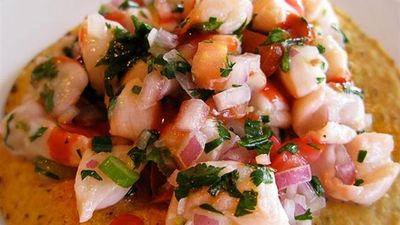
Ceviche
Ceviche is a vibrant, no-cook appetizer in which fresh seafood is "cooked" by the acidity of lime juice, taking on a firm, opaque texture while retaining a wonderfully fresh flavour. The addition of mango, citrus segments, and fresh chilli creates a bright, tropical balance of sweet, sharp, and heat.
More like this
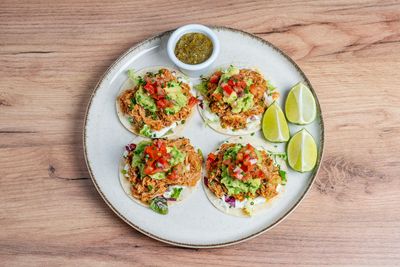
Tinga de Pollo
Chicken thighs are poached with onion, garlic and bay until just cooked, then shredded with two forks. A sauce is built separately: sliced onion is caramelised, then chipotles in adobo and tinned tomatoes are blended in and simmered down with the poaching liquor. The shredded chicken is folded back through the sauce so every shred picks up the smoke and acidity. Spoon onto warm tostadas with avocado, crema and crumbled queso fresco.
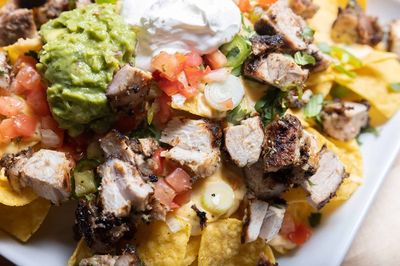
Cheesy Jerk Chicken Nachos
A Caribbean-American fusion that works because both food cultures speak the language of "everything on one tray". The base is American nachos: tortilla chips, melted cheese, black beans. On top sits jerk-marinated chicken thigh, which carries the dish's flavour, allspice, Scotch bonnet, nutmeg, cinnamon, thyme, soy and brown sugar blended into a wet jerk paste, marinated into the meat overnight, then oven-baked and sliced. The fresh element on top is a Trinidadian-style fruit chow: diced mango, pineapple, red bell pepper and red onion dressed with lime juice and cilantro. The chow is what makes this work; without it the nachos are just spicy meat-and-cheese, with it the dish has acid, crunch and sweetness to cut through the richness. Smell is melted cheese hitting jerk seasoning, with a citrus-tropical lift from the chow on top. Not difficult but it's three components running on different timelines, so plan ahead. A modern party-and-Super-Bowl-tray dish rather than something a Kingston grandmother makes, popularised by Caribbean-American food bloggers in the 2010s.
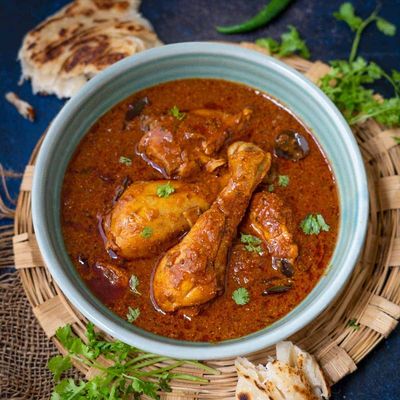
Andhra Chicken Curry
Chicken thighs are marinated briefly with turmeric, ginger-garlic paste, yogurt and a pinch of red chilli. A dry-roast of poppy seeds, sesame seeds, coconut, fennel, coriander and dried red chillies is ground with a splash of water into a coarse paste. The base is built with shallots, curry leaves and tomato; the chicken is browned in stages; and the masala paste is folded in for the long, gentle simmer. Tamarind and a curry-leaf temper finish.
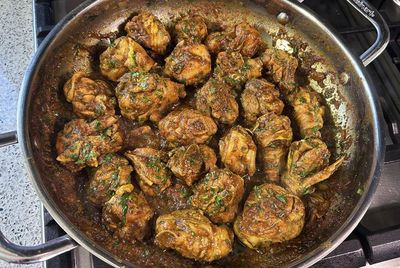
Bunjay-Style Curry Chicken
A dry curry rather than a saucy one, "bunjay" is Trinidadian patois for "fry-down", the technique of cooking meat in its own juices until the gravy completely disappears and the spices coat the surface of the meat in a sticky, glaze-like crust. The flavour is concentrated rather than diluted; nothing's been thinned with water or coconut milk, so what you taste is bone-in chicken, rendered chicken fat, and toasted spice. The spice mix is the East Indian Trinidadian signature: turmeric for colour and earth, roasted geera (toasted cumin, ground) for nuttiness, anchar masala for tang, regular curry powder for breadth. The pan oil splits and separates around the chicken at the end, which is the visual cue you're looking for. Smell when the curry powder hits hot oil is deeply aromatic, almost incense-like. Not difficult but it requires attention during the cook-down phase; if you walk away the curry burns onto the bottom of the pan. A Trinidadian household staple, eaten across the country with white rice and dhal, and a clean example of how Indian indentured labourers' descendants in the Caribbean evolved a distinct curry tradition over 150 years.