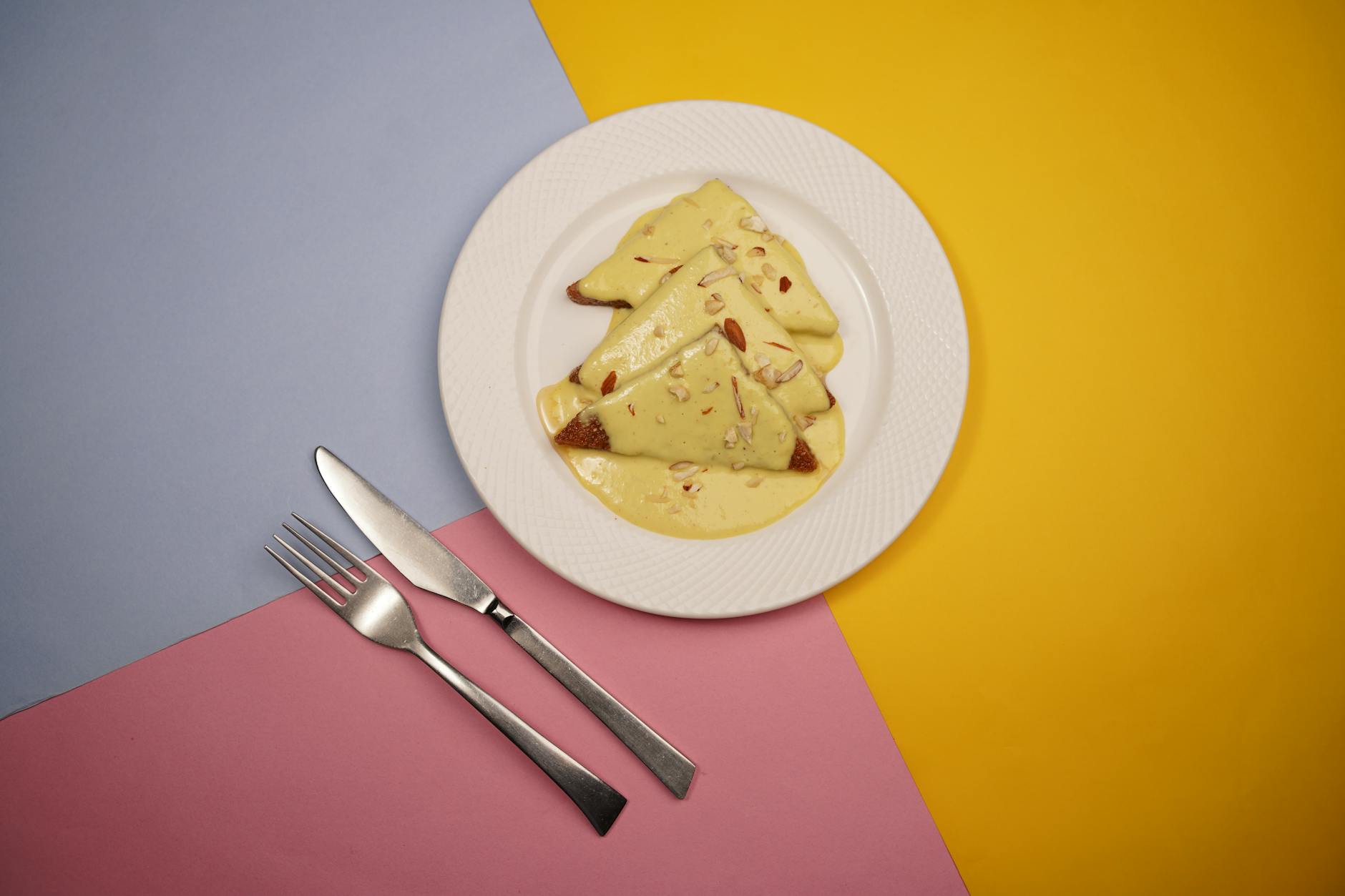
Lahori Shahi Tukda
Royal bread pudding: triangles of white bread fried in ghee until golden, soaked in a saffron-cardamom sugar syrup, then crowned with thickened cream and a scatter of nuts. A Mughal inheritance from Lahore's Old City sweet-makers.
Overview
Slices of white bread are trimmed of their crusts and cut into triangles, then fried in ghee until deep golden. A sugar syrup is made fragrant with saffron, cardamom and rose water. A second pan reduces milk to a thick rabri (the milk-cream topping). The fried bread triangles are dipped briefly in the syrup so they soak it up without going mushy, layered onto a serving plate, and topped with the rabri. Toasted nuts and silver leaf finish.
Ingredients
Bread
- 8 slices of thick-cut white bread (day-old works best; cut the crusts off and slice each piece into 4 triangles)
- 6 tablespoons ghee (for shallow-frying)
Sugar syrup
- 200 g caster sugar
- 200 ml water
- ½ teaspoon saffron threads
- ½ teaspoon ground cardamom (or 4 pods, lightly crushed)
- 1 tablespoon rose water (or kewra water)
- ½ lemon (prevents crystallisation, juice)
Rabri (thickened cream)
- 750 ml full-fat milk
- 100 ml double cream
- 50 g caster sugar
- ½ teaspoon ground cardamom
- 2 tablespoons fine semolina (optional, for body; speeds the reduction)
To finish
- 30 g flaked almonds (lightly toasted)
- 30 g pistachios (slivered)
- 1-2 sheets of silver leaf (vark; optional)
- A few extra saffron threads (for the look)
Method
Stage 1 - Reduce the rabri
- Pour the milk and cream into a wide, heavy-bottomed pan.
- Bring to a boil, then reduce to a low simmer.
- Cook for 25-30 minutes, stirring every 3-5 minutes (scrape the bottom to prevent burning), until the milk has reduced by half and thickened.
- Add the sugar, cardamom and the semolina (if using).
- Cook for 5 more minutes; the rabri should now coat the back of a spoon.
- Pull from the heat and cool to warm.
Stage 2 - Make the sugar syrup
- While the milk reduces, combine the sugar and water in a saucepan over medium heat.
- Stir until the sugar has dissolved.
- Bring to a simmer and cook for 5 minutes (the syrup should thicken slightly but still pour freely).
- Add the saffron, ground cardamom, rose water and lemon juice.
- Stir, then pull from the heat.
Stage 3 - Fry the bread
- Heat 3 tablespoons of the ghee in a wide pan over medium heat.
- Add 6-8 bread triangles (work in batches).
- Fry for 1-2 minutes a side, until deep golden.
- Lift onto kitchen paper to drain.
- Repeat with the remaining bread and ghee.
Stage 4 - Soak
- Bring the sugar syrup back to a gentle warmth (don't boil).
- Dip each fried bread triangle in the warm syrup for 5-10 seconds (long enough to absorb but not collapse).
- Lift out with a slotted spoon and arrange in a single layer on a serving plate.
Stage 5 - Top with rabri
- Spoon the warm rabri generously over the soaked bread (about 2 tablespoons per triangle).
- Scatter the toasted almonds and pistachios over.
- Lay the silver leaf gently across (if using).
- Garnish with a few saffron threads.
Stage 6 - Serve
- Serve immediately while the rabri is warm, or chill for 1 hour for a cold dessert (also traditional in Lahore).
Notes
- Day-old bread is the dish: Fresh bread falls apart in the syrup. Stale bread soaks up the syrup and holds its shape.
- Don't over-soak: 5-10 seconds in the syrup is the target. Longer and the bread loses its crisp golden shell and turns mushy.
- Rabri is the soul: A thin, watery topping makes the dessert feel cheap. The 30-minute slow reduction is what gives the rabri its restaurant-style body.
Storage
- Refrigerate up to 2 days. The bread softens further but the flavour holds.
- Doesn't freeze well.
More like this

Somlói Galuska
Three thin sponges bake side by side or in batches: one vanilla, one cocoa, one walnut. Each is moistened with a warm rum-citrus syrup and layered in a deep dish with raisins, walnuts and a vanilla pastry-cream-style filling. The whole thing chills overnight so the layers meld. Served by scooping (galuska means "dumpling", referring to the soft scoops), drowned in warm chocolate sauce and crowned with cold whipped cream.
Lahori Gajar Halwa
Red winter carrots are grated coarsely on a box grater. The grated carrot is simmered with full-fat milk over medium heat, stirred frequently as the milk reduces and the carrots take on its colour and fat. After about 45 minutes the milk has cooked down to a thick paste with the carrots; sugar is added (which releases more water briefly), then ghee, cardamom and the dish is fried-dried over higher heat for the final 15 minutes until thick, dark and oily-glossy. Khoya (reduced milk solids) is the traditional finish; condensed milk is the modern shortcut.
Apfelstrudel
A simple flour-egg-oil dough kneads until silky, rests so the gluten relaxes, then stretches over a floured cloth until you can read newsprint through it. A filling of grated and sliced tart apples, sugar, cinnamon, raisins, lemon zest and butter-toasted breadcrumbs spreads across the dough. The cloth helps roll the whole thing into a long log. Bakes brushed with butter until shatteringly crisp.
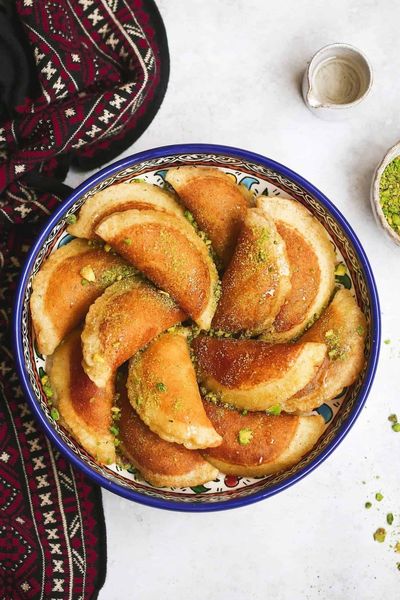
Atayef
A loose batter of fine semolina, plain flour, yeast, sugar and warm water rests until bubbly. Small disks are poured onto a hot dry pan and cook one side only, bubbles rise and burst, the top setting porous and lacy. Each disk is folded around a filling (sweetened cheese or spiced walnut), pinched into a half-moon, then fried in oil until deep golden. Cold sugar syrup is poured over hot pancakes; serve immediately.