Hotteok
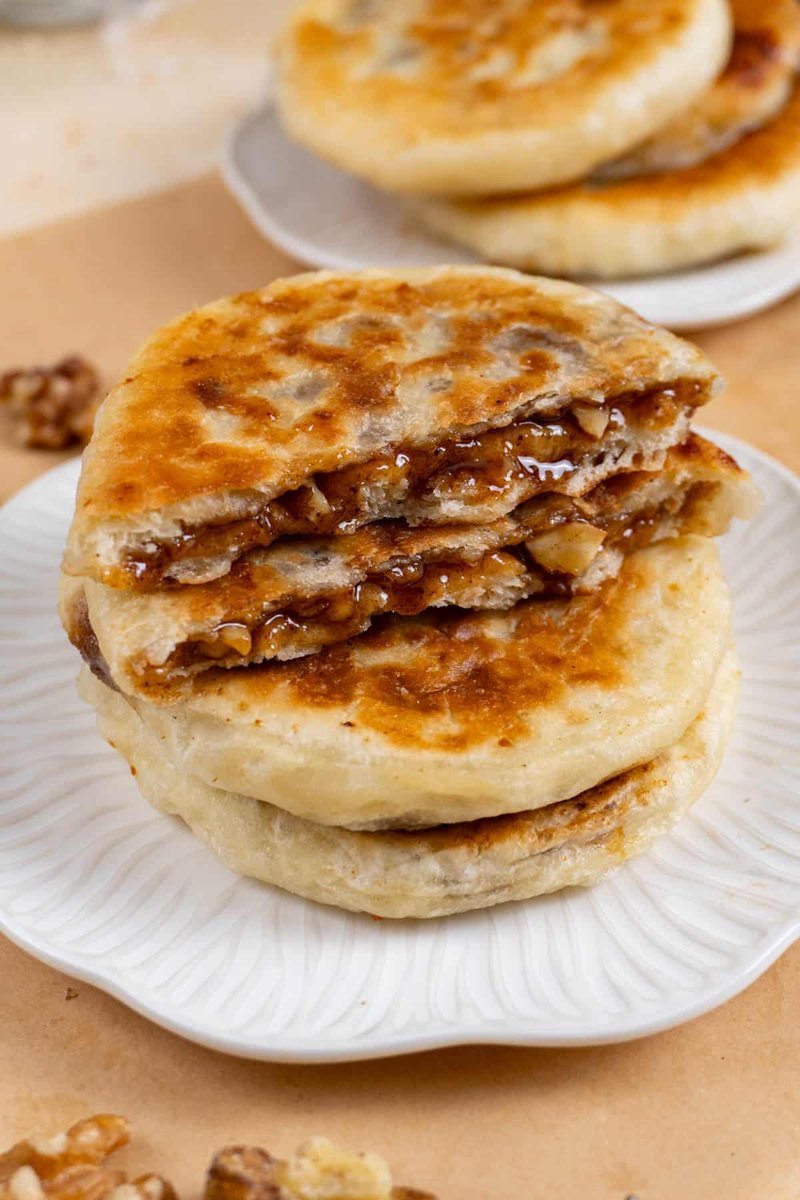
Korea's winter street pancake: a yeasted disc filled with brown sugar, cinnamon and peanuts that melt to molten caramel as it griddles.
Overview
A wet yeasted dough, combining plain flour, sweet rice flour, yeast, milk and a little oil, rises for 1 hour. Filling: dark muscovado, cinnamon, chopped peanuts. Dough divides into 8 oily balls; each flattens in the palm, fills with a heaped tablespoon of sugar mix, pinches shut. Pan-fries seam-side-down in oil; presses flat with a heavy spatula; flips; cooks the other side. Eats hot.
Ingredients
Dough
- 250 g plain flour
- 50 g sweet rice flour (mochiko / glutinous rice flour)
- 7 g instant yeast
- 1 tablespoon caster sugar
- ½ teaspoon salt
- 200 ml warm milk
- 1 tablespoon neutral oil
- Extra oil (for hands and pan)
Filling
- 120 g dark muscovado (or soft dark brown sugar)
- 30 g roasted peanuts (chopped)
- 1 ½ teaspoons ground cinnamon
- A pinch of salt
Cooking
- 4 tablespoons neutral oil
Method
Stage 1 - Dough
- In a wide bowl, whisk both flours, yeast, sugar and salt.
- Pour in the warm milk and 1 tablespoon oil.
- Stir with a wooden spoon to a wet sticky dough (don't knead - the dough is too wet to knead conventionally).
- Cover with cling film; rise in a warm spot 1 hour until doubled and bubbly on top.
Stage 2 - Filling
- Combine the muscovado, chopped peanuts, cinnamon and salt in a small bowl.
Stage 3 - Divide
- Oil your hands generously.
- With oily hands, scoop walnut-sized portions of dough (about 70 g each) directly from the bowl.
- The dough should slip off your fingers, oil prevents sticking.
- You should get 8 portions.
Stage 4 - Fill
- Hold one portion in the palm of your hand; flatten to a small disc.
- Place 1 heaped tablespoon of filling in the centre.
- Gather the edges up; pinch firmly at the top to seal.
- The ball should look like a small dumpling, seam pointing up.
Stage 5 - Cook
- Heat a heavy frying pan over medium heat; add 2 tablespoons oil.
- Place 4 hotteok seam-down in the pan.
- Cook 1 minute.
- Press flat with a heavy spatula or a small saucepan lid pressed onto the top of each hotteok (Korean cooks use a special flat hotteok press). Press to about 1 cm thick.
- Cook 2 more minutes - the bottom should be deep gold.
- Flip; cook 2-3 minutes on the second side.
- Lift onto a wire rack; the sugar inside will still be molten.
Stage 6 - Serve
- Eat immediately - but CAREFUL, the inside is volcano-hot.
- The crust should be crisp; the inside molten caramel-peanut.
Notes
- Wet dough, oily hands: the dough is too wet to knead conventionally. Oil is what makes it workable.
- Seal the ball tightly: any gap and the sugar leaks into the pan and burns. Pinch firmly at the seam.
- Press to flatten - don't roll: rolling tears the seam and the sugar leaks out. Press from above with a flat heavy object.
- Eat hot: the molten centre is the entire point. Cooled hotteok have set caramel - still tasty but less dramatic.
Storage
- Best within 30 minutes of cooking.
- Reheats in a hot dry pan 1 minute per side or in a 180°C oven 4 minutes.
- The sugar centre re-melts when reheated.
- Freeze cooked hotteok in a bag, 2 months; reheat from frozen in a 200°C oven 7 minutes.
More like this
Kimchijeon (Kimchi Pancake)
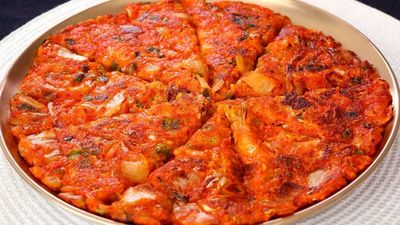
Well-fermented sour kimchi is chopped fine; the juice is reserved. A batter of plain flour, an egg, water and kimchi juice is mixed thin (consistency of pancake batter). Kimchi and chopped spring onion are stirred in. Half the batter is poured into a hot oiled pan, spread thin, fried for 4 minutes; flipped with a confident wrist or a wide spatula; fried another 3 minutes. Cut into wedges; eaten with soy-vinegar dip.
Burmese Samosa
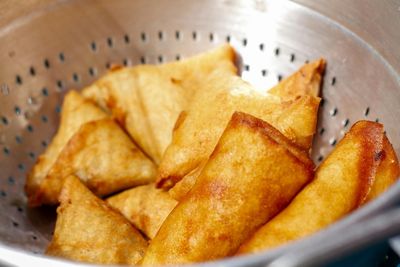
The Burmese take on the South Asian samosa, with a thinner, crisper pastry and a milder filling than its Indian cousin. You make a hot-water dough that rolls out very thin so the fried shell ends up glassy and crisp rather than bready. The filling is mild by Indian standards: turmeric, ginger, fried onion and a whisper of cumin folded into mashed potato and peas, finished with crushed peanuts for the nuttiness that marks the Burmese version. The triangles fry at moderate heat until amber and crackling, the pastry blistering as it goes. Eaten hot dipped in tamarind sauce, or torn into chunks for a samusa-thoke salad later.
Dolmadakia (Greek Stuffed Vine Leaves)
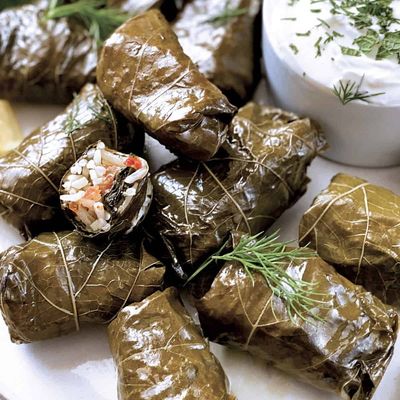
Brined vine leaves are soaked for 20 minutes to leach the brine. Filling: short-grain rice is par-cooked for 10 minutes with onion in olive oil; off heat, dill, mint, parsley, pine nuts, currants and lemon zest are stirred through. Each leaf is given a teaspoon of cool filling and rolled into a tight cigar. The rolls are packed tight in a heavy pot lined with broken / extra leaves. Olive oil, lemon juice and stock are poured in to barely cover. Weighed down with an inverted plate. Slow-simmered for 50-60 minutes. Cooled in the liquid; served at room temperature.
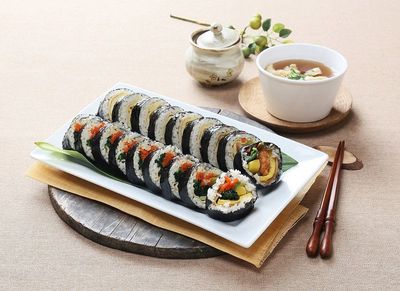
Gimbap
Rice cooks, dresses with sesame oil and salt while still warm. Fillings prep separately: carrots julienne and stir-fry briefly with salt; spinach blanches, drains, dresses with garlic, salt and sesame oil; egg cooks as a thin omelette, slices into strips; pickled yellow radish (danmuji) cuts into long strips; protein (ham, beef bulgogi, tuna mayo, fishcake) preps to size. Each gim sheet (toasted seaweed) lays on a bamboo mat; rice spreads thin over two-thirds of the sheet; fillings line in the centre; the mat rolls everything tightly. Cut into 12 slices per roll. Brushed with sesame oil; sprinkled with sesame seeds.