
Coco Bread
Jamaica's folded coconut-milk roll: soft, slightly sweet and pillowy, with a faint coconut sweetness. The traditional wrap for a Jamaican beef patty.
Overview
An enriched yeast dough made with coconut milk, butter, sugar and a little salt. Risen once, divided, rolled into rounds, brushed with butter and folded in half so the baked roll opens like a clamshell. Baked at moderate heat until lightly golden and soft. The folded shape is purposeful: it tears cleanly into two leaves, ideal for stuffing with a beef patty or jerk pork.
Ingredients
Dough
- 500 g strong white bread flour
- 7 g instant dried yeast (1 sachet)
- 50 g caster sugar
- 1 teaspoon fine salt
- 240 ml coconut milk (full-fat tinned), gently warmed
- 80 ml whole milk, gently warmed
- 1 egg (large), beaten
- 50 g unsalted butter, softened
For folding and finishing
- 40 g melted butter (for brushing and folding)
- 2 tablespoons milk (for brushing)
Method
Stage 1 - Make the dough
- In a large bowl, whisk together the flour, yeast, sugar and salt.
- Make a well; pour in the warm coconut milk, warm milk and beaten egg.
- Mix with a spoon until a rough dough forms, then turn onto a clean surface.
- Knead in the softened butter (it will look messy at first - persist).
- Knead 10 minutes by hand (or 6 minutes in a stand mixer with a dough hook on medium) until smooth, elastic and slightly tacky.
- Place in an oiled bowl; cover; rise in a warm spot 1 to 1 ½ hours until doubled.
Stage 2 - Shape
- Knock the dough back; divide into 8 equal pieces (about 110 g each).
- Roll each piece into a smooth ball.
- On a lightly floured surface, roll each ball into a round about 14 cm across and 5 mm thick.
- Brush the surface generously with melted butter.
- Fold the round in half to form a half-moon; press lightly around the curved edge to seal (but not too hard - the fold should puff during baking).
- Lay the folded rolls onto a lined baking tray, leaving 3 cm between each.
- Cover with a clean cloth; let rest 25 minutes (they should look slightly puffed).
Stage 3 - Bake
- Heat the oven to 180°C (160°C fan).
- Brush the tops of the rolls lightly with milk.
- Bake 18-20 minutes until pale golden on top (not deeply browned - coco bread should stay soft and light in colour).
- Brush with the remaining melted butter while still hot.
- Cool on a wire rack 10 minutes before serving.
Notes
- Coconut milk: Full-fat tinned coconut milk is essential for the right richness and flavour. Light coconut milk leaves the bread bland.
- Don't overbake: Coco bread should be soft and pale, not crusty. As soon as it's pale gold and sounds slightly hollow when tapped underneath, it's ready.
- The fold: Brushing the inside with butter before folding is what allows the two halves to peel apart cleanly when filled with a patty.
Variations
Sweeter (breakfast version): Bump sugar to 70 g; brush the tops with sugar syrup after baking. Garlic-thyme: Brush the fold with garlic-thyme butter instead of plain butter for a savoury version with jerk.
Serving
Serve with: Beef patties (the classic patty-in-coco-bread), jerk pork, butter and jam, or fried egg and avocado for breakfast.
Storage
- Keeps 2 days at room temperature in a paper bag or wrapped in a tea towel.
- Refresh in a warm oven (150°C) for 5 minutes before serving.
- Freezes well 1 month; defrost wrapped, then warm in the oven.
More like this
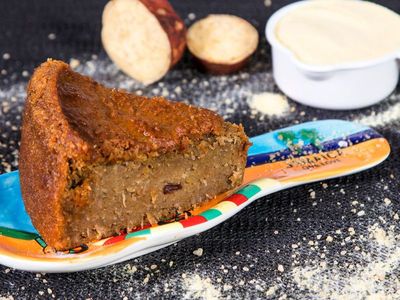
Sweet Potato Pudding
Yellow sweet potatoes (boniato or the Caribbean white-fleshed variety if you can find them; otherwise ordinary orange sweet potatoes work) are peeled and finely grated. Combined with coconut milk, brown sugar, plain flour, raisins, mixed peel, vanilla, nutmeg, allspice and a glug of dark rum. Baked low and slow until set but still slightly wobbly in the middle. Cooled completely before slicing, this is essential, as a warm pudding falls apart.
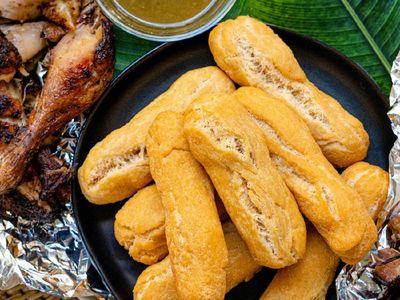
Festival
A simple dough of cornmeal, plain flour, sugar, baking powder, salt, vanilla and a hint of nutmeg, brought together with milk or water. Kneaded briefly, rested, then rolled into elongated finger shapes and fried in medium-hot oil until deep golden. The cornmeal gives a crunchy crust and an almost cakey interior. Sweet enough to eat as a snack, but the contrast with salty jerk or fried fish is the point.
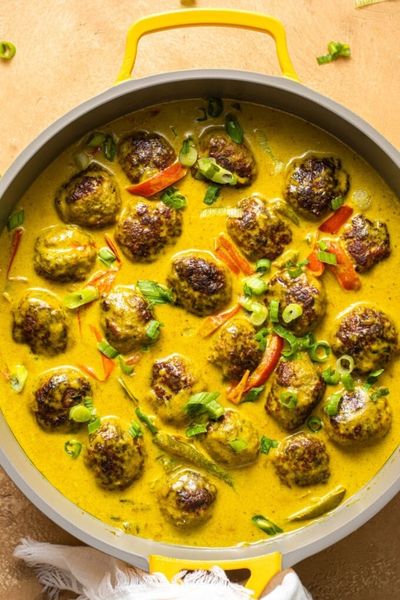
Jerk Meatballs in Coconut Curry Sauce
Two strong Caribbean flavours pulled into a single one-pan dinner: jerk on the inside (in the meatballs), curry on the outside (in the sauce). The meatballs are pork rather than the more common beef, which suits jerk better, pork carries the allspice-and-Scotch-bonnet seasoning the way it was historically intended (the Maroons of eastern Jamaica originally jerked wild boar, not chicken). Around them sits a coconut-curry sauce: shallot, garlic, sweet bell peppers, Jamaican curry powder bloomed briefly in butter, then full-fat coconut milk to mellow everything into something almost ice-cream-rich. The two flavours sit alongside each other rather than fighting, the jerk reads spicy-savoury, the curry reads sweet-aromatic, and a bite that includes both is genuinely better than either alone. Smell is curry powder bloomed in coconut milk, deeply Caribbean. One of the easier dishes here, 50 minutes start to finish, all in one pan, and a modern Black-American food-blogger creation rather than a traditional Jamaican dish; the cross-pollination is the point.
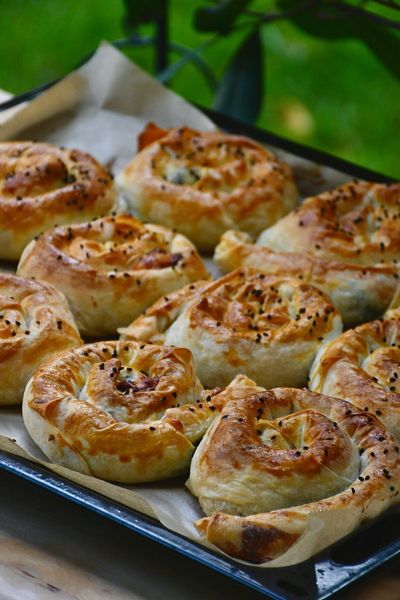
Baked Börek with Khandrajo Filling
Börek are Turkish pastry packages filled with various ingredients: meat, cheese, or vegetables. This vegetarian version uses khandrajo, a concentrated eggplant ragù heavily reduced until jammy and concentrated. Traditional börek-making uses thin, hand-rolled dough (yufka), but modern versions use readily available filo pastry. The key to success is preparing the khandrajo well ahead; it must be completely cool before filling (otherwise it creates soggy börek). The eggplant roasts down to deep mahogany richness through high-heat cooking, creating a sweet-savory filling. Baked börek develop shatteringly crisp exteriors through careful pastry handling and high-temperature baking.