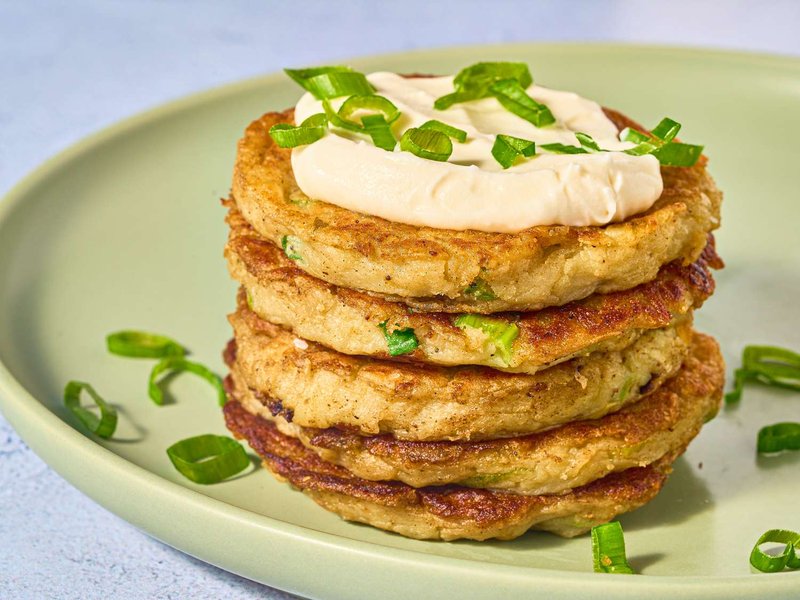
Boxty
Irish potato pancakes built on a 50/50 mix of grated raw and mashed cooked potatoes - the raw gives a chewy, almost fritter-like body; the mash gives smoothness. Eats hot off the pan with butter, an egg, or rolled around a savoury filling.
Overview
Half the potatoes are boiled and mashed; the other half are grated raw and squeezed dry. Both fold together with flour, milk and an egg into a thick batter. Spoonfuls fry in butter until deep golden on both sides.
Ingredients
- 250 g floury potatoes (peeled and cubed)
- 250 g floury potatoes (peeled, for grating)
- 100 g plain flour
- 1 teaspoon baking powder
- 1 egg (large)
- 100 ml whole milk
- 1 teaspoon salt
- Black pepper
- 50 g unsalted butter (for frying; plus more to serve)
Method
Stage 1 - Mash half
- Boil the cubed potatoes in salted water 12-15 minutes until tender; drain; mash; cool slightly.
Stage 2 - Grate the other half
- Coarsely grate the remaining peeled potatoes.
- Pile the grated potato into a clean tea towel; twist hard over the sink to wring out as much liquid as possible - you want the grated potato dry-ish.
Stage 3 - Mix
- Combine the mash, grated potato, flour, baking powder, egg, milk, salt and black pepper in a bowl. Stir to a thick, lumpy batter - should hold its shape on a spoon.
- Rest 10 minutes (lets the flour hydrate).
Stage 4 - Fry
- Heat half the butter in a wide frying pan over medium heat.
- Drop heaped tablespoons of batter into the pan; flatten gently with the back of the spoon to 1 cm thick.
- Cook 4-5 minutes per side until deep golden and crisp; the inside should be cooked through (test with a knife).
- Cook in 2-3 batches; add more butter as needed.
Stage 5 - Serve
- Eat hot off the pan with butter, a fried egg, or smoked salmon for a more substantial meal.
Notes
- Wring the grated potato: Damp grated potato makes soggy boxty. The drier you can get it, the better the fritter texture.
- Floury potatoes: Waxy ones don't break down for the mash and don't bind the grated potato.
- Heat control: Too hot and the outside burns before the inside cooks. Medium heat; flip once they're properly golden.
Storage
- Best eaten hot. Leftovers refrigerate 2 days; re-fry in butter to restore the crisp.
More like this
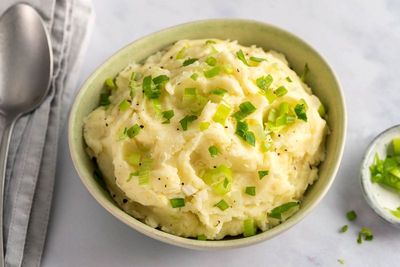
Champ
Spring onions infuse hot milk for 10 minutes off the heat. Floury potatoes boil and dry; everything mashes together with a generous amount of butter. The classic finish: a hollow scooped out of the centre of the mound on each plate, filled with melting butter.
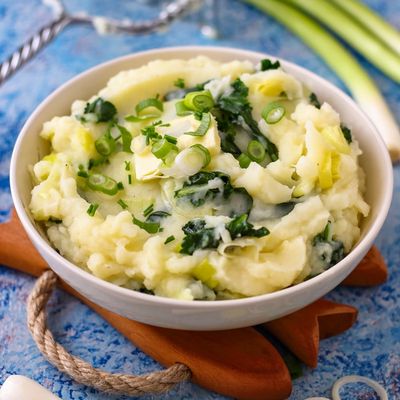
Colcannon
Floury potatoes boil; cabbage or kale wilts in butter with spring onions; the lot is mashed with hot milk and lots of butter. The cabbage softens but keeps a little texture; the mash should be smooth, with green flecks throughout.
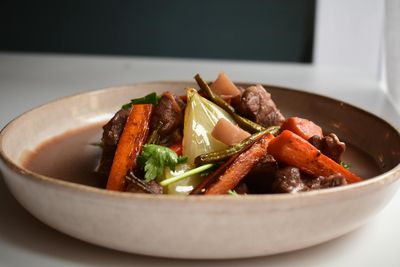
Beef and Guinness Stew
Chuck steak in big chunks, dredged in seasoned flour and browned in batches in a heavy pot until properly dark. Onions cooked low and slow in the same pot to draw out their sugar. The beef returned, a bottle of Guinness poured over with stock and a spoon of treacle, brought to a simmer and tucked into a low oven for two hours. The last half-hour gets carrots, potatoes and a handful of pearl barley to thicken the broth. Finished with parsley and a chunk of soda bread for mopping.
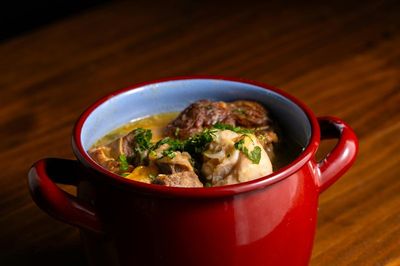
Irish Stew
Irish stew is the epitome of rustic, peasant cooking elevated to comfort food status. Middle neck of lamb simmers gently with potatoes, onions, carrots, and cabbage in a light broth, with the potatoes gradually breaking down to thicken the sauce naturally. The result is a one-pot wonder that's wholesome, deeply flavorful, and warming, the kind of dish that feeds both body and soul on cold days.