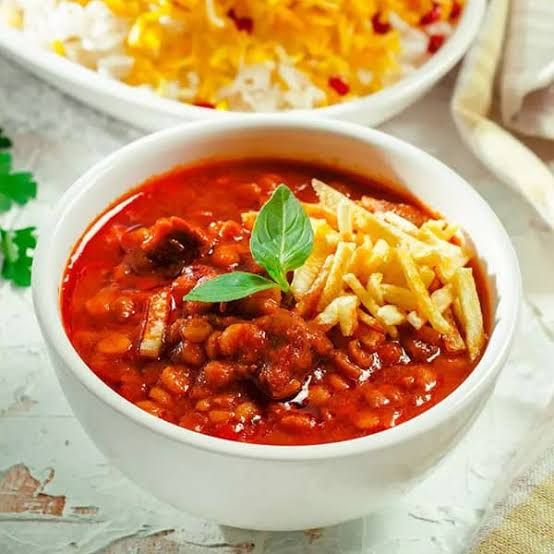
Gheymeh
Persia's split-pea stew: cubed lamb simmered with yellow split peas, tomato, dried lime, turmeric and cinnamon, finished with crisp matchstick potatoes.
Overview
Onion fries dark gold; turmeric, cinnamon and meat brown in. Tomato puree, hot stock, dried limes and presoaked split peas join. Simmers for 90 minutes until meat and peas are both tender. Matchstick potatoes deep-fry separately and pile on top at serving.
Ingredients
- 700 g lamb shoulder (or beef chuck) - 3 cm cubes
- 3 tablespoons vegetable oil
- 2 onions (large, chopped)
- 1 teaspoon ground turmeric
- ½ teaspoon ground cinnamon
- 1 teaspoon ground black pepper
- 3 tablespoons tomato puree
- 4 dried black limes (loomi, pierced)
- 1 large pinch saffron threads (bloomed in 2 tablespoons hot water)
- 1.2 litres hot stock
- 1 ½ teaspoons salt (to taste)
- 200 g yellow split peas (soaked 1 hour, drained)
Matchstick potatoes
- 2 potatoes (large, peeled, cut into 4 mm matchsticks)
- 500 ml vegetable oil for frying
- Salt for finishing
To serve
- 4 servings cooked chelo rice
- Lemon wedges
- Fresh herbs (sabzi khordan)
Method
Stage 1 - Onion
- Heat oil in a wide heavy pot.
- Soften onion 12 minutes until deep gold.
Stage 2 - Spices and meat
- Add turmeric, cinnamon, pepper; cook 30 seconds.
- Add lamb cubes; brown 6 minutes.
- Stir in tomato puree; cook 3 minutes.
Stage 3 - Simmer
- Add pierced dried limes, saffron-water, hot stock, salt.
- Bring to a simmer; cover; cook on low 50 minutes.
Stage 4 - Split peas
- Add the drained split peas.
- Cook another 35-45 minutes until both meat and peas are tender. Top up stock if needed.
- The sauce should be thick and rich; uncover for the last 10 minutes if loose.
- Taste; adjust salt. Squeeze the limes against the pot side.
Stage 5 - Matchstick potatoes
- Heat oil to 180°C.
- Pat potato matchsticks very dry.
- Fry in batches 3-4 minutes until deep gold and crisp.
- Drain on kitchen paper; salt.
Stage 6 - Serve
- Ladle stew over chelo rice.
- Top generously with crisp matchstick potatoes.
- Lemon wedge and fresh herbs on the side.
Notes
- Soak the peas: Without soaking they take double the time and stay tough. 1 hour minimum.
- Matchstick potatoes on top: The Persian signature - the crisp contrast against the soft stew. Don't skip; eat with the stew.
- Loomi at the start: Pierce them once; they perfume the entire pot. Squeeze at the end.
Storage
- Refrigerate 4 days; better next day. Matchstick potatoes fry fresh.
- Freezes 3 months (without potatoes).
More like this
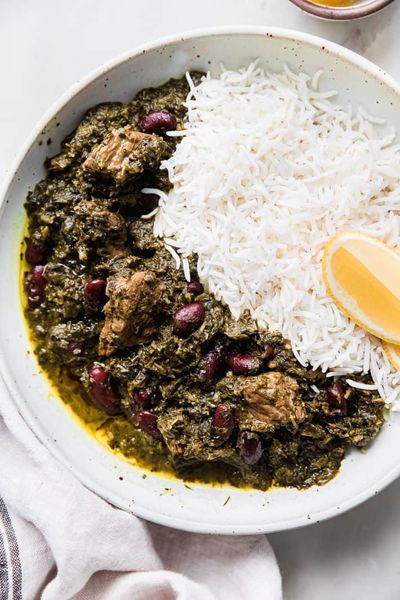
Ghormeh Sabzi
Onion fries deep golden in oil; turmeric and a touch of cinnamon toast in. Cubed lamb browns alongside. Herbs (huge quantities, 6 cups chopped) fry hard in their own pan in oil for 20 minutes until very dark. Everything combines with dried limes and stock; simmers for 90 minutes. Soaked kidney beans go in for the last 30 minutes.
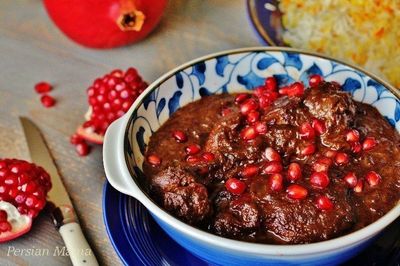
Khoresh-E Fesenjan
Walnuts are toasted and ground to a paste. Onions are softened slowly with turmeric and saffron; chicken thighs are seared, then poached in a stock that the walnut paste loosens into. Pomegranate molasses, sugar and lemon balance the sauce as it darkens; chicken returns to absorb flavour. Slow-cooked until the oil splits out, the sign Fesenjan is ready.
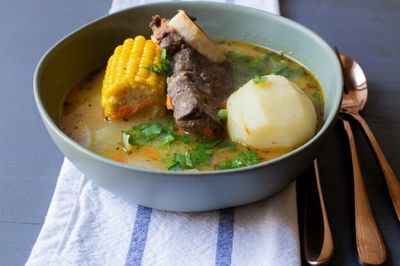
Cazuela de Vacuno
The Chilean Sunday-lunch one-pot, the soup-stew that turns up on every kitchen table from Santiago to Patagonia. You brown bone-in beef shin to colour, then drop it into a simple broth of onion, garlic, oregano and cumin and simmer slowly for ninety minutes until the meat is tender and the broth has built depth. The vegetables go in for the last twenty-five minutes - a thick chunk of pumpkin, a section of corn-on-the-cob, a whole potato, a handful of green beans - each piece kept whole because the cazuela is meant to arrive in the bowl looking like a still life. Rice or vermicelli cooks separately in a ladle of the broth and joins at the very end. Served in deep bowls with chopped coriander and a wedge of lime, the steam rising while you eat. Comfort food at its plainest and deepest.
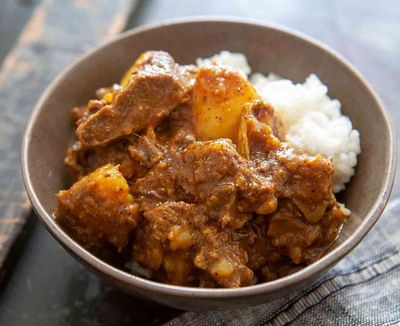
Jamaican Goat Curry
A deep, brick-yellow gravy stained with turmeric and allspice (called pimento in Jamaica, confusingly, nothing to do with the pepper of the same English name). The taste is layered: the curry powder hits first, then the slow heat of Scotch bonnet, then a sweet-piney back-note from allspice and thyme that's unmistakably Caribbean rather than Indian. The goat is the point; bone-in shoulder or leg, braised until the bones loosen and the connective tissue melts into the gravy and gives it body without any flour or roux. Patient cooking but not difficult: brown the meat, bloom the curry powder until it darkens to brown, then leave it alone for two hours. The whole pierced Scotch bonnet sits in the pot scenting the gravy and is fished out before it ruptures, so the heat stays controllable. Came to Jamaica via Indian indentured labourers in the 1840s, then got reshaped by what the island already had: thyme, pimento, scotch bonnet, and the Saturday-evening habit of putting a pot on to braise for Sunday lunch. Day-2 goat curry is better than day-1, which is why every Jamaican grandmother starts it on a Saturday.