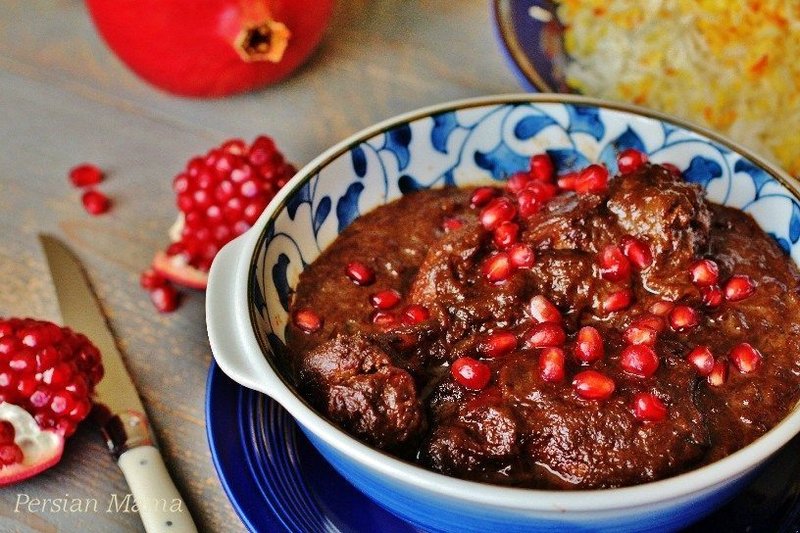
Khoresh-E Fesenjan
Persia's walnut and pomegranate stew: chicken braised in a sauce of ground toasted walnuts and pomegranate molasses till mahogany and silky. Saffron at the end.
Overview
Walnuts are toasted and ground to a paste. Onions are softened slowly with turmeric and saffron; chicken thighs are seared, then poached in a stock that the walnut paste loosens into. Pomegranate molasses, sugar and lemon balance the sauce as it darkens; chicken returns to absorb flavour. Slow-cooked until the oil splits out, the sign Fesenjan is ready.
Ingredients
- 6 chicken thighs (bone-in, skin on) or 1 duck (jointed)
- 2 tablespoons olive oil
- 2 onions (large, finely chopped)
- 1 teaspoon ground turmeric
- A generous pinch of saffron (steeped in 3 tablespoons hot water 10 min)
- 400 g shelled walnuts
- 1 litre chicken (or vegetable stock)
- 4 tablespoons pomegranate molasses (Iranian if possible)
- 2 tablespoons brown sugar (or to taste)
- ½ lemon (juice)
- 1 ½ teaspoons salt
- ½ teaspoon black pepper
- ½ teaspoon ground cinnamon
To serve
- Hot chelo (Persian saffron rice)
- Pomegranate seeds
- A few mint leaves
Method
Stage 1 - Walnut paste
- Toast the walnuts in a dry pan over medium heat 5-6 minutes, stirring, until fragrant and lightly coloured.
- Cool slightly; blitz in a food processor until they form a coarse, oily paste - about 1 minute. Don't take them all the way to butter; texture is good.
Stage 2 - Sear chicken
- Heat the oil in a wide heavy pan over medium-high heat.
- Salt and pepper the chicken; sear skin-side down 4-5 minutes until golden; flip; sear 2 more minutes; lift out.
Stage 3 - Onions
- Reduce the heat to medium-low.
- Cook the onions in the rendered fat 12-15 minutes until soft and golden.
- Stir in the turmeric and half the saffron-water; cook 1 minute.
Stage 4 - Build the sauce
- Add the walnut paste; stir 2-3 minutes (it'll absorb the oil).
- Pour in the stock; whisk to break up any lumps.
- Add the pomegranate molasses, sugar, salt and cinnamon.
- Bring to a simmer; reduce to lowest heat.
Stage 5 - Simmer
- Return the chicken to the pan; nestle into the sauce.
- Partly cover; cook 1 hour - 1 ¼, stirring every 15 minutes so the walnuts don't catch on the bottom.
- The sauce should darken to deep mahogany and the oil should start to glisten on the surface - that's the sign it's done.
Stage 6 - Balance and finish
- Stir in the lemon juice and the remaining saffron-water.
- Taste; adjust sugar (more if too sour) or molasses (more if too sweet).
Stage 7 - Serve
- Spoon over hot saffron rice.
- Top with pomegranate seeds and mint leaves.
Notes
- Don't rush the walnut cook: Fesenjan needs a slow simmer for the oil to split out and the sauce to darken. An hour minimum; longer is better.
- Pomegranate molasses quality: Iranian or Lebanese brands are richer and less tart than supermarket versions. Worth seeking out.
- Sweet vs sour: Northern Iranian Fesenjan is often more sour; central versions are sweeter. Adjust by tasting; either is correct.
Storage
- Keeps 4 days refrigerated; tastes better on day 2.
- Freezes 3 months.
More like this
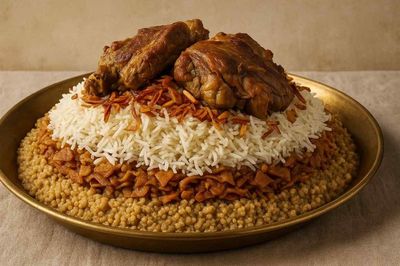
Mathloutha
The Saudi gathering platter built for the night when one cut of meat isn't enough. Three proteins share the same pot: lamb shoulder and beef chunks go in first with a kabsa-spiced tomato base for ninety minutes of slow simmer until they're meltingly tender, then chicken pieces drop in for the last thirty-five minutes (their cook time is shorter, so they go in later). The strained meat broth, deeply spiced from everything that has braised in it, becomes the cooking liquid for basmati scented with saffron and dried lime. At the end you arrange all three meats on top of the rice in the same platter and bring the whole thing to the centre of the table. The kind of dish you make for a wedding lunch, an Eid gathering, or the night the extended family arrives unannounced.
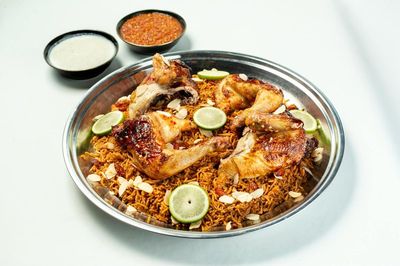
Kabsa
Saudi Arabia's national dish, the one platter you'll meet at almost every gathering from family lunch through wedding banquet. You brown chicken pieces or lamb shoulder hard in a heavy pot, then build a base of onion, garlic and ginger softened in the same fat, with tomato and a spoonful of baharat (or a dedicated kabsa spice mix) blooming until the kitchen fills with cardamom and cinnamon. The protein simmers in tomato and stock until it's tender and pulling away from the bone, then long-grain rice goes in to cook absorption-style in the same liquid, drinking up every layer of flavour the broth carries. You finish with almonds toasted in butter, raisins plumped briefly, and a fresh salsa of tomato, onion, chilli and parsley spooned on the side to cut the richness. Eaten communally from the centre platter, with hands or a long spoon.
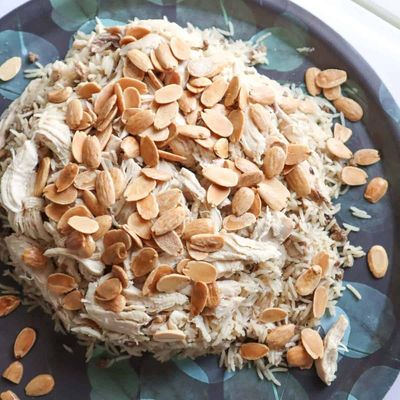
Riz a Djej
A whole chicken poaches with onion, cinnamon, cardamom and bay 45 minutes; chicken comes out, stock is strained. Mince (lamb or beef) browns hard with onion, baharat, cinnamon and allspice. Basmati rice toasts in ghee with the mince, then cooks absorption-style in the chicken stock for 18 minutes. Plated with the rice on the bottom, the mince mixed through, shredded poached chicken on top, and toasted pine nuts, almonds and raisins scattered over.
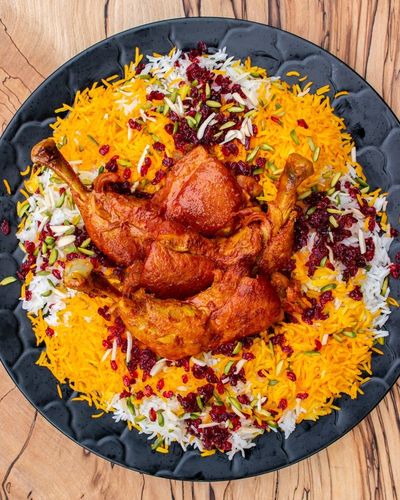
Zereshk Polo Ba Morgh
Basmati rice rinses thoroughly; soaks for 1 hour in salted water. Bone-in chicken (thighs and drumsticks) browns; cooks for 45 minutes with onion, turmeric, tomato paste, cinnamon, saffron and a splash of water until tender and the sauce thick. Rice parboils for 6 minutes in heavily salted water; drains. The Persian rice technique: a layer of yogurt-rice (or just oil and rice) goes in the bottom of the pot to form tahdig; remaining rice mounds on top in a cone; a cloth-wrapped lid clamps on; cooks for 40 minutes over low heat. Meanwhile, zereshk berries are rinsed (they're salty), sautéed in butter with a touch of sugar and saffron. Plated with the rice spread out, chicken nestled on top, and zereshk-and-nuts scattered across.