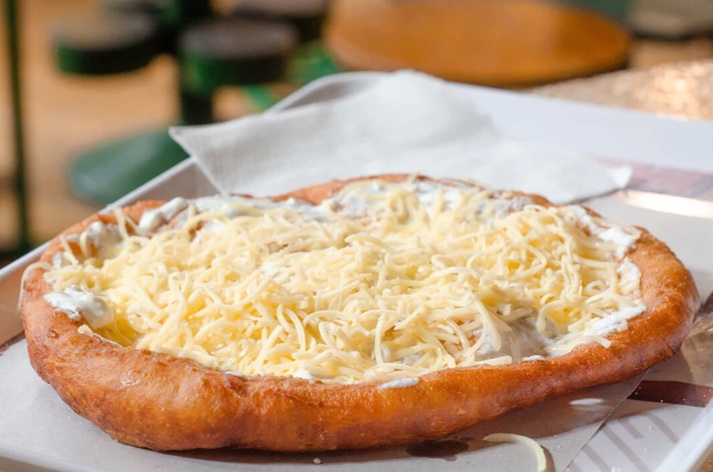
Lángos
Hungary's deep-fried flatbread: a soft yeasted dough stretched thin, dropped into hot oil and puffed into a golden disc, then rubbed with raw garlic and crowned with sour cream and grated cheese. Market-stall food, street food, late-night food. Eaten hot, by hand, often standing up.
Overview
A soft potato-enriched yeast dough rises slowly, gets stretched thin (not rolled), and shallow-fries in hot oil for 60-90 seconds a side until puffed, blistered and golden. Out of the pan, it's brushed with a smashed garlic-water and immediately topped with sour cream and grated cheese. The classic combination is unbeatable, but plain salted lángos eaten with the garlic rub alone is also traditional.
Ingredients
Dough
- 250 g plain flour
- 100 g cooked, mashed floury potato (cooled)
- 7 g instant dried yeast (1 sachet)
- 1 teaspoon caster sugar
- 1 teaspoon salt
- 160 ml warm milk
- 2 tablespoons sunflower oil
- 1 litre sunflower oil, for frying
Garlic rub
- 4 garlic cloves (crushed)
- 3 tablespoons warm water
- ½ teaspoon salt
Topping (classic)
- 200 ml sour cream (tejföl)
- 150 g semi-hard cheese, grated (Trappista, Edam or mature cheddar)
Method
Stage 1 - Dough
- Whisk the yeast and sugar into the warm milk; rest 5 minutes until foamy on top.
- Mix the flour, mashed potato and salt in a large bowl. Pour in the yeasty milk and the 2 tablespoons of oil.
- Mix to a soft, sticky dough. Knead in the bowl or on an oiled surface for 6-8 minutes until smooth and elastic. It should be tacky but not gluey.
- Cover; rise in a warm spot 1 ½ hours, until doubled.
Stage 2 - Shape
- Tip the dough onto an oiled surface; divide into 4 equal pieces.
- Rest the pieces 10 minutes covered (the gluten relaxes; stretching gets easier).
- Working one piece at a time, flatten with oiled hands then stretch gently into a 20 cm disc. The middle should be thin enough to see light through; the edges slightly thicker. Don't use a rolling pin: hand-stretching keeps the bubbles.
Stage 3 - Fry
- Heat 3-4 cm of oil in a wide, deep pan to 180°C (a small piece of dough should bubble vigorously and brown in 30 seconds).
- Slide one disc in carefully. It will sink, then float and puff within 15 seconds.
- Fry 60-90 seconds, spooning hot oil over the top, until the underside is deep golden.
- Flip; fry the other side 45-60 seconds. The lángos should be puffed, blistered and dark-gold all over.
- Lift onto kitchen paper. Repeat with the rest, keeping the oil temperature steady.
Stage 4 - Garlic and top
- Whisk the crushed garlic, warm water and salt together.
- Brush each hot lángos generously with the garlic water on one side.
- Spread thickly with sour cream and shower with grated cheese.
- Eat immediately while hot.
Notes
- Hand-stretch, don't roll: Rolling crushes the gas bubbles and you get a flat, leathery lángos instead of a puffed one.
- Oil temperature: 180°C is the sweet spot. Too cool and it absorbs oil; too hot and the outside browns before the middle cooks. A thermometer is genuinely useful here.
- Mashed potato: Adds moisture and softness; gives the proper lángos texture. Don't skip.
- Eat hot: Lángos goes leathery within 15 minutes. Time it so people are at the table.
Variations
Sajtos-tejfölös (classic): As above, sour cream and cheese. Fokhagymás (plain garlic): Garlic rub only, no toppings. The original. Pizza-style (modern): Tomato sauce, ham, cheese, sour cream. Common at Lake Balaton stalls; purists object.
Serving
Eat hot, by hand, ideally outdoors with a cold beer or a glass of fröccs (white wine with soda).
Storage
- Best eaten within 30 minutes of frying.
- Reheating doesn't really work; the texture is gone.
- Dough can be made and refrigerated overnight after the first rise; bring back to room temperature before stretching.
More like this
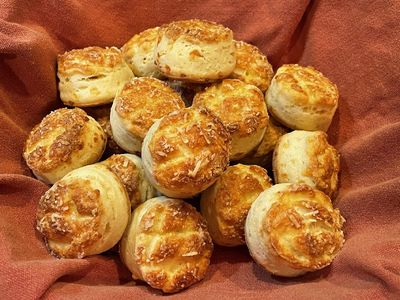
Pogácsa
A yeast-leavened, fat-rich dough rests cold so the fat stays solid in flaky layers. The dough is rolled, folded and rolled again like a rough puff pastry, then cut into rounds, scored, brushed with egg and baked at high heat until golden and crisp on the outside, tender inside. Cheese is added by folding grated cheese into the dough and showering more on top.
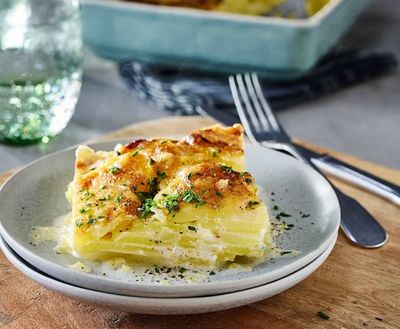
Gratin Dauphinois
Waxy potatoes (Yukon Gold, Charlotte, or any low-starch variety) are peeled and sliced very thinly, 2-3 mm. A wide shallow gratin dish (or oven-safe heavy pan) is rubbed all over with a halved garlic clove, then heavily buttered. A cream-and-milk mixture warms in a saucepan with crushed garlic, salt, pepper, and a generous grating of nutmeg, brought just to a simmer, then strained. Potatoes layer in the dish, overlapping like shingles, with a sprinkle of salt and a few grinds of pepper between layers. The infused cream pours over to come up to (not over) the top layer. Baked at 160°C for about 90 minutes until the potatoes are fork-tender and the top is bubbling and golden-brown.
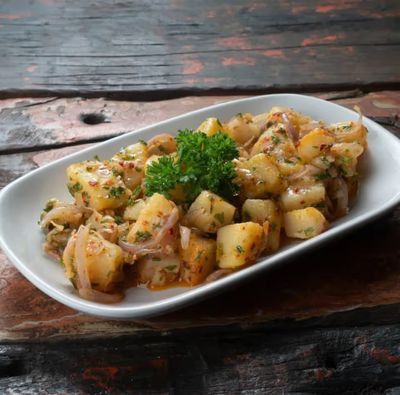
Kachalou Pakora
Kachalou pakora are Afghan-style battered potato slices, fried crisp and dusted with chaat masala while they are still hot from the oil. The batter is chickpea flour (besan) with a touch of rice flour for crispness, water, salt, turmeric, ground coriander, chilli powder, ajwain seeds, crushed garlic and a pinch of baking soda. Ten minutes to rest so the chickpea flour hydrates and the batter clings properly. Potatoes slice into 3 mm rounds and salt briefly to draw out a little moisture. Each slice dips in the batter, lifts with chopsticks, drops into oil at 175°C, fries three minutes a side until amber. Drained, dusted with chaat masala, served with a quick mint-and-coriander chutney. Eat hot. Cold pakora are a different food entirely, and not in a good way.
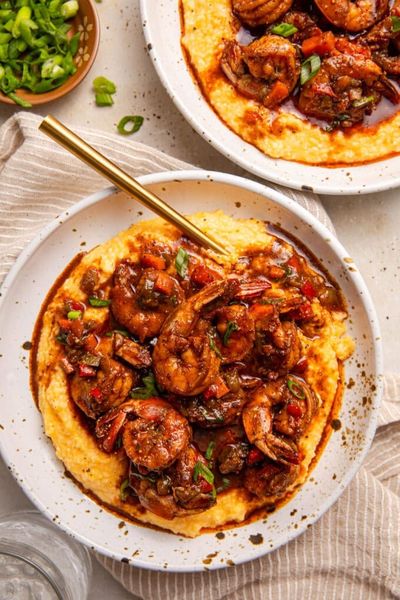
Brown Stew Shrimp and Sweet Potato Grits
A Caribbean-Southern crossover that works because both traditions cook in a similar register: butter, peppers, alliums, slow heat, savoury depth. The brown stew base on top of the dish is Jamaican, bell peppers, carrot, Scotch bonnet, ginger, browning sauce, that mahogany-coloured gravy with the unmistakable allspice-and-thyme signature, and the bed underneath is from Lowcountry Charleston, where sweet potato grits enriched with butter, half-and-half and gouda are a long-running modern Southern restaurant standard. The shrimp themselves are quick-cooked and sweet, picking up the brown stew sauce. Two textures stacked: silky-rich grits, brothy stew on top with bite from the diced peppers and carrot. Smell is sweet-onion-and-browning-sugar over the corn-sweet base of the grits. Not difficult but it's two pans running at once, so timing matters; the grits hold on a low warm setting while the shrimp cook quickly. A modern fusion rather than a traditional dish, popularised by Black American chefs in the 2010s exploring the points of overlap between Lowcountry and Caribbean cookery.