Pollo Con Tajadas
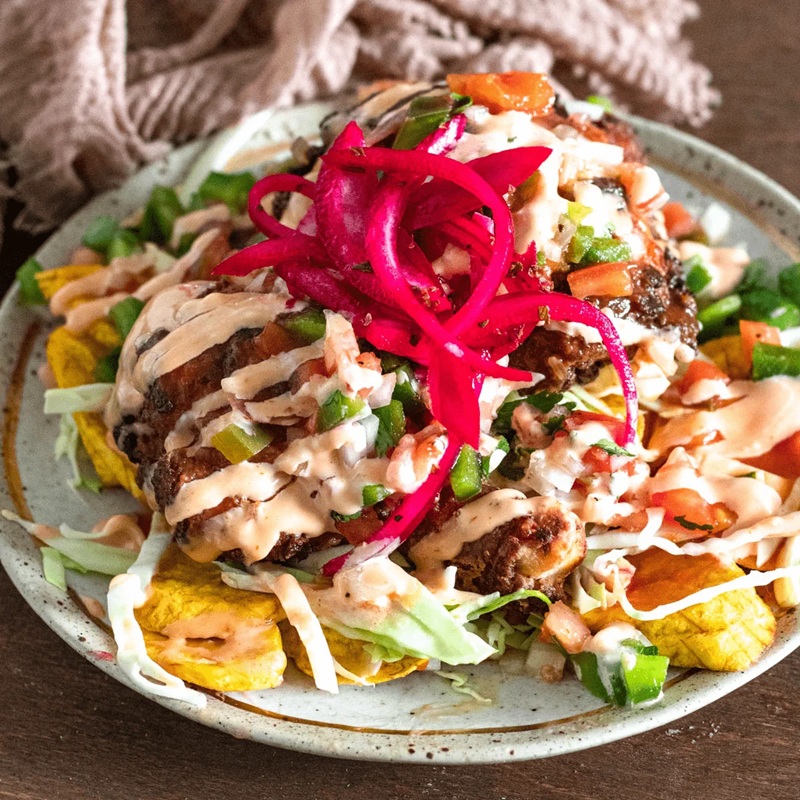
A Honduran street plate: fried chicken on a bed of fried plantain, topped with cabbage curtido, chimol relish and a drizzle of sour cream. With lime.
Overview
Bone-in chicken pieces marinate in lime, garlic, achiote and cumin, then are floured and fried until deep gold and crisp-skinned. Ripe (or green) plantains slice into long tajadas and fry until soft and sweet. A quick curtido of cabbage, onion and vinegar provides crunch; a chunky chimol of tomato, onion and cilantro provides freshness. Plate, top, drizzle, serve.
Ingredients
Chicken
- 8 bone-in chicken thighs and drumsticks (or 1.2 kg cut chicken pieces)
- 2 limes (juice)
- 6 garlic cloves (crushed)
- 1 teaspoon ground annatto (achiote)
- 1 teaspoon ground cumin
- 1 teaspoon dried oregano
- 1 ½ teaspoons salt
- 1 teaspoon ground black pepper
- 4 tablespoons plain flour
- 500 ml vegetable oil (for shallow frying)
Tajadas
- 3 ripe (yellow with black spots) or green plantains (peeled, sliced lengthways into 5 mm slices)
- Vegetable oil for frying (reuse from chicken)
- Salt
Curtido (cabbage relish)
- 200 g white cabbage (finely shredded)
- 1 carrot (small, grated)
- 1 red onion (small, very thinly sliced)
- 3 tablespoons white vinegar
- ½ teaspoon salt
- ½ teaspoon dried oregano
Chimol
- 3 ripe tomatoes (finely diced)
- 1 white onion (small, finely diced)
- 3 tablespoons fresh cilantro (chopped)
- 1 lime (juice)
- ½ teaspoon salt
To finish
- 200 ml sour cream (or mantequilla)
- 2 limes (cut into wedges)
Method
Stage 1 - Marinate the chicken
- Mix lime juice, garlic, achiote, cumin, oregano, salt and pepper in a bowl.
- Add the chicken; turn to coat; refrigerate at least 1 hour.
Stage 2 - Curtido
- Combine cabbage, carrot, onion, vinegar, salt and oregano in a bowl; toss; let sit 30 minutes.
Stage 3 - Chimol
- Mix tomato, onion, cilantro, lime juice and salt. Set aside.
Stage 4 - Fry the chicken
- Pat the marinated chicken dry; dust lightly with flour.
- Heat the oil to 175°C in a wide deep pan.
- Fry in batches 7-9 minutes per side, until deep gold and the juices run clear (internal 75°C).
- Drain on a rack.
Stage 5 - Fry the tajadas
- Lower the oil to 170°C. (If too dark, strain off and start fresh.)
- Fry the plantain slices 2-3 minutes per side until deep gold and soft (for ripe) or crisp (for green).
- Drain; salt lightly.
Stage 6 - Plate
- Arrange tajadas on each plate. Top with chicken pieces.
- Spoon over the curtido and a generous spoonful of chimol.
- Drizzle with sour cream; add a lime wedge.
Notes
- Achiote / annatto: Sold ground or as whole seeds in Latin American shops. If using whole, infuse 1 teaspoon in 2 tablespoons hot oil 30 seconds, then strain. Paprika is the easy substitute.
- Ripe or green plantain? Both are eaten with this dish. Ripe (yellow-black) gives sweet, soft tajadas; green gives starchy, crisp ones. Most plates serve ripe.
- Mantequilla swap: Honduran mantequilla is fermented; UK sour cream or crème fraîche thinned with buttermilk gets close.
Storage
- Best eaten same day. Cooked chicken keeps 2 days refrigerated; re-crisp at 200°C.
- Curtido keeps 5 days; gets better. Chimol best within 24 hours.
More like this
Agra Ginger Chicken
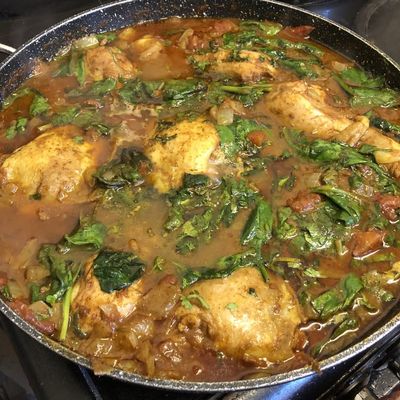
A light, cleansing chicken curry from Agra with fresh ginger, warm spices and bright tomato notes. This vibrant dish is designed to be accessible and fresh, with spinach and lime lifting the finished curry.
Bunjay-Style Curry Chicken
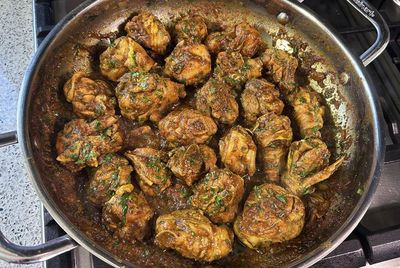
A dry curry rather than a saucy one, "bunjay" is Trinidadian patois for "fry-down", the technique of cooking meat in its own juices until the gravy completely disappears and the spices coat the surface of the meat in a sticky, glaze-like crust. The flavour is concentrated rather than diluted; nothing's been thinned with water or coconut milk, so what you taste is bone-in chicken, rendered chicken fat, and toasted spice. The spice mix is the East Indian Trinidadian signature: turmeric for colour and earth, roasted geera (toasted cumin, ground) for nuttiness, anchar masala for tang, regular curry powder for breadth. The pan oil splits and separates around the chicken at the end, which is the visual cue you're looking for. Smell when the curry powder hits hot oil is deeply aromatic, almost incense-like. Not difficult but it requires attention during the cook-down phase; if you walk away the curry burns onto the bottom of the pan. A Trinidadian household staple, eaten across the country with white rice and dhal, and a clean example of how Indian indentured labourers' descendants in the Caribbean evolved a distinct curry tradition over 150 years.
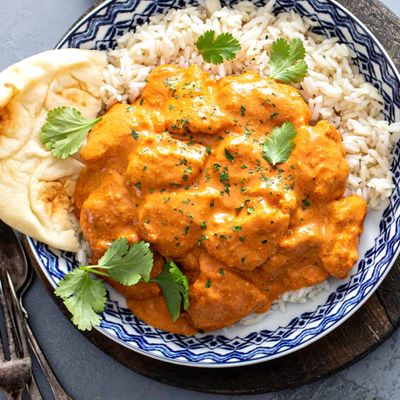
Butter Chicken
The BIR icon: tandoori-grilled chicken finished in a velvety tomato-onion sauce enriched with double cream, butter and a hit of garam masala at the end. Mildly spiced, lightly sweet, deeply savoury. The sauce is built on a paste of cooked onion, tomato and cashews / almonds, finished off-heat with cold butter for the signature gloss.
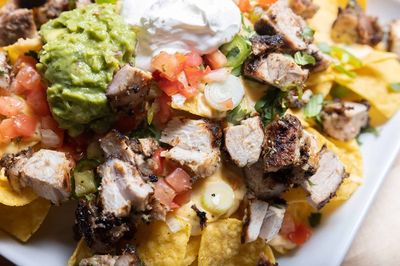
Cheesy Jerk Chicken Nachos
A Caribbean-American fusion that works because both food cultures speak the language of "everything on one tray". The base is American nachos: tortilla chips, melted cheese, black beans. On top sits jerk-marinated chicken thigh, which carries the dish's flavour, allspice, Scotch bonnet, nutmeg, cinnamon, thyme, soy and brown sugar blended into a wet jerk paste, marinated into the meat overnight, then oven-baked and sliced. The fresh element on top is a Trinidadian-style fruit chow: diced mango, pineapple, red bell pepper and red onion dressed with lime juice and cilantro. The chow is what makes this work; without it the nachos are just spicy meat-and-cheese, with it the dish has acid, crunch and sweetness to cut through the richness. Smell is melted cheese hitting jerk seasoning, with a citrus-tropical lift from the chow on top. Not difficult but it's three components running on different timelines, so plan ahead. A modern party-and-Super-Bowl-tray dish rather than something a Kingston grandmother makes, popularised by Caribbean-American food bloggers in the 2010s.