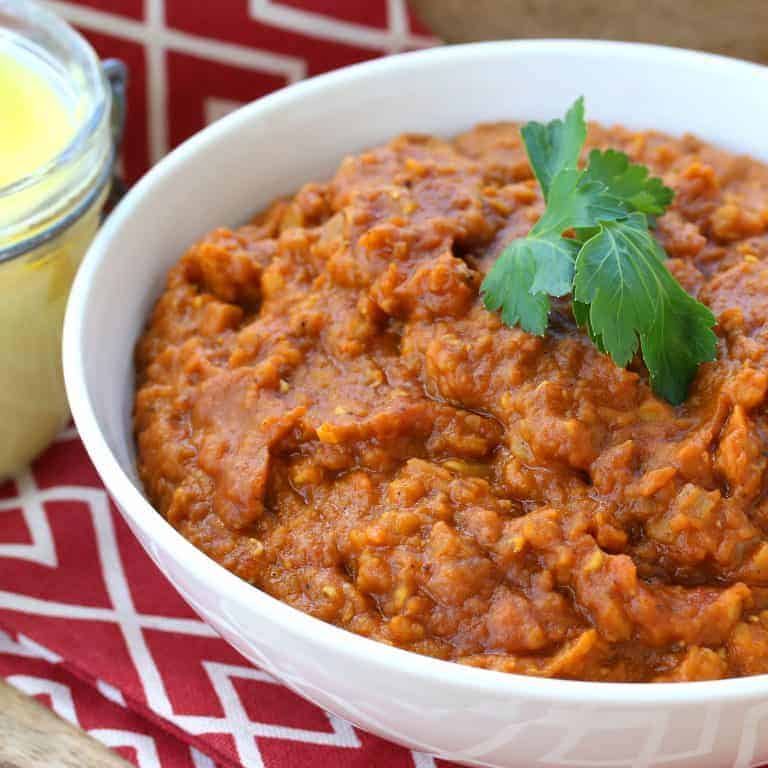
Misir Wat
Ethiopia's red lentil stew: bright orange from berbere, deep with onion that's been cooked nearly to nothing, and rich with niter kibbeh (spiced butter). Eaten by mopping with injera; vegan if made with oil instead of butter.
Overview
Ethiopia's red lentil stew, the vegan everyday main that turns up on every fasting-day table and most non-fasting ones too. You cook onions slowly in oil or niter kibbeh until they melt and turn jammy - this is the same long, patient onion cook that doro wat relies on. Berbere blooms in, tomato paste deepens, lentils go in with water and simmer until they're soft and the stew has thickened to a coating consistency. A squeeze of lemon at the end brightens the deep berbere-rich base. Bright orange from the spice, eaten by mopping with injera, made vegan with oil or richer with niter kibbeh. Either way, the dish that anchors an Ethiopian meal.
Ingredients
- 3 onions (large, very finely chopped)
- 60 ml vegetable oil (or 50 g niter kibbeh; see notes)
- 6 garlic cloves (crushed)
- 2 cm fresh ginger (grated)
- 3 tablespoons berbere spice mix
- 2 tablespoons tomato paste
- 250 g red lentils (rinsed)
- 1 litre vegetable stock (or water)
- 1 teaspoon salt (or to taste)
- ½ lemon (juice)
- Black pepper
Method
Stage 1 - Onions
- Cook the onions in a dry heavy saucepan over medium-low heat with no oil for the first 15 minutes, stirring often. They release water and start to break down.
- Add the oil (or niter kibbeh); cook another 15 minutes until deep brown, jammy and almost paste-like.
Stage 2 - Bloom
- Add the garlic, ginger and berbere; cook 1 minute (it should smell intense but not burn).
- Stir in the tomato paste; cook 2 minutes until darkened.
Stage 3 - Lentils
- Add the lentils and stock; bring to the boil; reduce to a simmer.
- Cook 25-30 minutes, stirring occasionally, until the lentils have completely broken down and the stew is thick enough to hold a furrow when you draw a spoon through.
- Top up with hot water if it tightens too much.
Stage 4 - Finish
- Off the heat, stir in the lemon juice and salt to taste; grind in plenty of black pepper.
- Serve with injera (Ethiopian flatbread) or rice.
Notes
- Niter kibbeh vs oil: Niter kibbeh - clarified butter spiced with cardamom, fenugreek and aromatics - gives the authentic flavour. Oil makes it vegan and still excellent.
- Berbere strength varies: Some blends are mild; others are searing. Start with 2 tablespoons and add more after tasting at Stage 3.
- The dry-onion start: Dry-cooking onions before adding fat is the Ethiopian technique. They break down faster and end up sweeter; doesn't burn because they're releasing moisture.
Storage
- Keeps 5 days refrigerated; the flavour improves overnight.
- Freezes 3 months.
Recipes mentioned here
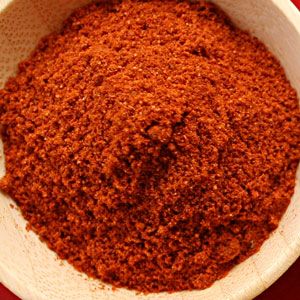
Berbere
Berbere is the cornerstone of Ethiopian cuisine, a powerfully hot and complex spice blend that's both a condiment and a cooking base. Unlike other chilli-forward blends, Berbere combines dried chillies with cardamom, cloves, and ajowan to create heat with sophistication. The blend is intensely aromatic and demands respect; a little goes a long way. This is a blend for stews and braises that simmer for hours, allowing the spices to develop depth and integrate with other ingredients.
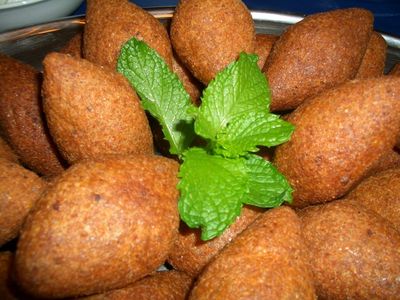
Kibbeh
Fine bulgur soaks until soft. The shell mixture combines bulgur, raw minced lamb, finely-grated onion, salt and spices, then blitzes (or pounds) into a dense, smooth, almost claylike paste. The filling is a separate cooked mince of lamb, onion, pine nuts, allspice and cinnamon. Each kibbeh shell is shaped over a finger; filling stuffs in; the lot pinches closed into a pointed oval. Deep-fries for 5 minutes.
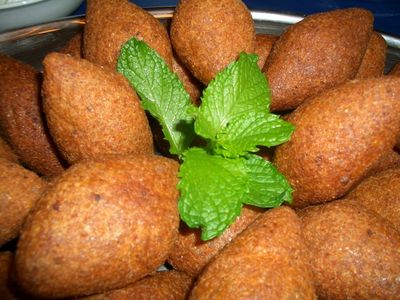
Kibbeh
Two preparations: the bulgur-and-mince shell paste and the spiced cooked filling. The shell is shaped around a portion of filling into a football shape, then deep-fried until the outside is golden and the inside is hot and savoury. Served warm with yogurt or tahini.
More like this
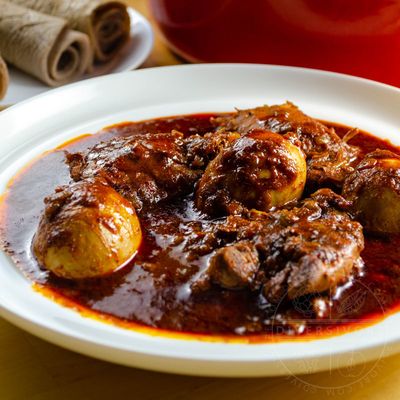
Doro Wat
Ethiopia's national dish, the spiced chicken stew that turns up at every wedding, Easter feast and Christmas table, and the one dish a cook is judged on. The foundation is the onion - you cook it down slowly for nearly an hour into a deep dark base, and this is the step that decides whether the wat is great or merely acceptable. Berbere (the Ethiopian spice blend of chilli, fenugreek, ginger and a dozen others) and niter kibbeh (spiced clarified butter, the dish's defining fat) fold in. Chicken thighs and legs simmer in the deep red sauce, and hard-boiled eggs join late, scored with a knife so they take on the colour and the flavour. Eaten communally from a single platter, with injera flatbread torn into pieces to scoop the stew. No cutlery, no individual plates, hands clean before the meal.

Harira
Lamb shoulder cubes simmer slow with chickpeas, lentils, tomatoes, vermicelli noodles, and a heavy spice mix (ginger, cinnamon, turmeric, cumin) in a generous broth. The soup is finished by adding the noodles in the last 10 minutes and a final scatter of fresh coriander, parsley and lemon juice.
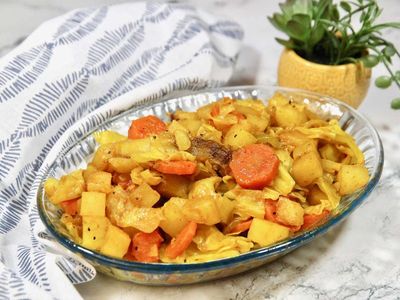
Atakilt Wat
Ethiopia's spiced cabbage stew, the gentle vegetable side that sits between the fiercer berbere-loaded curries on a shared platter and cools whoever's eating against the heat. You soften onions in oil with turmeric until they're pale gold, then bloom garlic, ginger and a small amount of berbere in the same fat - small because this is the mellow dish, not the fierce one. Carrots and potatoes go in first to soften; cabbage joins later. Cover, drop the heat, and let the lot steam-cook for forty minutes until the volume has halved, the vegetables have melted into each other, and the cabbage has almost disappeared into the sauce. Eaten with injera and a few spoonfuls of doro wat or misir wat alongside for contrast.
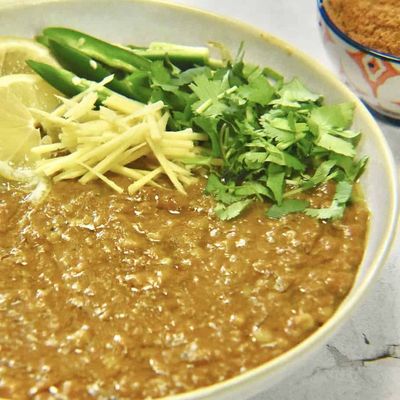
Haleem
Cracked wheat (daleya), pearl barley, chana dal, masoor dal, moong dal and urad dal soak overnight together. Mutton on the bone (or beef shin) simmers separately with ginger-garlic paste, ground spices, onion and salt for 2 hours until tender. The drained grains and lentils join; everything simmers 2 more hours, beating periodically with a wooden masher (or blitzing in batches with a stick blender) until the meat strands break apart and integrate with the grain. The base goes intensely smooth, almost the texture of porridge. Off heat, fried onions, ghee-and-cumin tarka, julienned ginger, lemon, chilli and herbs finish each bowl.