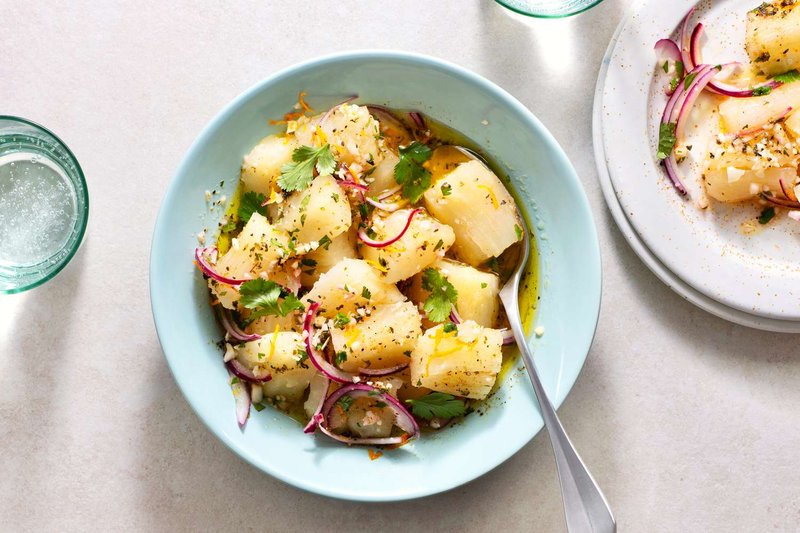
Yuca Con Mojo
Cuban boiled cassava drowned in mojo: a vivid, raw sauce of crushed garlic, sour orange and olive oil. The starchy, almost waxy yuca soaks up everything; a fork of it, hot, with the mojo just spooned over and crackling in the pan-warmth, is one of the great simple plates of the Caribbean.
Overview
Cassava boils in salted water until a knife slides through easily. Garlic is crushed to a coarse paste with salt; sour orange juice (or lime + orange) mixes in; hot olive oil is poured over, blooming the garlic. The drained yuca goes into a serving dish; the mojo gets poured generously on top.
Ingredients
- 1 kg cassava (yuca; peeled, cored and cut into 4 cm chunks)
- 1 tablespoon salt (for the cooking water)
Mojo
- 8 garlic cloves (crushed to paste with a pinch of salt)
- 1 teaspoon salt
- ½ teaspoon ground cumin
- ½ teaspoon dried oregano
- 100 ml olive oil
- 2 sour oranges (or 60 ml fresh orange juice + 30 ml lime juice, juice)
- 1 onion (small, very thinly sliced)
- Black pepper
- Fresh parsley (or coriander, chopped, to serve)
Method
Stage 1 - Boil the yuca
- Cover the cassava with cold water in a large pan; add the salt.
- Bring to the boil; reduce to a simmer and cook 20-25 minutes until a knife slides through easily.
- Drain; arrange in a serving dish; pull out the woody central core if any pieces still have it.
Stage 2 - Mojo
- Mash the garlic with the salt to a paste in a mortar (or finely mince and crush with the side of a knife).
- Mix in the cumin, oregano, citrus juices and onion. Let sit 5 minutes.
- Heat the olive oil in a small pan until shimmering (just before smoking).
- Pour the hot oil over the garlic mixture; it will sizzle and bloom. Stir; let stand 2 minutes.
Stage 3 - Serve
- Spoon the mojo all over the hot yuca, including the onions.
- Top with chopped parsley or coriander.
Notes
- Sour orange (naranja agria) is traditional: If you can't find it, the orange + lime mix is the standard substitute.
- Cassava cooking time varies: Older roots take longer. The piece is done when a knife meets no resistance.
- Hot oil is key: Cold oil gives raw garlic. The bloom step mellows the garlic and emulsifies the sauce.
- Frozen cassava: Pre-peeled frozen yuca (Caribbean grocers) skips a tedious knife job; cook from frozen, adding 5 minutes.
Storage
- Best eaten right away. Leftover yuca refrigerates 2 days; reheat in the microwave; remake the mojo fresh.
More like this
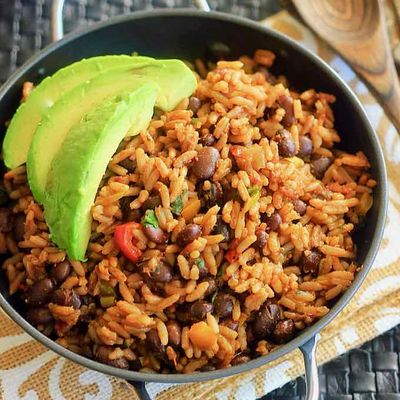
Moros Y Cristianos
Black beans simmer with bay and oregano until tender. Sofrito (onion, pepper, garlic, cumin) cooks in olive oil; the cooked beans plus their liquid join in; rice is stirred through and steamed in the bean broth until tender and tinted.
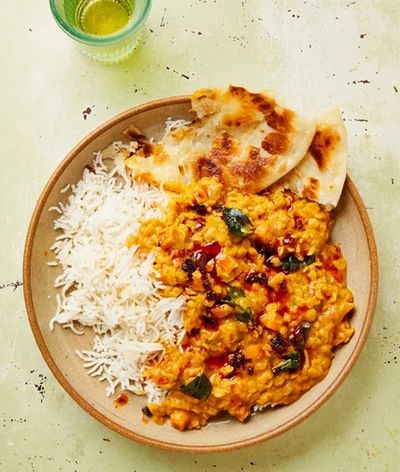
Malaysian Dhal Curry
Yellow split peas (chana dal) simmer with onion, turmeric and tomato until very soft. The lentils break down into a thick soup. Right at the end, a tempering of mustard seeds, curry leaves, dried red chillies, garlic and shallots is poured sizzling-hot over the surface. The aromatic oil seeps through; the dish transforms.
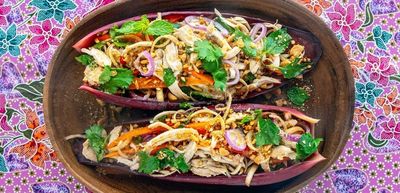
Nhom Trav
A Cambodian banana flower salad, the kind of bright herby starter that opens a Khmer meal. You slice banana flower thin and submerge it immediately in lemon water to stop the browning (banana flower oxidises within seconds of cutting, going from pale ivory to brown). Tofu cubes (or shredded chicken in the non-vegetarian version) join for substance. Peanuts toast in a dry pan; shallots fry crisp in oil. The dressing is lime, palm sugar, soy and chilli pounded together in a mortar, and everything tosses with fresh herbs at the last minute - mint, coriander, Thai basil, whatever is around. Eaten as a starter or alongside grilled meat, the bitter floral note of the banana flower balanced by the salty-sweet dressing and the crunch of peanuts.
Buss-Up-Shut Roti with Curry
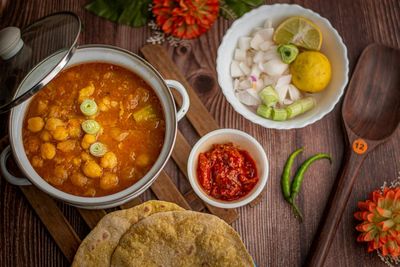
Buss-up-shut, also called paratha roti, is the flaky-layered Trinidadian roti that takes its English name from "burst-up shirt", a buss-up-shut roti is one that has been beaten the moment it comes off the tawa until it explodes into soft, irregular shreds. It is descended from the South Asian paratha, brought by indentured Indian labourers in the 19th century and rebuilt in Trinidad with a softer, more elastic dough and a finishing technique that is uniquely local. The recipe here covers the roti itself, which is the demanding part, with a short Trini channa-aloo curry on the side so you have a proper plate to scoop with. The layering technique (rolling, brushing with oil, coiling, resting, rolling out) is what creates the laminated, flaky structure. The beating step uses two wooden spatulas (called "klappers" in some roti shops) and looks dramatic but is straightforward. Difficulty is moderate; the dough is forgiving but the rolling-and-coiling step needs a little practice. Once you have a feel for it, you will make this every fortnight.