
Shrimp Po-Boy
The New Orleans po-boy: a long French roll slathered with mayo and Creole mustard, piled with fried shrimp, sliced tomato, lettuce and pickles.
Overview
Raw shrimp marinate briefly in buttermilk and hot sauce; dredge in seasoned flour and cornmeal mix; deep-fry at 180°C until deep gold and crisp (2-3 minutes, shrimp cook fast). Long French rolls split lengthways; toasted on the cut side; slathered with mayo and Creole mustard; piled with shrimp, lettuce, tomato, pickles. Wrap halfway in paper; eat.
Ingredients
Shrimp
- 400 g raw shell-off shrimp (large, 16-20 count)
- 200 ml buttermilk
- 2 tablespoons hot pepper sauce (Crystal or Tabasco)
- 100 g plain flour
- 50 g fine yellow cornmeal
- 1 teaspoon Creole seasoning (paprika + cayenne + oregano + garlic powder + onion powder + salt + pepper, or pre-mixed)
- 1 teaspoon salt
To fry
- 1 litre vegetable oil
Po-boy assembly
- 2 long French rolls (each 25-30 cm, soft inside, crisp crust)
- 3 tablespoons mayonnaise
- 2 tablespoons Creole mustard (or coarse Dijon)
- 1 cup shredded iceberg lettuce
- 1 tomato (medium, sliced)
- 12 dill pickle slices
- 1 lemon (cut into wedges)
- More hot sauce on the table
Method
Stage 1 - Marinate shrimp
- Whisk buttermilk and hot sauce in a bowl.
- Add shrimp; toss to coat; refrigerate 15 minutes.
Stage 2 - Dredge
- Whisk flour, cornmeal, Creole seasoning, salt in a wide dish.
- Lift shrimp from buttermilk (let excess drip); roll in the dry mix; press firmly to coat.
Stage 3 - Fry
- Heat oil to 180°C.
- Fry shrimp in batches of 6-8, 2-3 minutes, until deep gold and curled.
- Drain on a rack.
Stage 4 - Buns
- Split rolls lengthways. Toast cut-side down in a dry pan or under the grill 30 seconds.
Stage 5 - Build
- Spread the bottom of each roll with mayo. Spread the top with Creole mustard.
- Lay 2 tomato slices on the bottom.
- Top with shredded lettuce and pickles.
- Pile the fried shrimp generously over the lettuce.
- Squeeze lemon over the shrimp.
- Close.
Stage 6 - Eat
- Wrap halfway in paper. Eat immediately with both hands.
Notes
- The bread is the soul: A proper po-boy uses a long French roll with a crisp shell and hollow centre. A baguette is too crisp; a soft sub roll is too soft. Find a fresh French loaf or an Italian filone.
- Cornmeal in the dredge: Gives the New Orleans crunch. Pure flour gives a softer fried shrimp.
- Dressed vs naked: "Dressed" = with lettuce, tomato, pickles, mayo. "Naked" = just shrimp on bread. Both are right.
Storage
- Eat immediately. Po-boys don't keep - the bread goes soggy in 20 minutes.
More like this
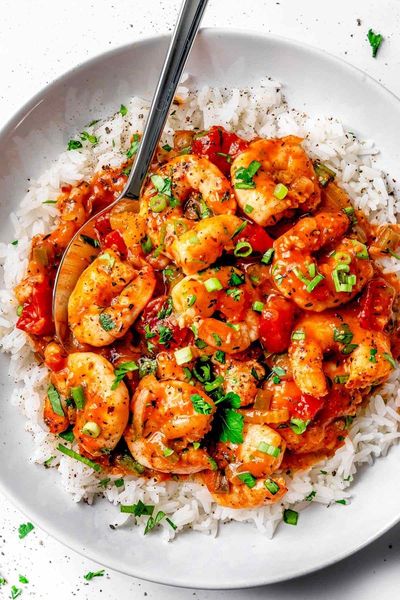
Shrimp Creole
The trinity (onion, celery, green pepper) softens in butter; garlic, Creole seasoning and herbs join. Tomato paste deepens; chopped tomatoes and stock loosen; the lot simmers for 20 minutes into a thick sauce. Prawns drop in at the end and cook for 3 minutes, pink and just-set. Hot sauce, lemon and parsley to finish.
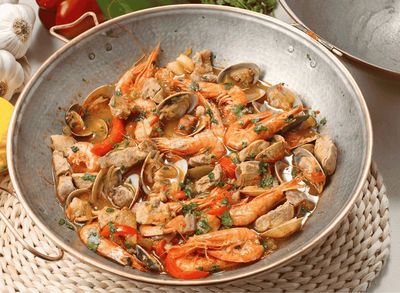
Cataplana de Marisco
A cataplana is a hinged copper clamshell pan, and the seafood stew named after it is one of those dishes where the cookware does the work. You build a base of onions, peppers, sliced chouriço, smoked paprika, tomato and white wine in the bottom of the cataplana, then layer clams, mussels, prawns and chunks of firm white fish on top, clamp the lid shut, and steam it all for less than ten minutes. The lid lifts at the table to release a cloud of paprika-and-wine-scented steam, which is the entire point of the dish. If you do not have a cataplana, any wide pan with a tight lid does the same job. Coriander and lemon at the end, crusty bread for the broth, and vinho verde for everything else.
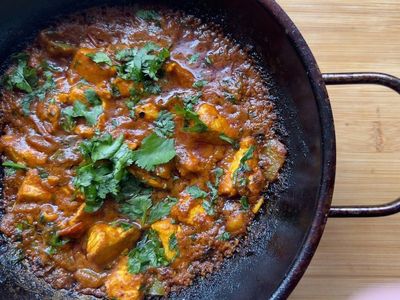
Special Balti
A customizable British curry-house special balti, mixing pre-cooked meats, seafood, and vegetables in a rich, spiced sauce. This is a chef's signature dish, adapt with your favorite ingredients for a personalized feast.

Rissóis de Camarão
A boiled water-butter-flour dough rolls thin; a thick shrimp béchamel goes on top; folded into half-moons, sealed, dipped in egg, rolled in breadcrumbs, fried. Mozambican home cooks make these in batches of fifty and freeze them. The dough is forgiving as long as you let it rest.