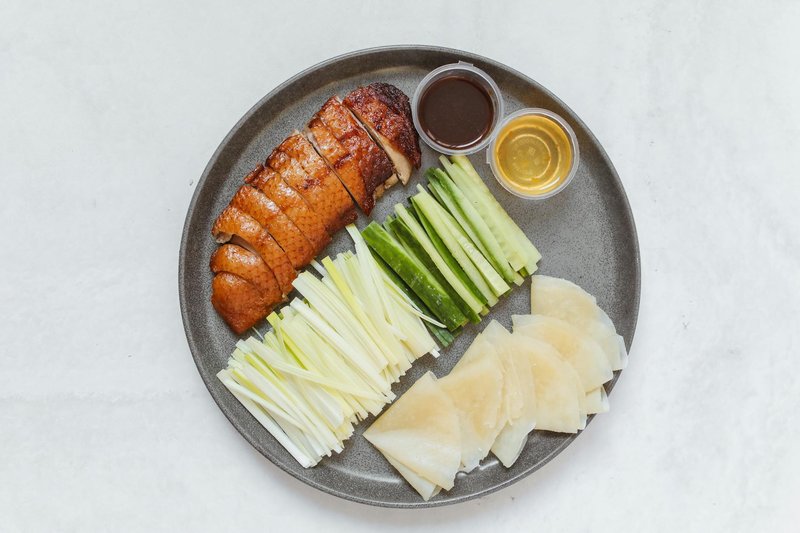
Peking Duck
Beijing's banquet duck: a whole bird air-dried, lacquered with maltose syrup and roasted till the skin crisps to glass.
Overview
The Chinese revere duck as a symbol of wholesomeness and fidelity. With Peking duck, Chinese cooks mastered the art of maximising the duck's rich, succulent flesh while minimising bone and fat. This simplified method produces similar results to traditional restaurant preparations. While the authentic version involves air-pumping and wood-burning ovens, this approach creates shatteringly crisp skin through a honey-syrup glaze and extended drying.
Serves: 4-6 Cook Time: 2 minutes
Prep Time: 15 minutes
Ingredients
Duck
- 1 whole duck (about 1.6 kg)
Honey Syrup Glaze
- 1 lemon (cut into 5 mm slices, rind on)
- 1 litre water
- 3 tablespoons honey
- 3 tablespoons dark soy sauce
- 150 ml dry sherry (or rice wine)
To Serve
- 12 Chinese pancakes
- 6 tablespoons hoisin sauce
- 24 spring onion brushes
Method
Stage 1 - Prepare & Dry
- Rinse the duck thoroughly and ensure it is completely dry.
- Insert a meat hook into the duck near the neck.
- Combine the lemon slices with the remaining syrup ingredients in a large pot and bring to the boil.
- Immediately reduce heat to low and simmer for about 20 minutes.
- Using a large ladle, pour this mixture over the duck several times, bathing it completely until all skin is coated.
- Hang the duck in a cool, well-ventilated place to dry for at least 6 hours, with a tray underneath to catch syrup.
- The duck is ready when the skin feels like parchment.
Stage 2 - Roast
- Preheat the oven to 240°C.
- Place the duck on a roasting rack in a roasting pan, breast side up.
- Put 150 ml of water into the roasting pan to prevent fat spluttering.
- Roast for 15 minutes at 240°C.
- Turn the heat down to 180°C and continue roasting for 1 hour and 10 minutes.
- Remove from the oven and let it sit for at least 10 minutes before carving.
Stage 3 - Carve & Serve
- Using a cleaver or sharp knife, cut the skin and meat into several pieces.
- Arrange on a warm platter.
- Serve at once with Chinese pancakes, spring onion brushes and a bowl of hoisin or sweet bean sauce.
Notes
- Extended drying: The 6-hour (or longer) drying period is crucial for achieving truly crisp skin. Plan accordingly.
- Honey syrup: This sweet coating develops a shiny, caramelised exterior while infusing flavour throughout.
- Parchment-like skin: This texture indicates the duck is ready to roast. Properly dried skin becomes extremely crisp.
- Resting period: The 10-minute rest after roasting allows juices to redistribute, keeping meat moist.
Serving
Serve traditional Peking duck style: with Chinese pancakes, spring onion brushes, shredded cucumber, and hoisin or sweet bean sauce for wrapping
Storage
- Best served immediately for optimal crispness
- Can be partially prepared (through drying stage) 1 day ahead; roast just before serving
- Not recommended for freezing (skin becomes tough upon thawing)
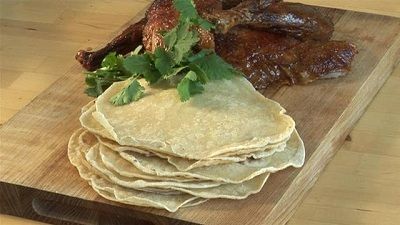
More like this
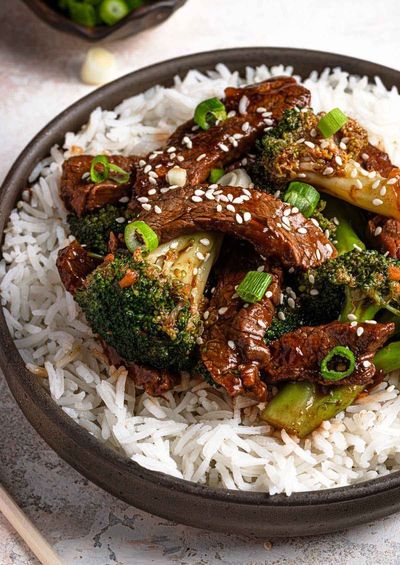
Beef and Broccoli
Sliced beef velvets briefly in cornflour and soy, broccoli florets blanch to bright green, and the lot stir-fries hard with garlic and ginger in a soy-oyster-rice-wine sauce. Served over steamed rice.
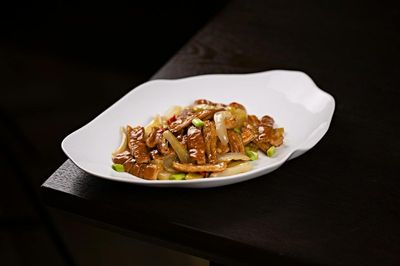
Beef in Oyster Sauce
A quick and elegant stir-fry that balances savoury oyster sauce with tender beef. This dish exemplifies the Chinese technique of high-heat cooking to seal flavours while keeping meat moist. Quality oyster sauce is essential, it should deepen the dish rather than dominate it.
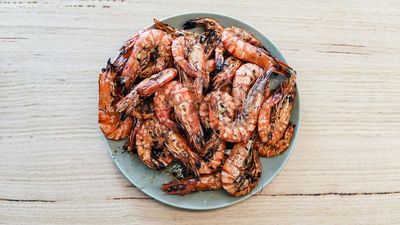
Braised Prawns
A simple, elegant preparation favoured by street vendors throughout southern China. This quick-braising method takes only minutes and produces tender, fragrant prawns. The beauty of this dish lies in its simplicity, fresh ginger and spring onions infuse the delicate sweetness of prawns. Equally delicious served hot immediately or chilled for an exotic picnic dish.
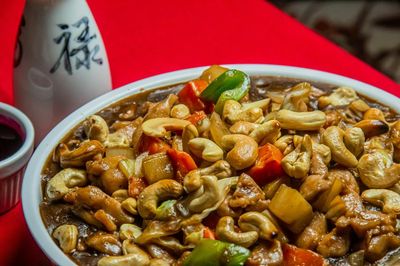
Cashew Chicken
This dish exemplifies the Chinese penchant for contrasting textures. Tender succulent pieces of chicken are paired with sweet, crunchy cashew nuts and a delicate sauce. While the original Chinese version would have used peanuts (as cashews were not traditionally featured in Chinese cookery), this adaptation showcases how the cuisine evolves while maintaining its core philosophy of textural harmony.