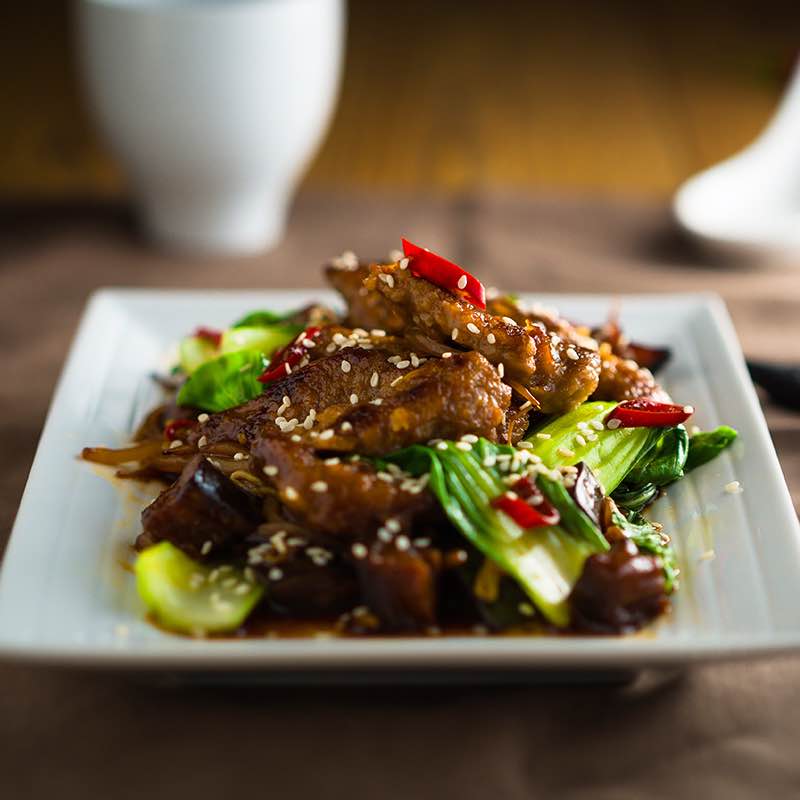
Five-Spice Beef (Wuxiang Niurou)
Slow-braised beef shank sliced cold into thin glossy rounds, dark from soy and rock sugar, perfumed with star anise, cassia and Sichuan pepper. A classic Northern Chinese deli meat with deep Hui Muslim roots, traditionally eaten as a cold appetiser or layered into noodle soups.
Overview
Wuxiang niurou is one of China's great deli meats, descended from the spiced braised meats of the Hui Muslim community that travelled along the Silk Road and settled into the cuisines of Beijing, Xi'an and Nanjing. The legend traces the modern dish to Ma Qingrui's Yue Sheng Zhai restaurant in Beijing in the 1700s, which still operates today as a halal state enterprise. Originally made with mutton, the recipe shifted to beef shank as the dish moved into the mainstream Han diet: shank is lean, gelatinous and full of connective tissue that turns silky after a long simmer. The flavour is dark, sweet and savoury with a slow warmth from Sichuan peppercorn and the woody perfume of cassia and star anise. Difficulty is low but the timeline is long: salt overnight, braise an afternoon, cool overnight in the liquid so the meat tightens and the spices penetrate. Sliced thinly across the grain the next day, the beef shows off the marbled cross-section of muscle and tendon that makes shank the right cut. Eat as part of a cold meze with pickles and peanuts, layer into a bowl of lanzhou lamian, or fold into bing flatbreads with cucumber.
Ingredients
Beef and cure
- 900 g beef shank (3-4 pieces)
- 1 tbsp kosher salt
- 1 tsp ground Sichuan pepper
Braising liquid
- 60 ml neutral oil
- 150 g rock sugar
- 6 thick slices fresh ginger
- 6 spring onions (white and pale green only), cut into 5 cm lengths
- 1 tbsp chicken bouillon powder (optional)
- 30 ml Shaoxing wine
- 30 ml light soy sauce
- 30 ml dark soy sauce
- 30 ml Chinese soybean paste (huangdou jiang)
Spice bundle
- 3 star anise pods (about 2 g)
- 2 g cassia bark
- 1 tsp fennel seeds (about 2 g)
- 2 tsp whole Sichuan peppercorns (about 2 g)
- 1 tsp cloves (about 1 g)
Method
Stage 1 - Cure
- Pat the beef shanks dry. Rub all over with the salt and ground Sichuan pepper.
- Place in a covered container and refrigerate overnight, or at least 4 hours.
Stage 2 - Blanch
- Put the cured shanks in a large pot, cover with cold water and bring to a boil.
- Boil 5 minutes, skimming the grey scum that rises.
- Drain and rinse the meat under cold water to wash off any residue. Set aside.
Stage 3 - Caramel and aromatics
- In a wok over medium-low heat, combine the neutral oil and rock sugar.
- Stir continuously as the sugar liquefies, foams, then deepens to the colour of dark soy. It should smoke lightly but never smell burnt.
- Add the ginger and spring onion (stand back, it spits). Stir for 1 minute to toast.
- Take off the heat.
Stage 4 - Braise
- Tie the star anise, cassia, fennel, Sichuan peppercorns and cloves in muslin or place in a tea ball.
- Put the shanks in the smallest pot that fits them in a single layer. Add cold water to barely cover, plus the optional chicken bouillon. Bring to a simmer and skim.
- Pour in the caramel mixture (scrape every drop). Add Shaoxing wine, light and dark soy, soybean paste, and the spice bundle.
- Cover, reduce to the lowest simmer and cook 1 ½ hours. Test with a chopstick: when the beef slides off the chopstick easily, it is done. If it clings, simmer 15 more minutes and test again.
Stage 5 - Cool and serve
- Let the beef cool completely in the braising liquid, then refrigerate overnight in the same liquid.
- Lift the firmed beef from the jellied broth. Slice thinly across the grain.
- Serve cold with a spoonful of warm braising liquid, or layer into noodle soups or sandwiches.
Notes
- Cool in the liquid: the meat tightens as it cools, and the spices penetrate over the resting hours. Skipping this step gives flabby, under-flavoured beef.
- Soybean paste swap: if huangdou jiang is hard to find, Japanese miso or Korean doenjiang give a similar deep umami. A spoon of Pixian doubanjiang adds gentle heat.
- Shank only: other cuts can work but shank's mix of muscle and connective tissue gives the marbled, slightly springy cross-section that defines the dish.
- Save the braising liquid: strain and freeze it; it is a "master stock" that gets better each time you use it for another braise.
Storage
- Beef keeps 5 days refrigerated in its braising liquid.
- Freezes well, sliced or whole, for up to 3 months.
- Reuse the strained liquid to braise eggs, tofu or another batch of beef.
More like this
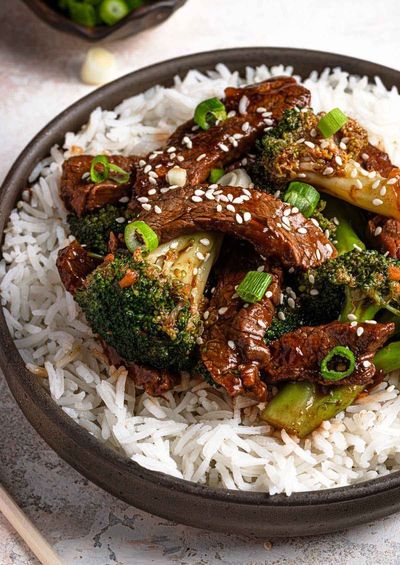
Beef and Broccoli
Sliced beef velvets briefly in cornflour and soy, broccoli florets blanch to bright green, and the lot stir-fries hard with garlic and ginger in a soy-oyster-rice-wine sauce. Served over steamed rice.
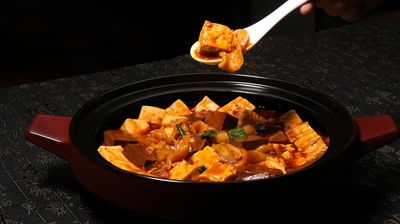
Mapo Tofu
Silken tofu cubes are blanched briefly in salted water (firms slightly and seasons). Pork mince is fried hard in oil; doubanjiang and douchi join, cooking to release oil; garlic, ginger, chilli flakes and ground Sichuan peppercorn are toasted briefly. Stock is poured in; tofu is slipped in; gentle simmer for 5 minutes; cornflour slurry thickens. Spring onions and a final dusting of ground Sichuan peppercorn finish.
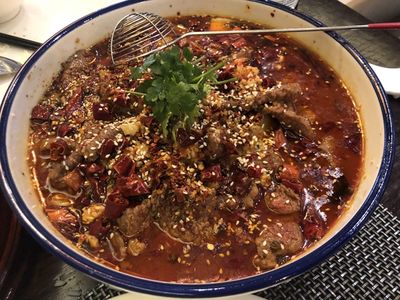
Shuizhu Niurou
Two sensations at once: the bright, immediate burn of dried chilli (la) sitting under the slow numbing-electric prickle of Sichuan peppercorn (ma). That mala pair is the whole point. Beneath that, the broth is salty and fermented-funky from doubanjiang, the deep umami of broad-bean paste that's been aged for months in clay vessels. The hot oil pour at the table is theatre but it does real work: it blooms the dried chillies and Sichuan peppercorn powder right before you smell them, so the aroma arrives in a wave. Texturally: gloriously tender silk-thin beef slices (the cornflour-and-egg-white marinade is what keeps them that way), crisp-on-the-edge bok choy or bean sprouts wilting under the heat, oil swimming on top. Easier than its restaurant-banquet reputation suggests once you have doubanjiang and Sichuan peppercorns in the pantry; the technique is mostly "don't overcook the beef" and "pour the oil while it's smoking". Originates in 1930s Chongqing as a riverboat-worker's dish, water and chillies were cheap, lean cuts of beef tough, then spread through Sichuan in the 1980s as the wider mala movement caught hold.
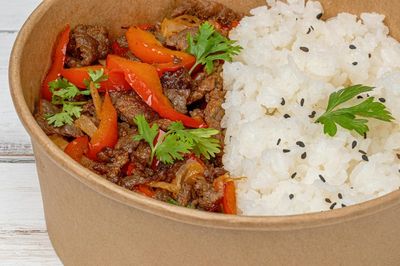
Sichuan Pepper Beef
This fast, easy, and delicious supper showcases how Chinese five-spice powder flavours an entire dish via a marinade approach. Overnight marination develops deep, complex flavours that distinguish this simple stir-fry from quickly-thrown-together meals. The combination of Sichuan pepper's numbing quality with five-spice complexity creates an unforgettable sauce.