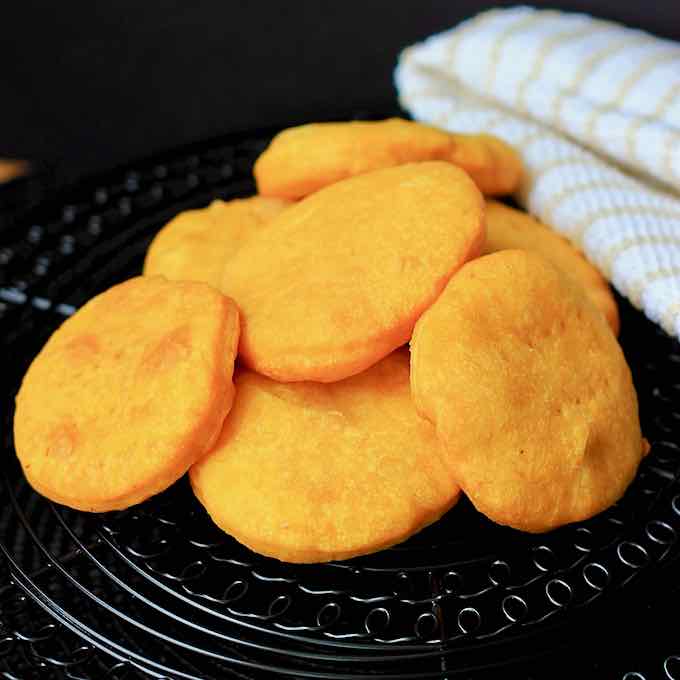
Sopaipillas
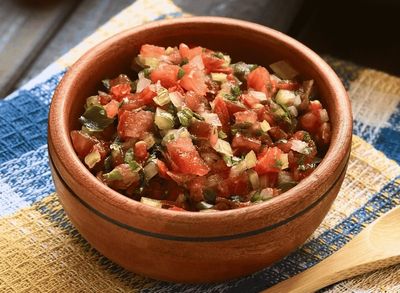
Chile's rainy-day flatbread: pumpkin-and-flour discs deep-fried golden and puffed. Eaten warm with pebre, mustard or a smear of butter.
Overview
Chile's rainy-day flatbread, the pumpkin-and-flour disc that turns up at street stalls on cold winter afternoons and gets dunked in mustard or pebre by every passer-by. You boil pumpkin (or butternut) cubes until soft, drain and mash, then mix the warm purée with flour, melted butter, baking powder and salt to a soft pliable dough. Rest for thirty minutes, roll to five millimetres thick, stamp out eight-centimetre rounds, pierce each one twice with a fork (which keeps them from puffing into balloons), and fry at 170°C for ninety seconds per side until deep gold. Eaten warm with pebre, mustard, or a smear of butter, ideally while the rain is still falling.
Ingredients
- 500 g pumpkin (or butternut squash, peeled, cut into 3 cm chunks)
- 1 teaspoon salt (for boil)
- 450 g plain flour
- 2 teaspoons baking powder
- 1 teaspoon salt
- 60 g unsalted butter (melted)
- 1 litre vegetable oil for deep frying
Method
Stage 1 - Pumpkin
- Place pumpkin in a pot with salted water to cover; bring to a boil.
- Cook 15 minutes until very tender.
- Drain very thoroughly; return to the dry pot; mash to a smooth purée.
- Cool to lukewarm - too hot melts the butter unevenly.
Stage 2 - Dough
- Whisk flour, baking powder, salt in a wide bowl.
- Add 400 g of the warm pumpkin purée and the melted butter; mix to a soft dough.
- Knead 3-4 minutes on a lightly floured surface - the dough should be soft and slightly sticky but workable.
- Cover; rest 30 minutes.
Stage 3 - Shape
- Roll the dough on a floured surface to 5 mm thick.
- Stamp out 8 cm rounds with a cutter or glass.
- Pierce each round twice through the centre with a fork - this prevents puffing too dramatically.
Stage 4 - Fry
- Heat oil to 170°C in a deep pan.
- Fry in batches of 4-5, 90 seconds per side, until deep gold.
- Drain on kitchen paper.
Stage 5 - Serve
- Eat warm. Plain with butter, dipped in pebre, or spread with mustard.
- For sweet sopaipillas pasadas, dunk in a hot chancaca syrup (brown sugar boiled with orange peel and cinnamon).
Notes
- Dry pumpkin: Drain very well after boiling - wet pumpkin gives wet dough that won't fry crisp.
- Don't roll too thin: 5 mm is right. Thinner gives crispy crackers; thicker gives doughy centres.
- Pierce them: Without the fork holes, they balloon then collapse to leathery flatbreads. With the holes, they stay flat-ish and crisp.
Storage
- Best eaten warm same day. Refresh briefly in a 200°C oven 3 minutes.
- The dough keeps 24 hours refrigerated; fry fresh.
More like this
Humitas
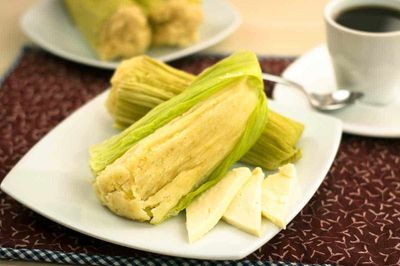
The Andean-Chilean answer to the Mexican tamale, but unfilled - just sweet fresh corn intensified by being pulped, wrapped in its own husk, and steamed into tender parcels. You shuck fresh sweetcorn and save the husks in warm water to soften. Strip the kernels: half get pulsed to a coarse paste, half stay whole, and the two textures combine in the bowl. Onion softens in butter with paprika and salt, then folds through the corn. Two tablespoons of mixture spoon onto each softened husk, the sides fold in, the ends fold down, and a thin strip of husk ties the parcel closed. Steam for forty-five minutes until the corn has set. Served hot with a sprinkle of sugar (the savoury-sweet thing happens at the table) or with pebre alongside for a saltier finish.

Beignets
A soft eggy yeasted dough mixes, flour, yeast, sugar, salt, butter, egg, milk and a touch of evaporated milk for the classic richness. Rises for 2 hours (or overnight in the fridge). Rolls to 5 mm thick on a floured surface; cuts into 5 cm squares. Fries at 180°C 90 seconds per side. Drains briefly; dusts heavily with icing sugar; eaten hot.
Bolo Do Caco
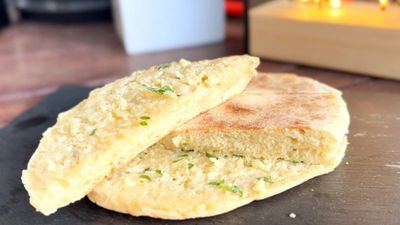
Bolo do caco is the Madeiran flatbread you'll get at every restaurant on the island, traditionally cooked on a hot basalt stone (the caco) but very happily on a heavy dry griddle at home. The dough is straightforward (strong flour, yeast, salt, water) with one twist: a small boiled and mashed orange sweet potato folded in, which gives the bread its faintly sweet edge and golden colour. After a single rise, you divide the dough, shape into 18 cm rounds, and press them onto a hot dry pan for five minutes a side until both faces are charred-spotted. Split horizontally, slathered with garlic-parsley butter, and closed back like a sandwich. Eat hot; it does not keep.
Buttered Red Cabbage
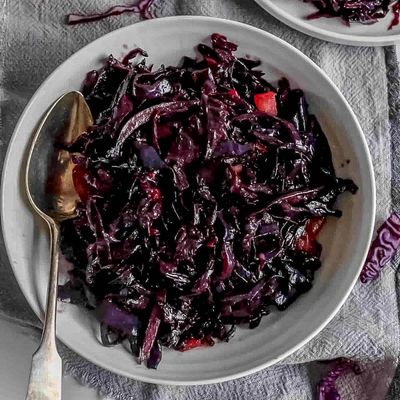
Onion is softened in butter; red cabbage joins along with sliced apple, brown sugar, red wine vinegar, a touch of red wine, cinnamon and cloves. Slow-cooked covered for an hour until the cabbage is silky and the liquid has reduced into a glossy glaze.