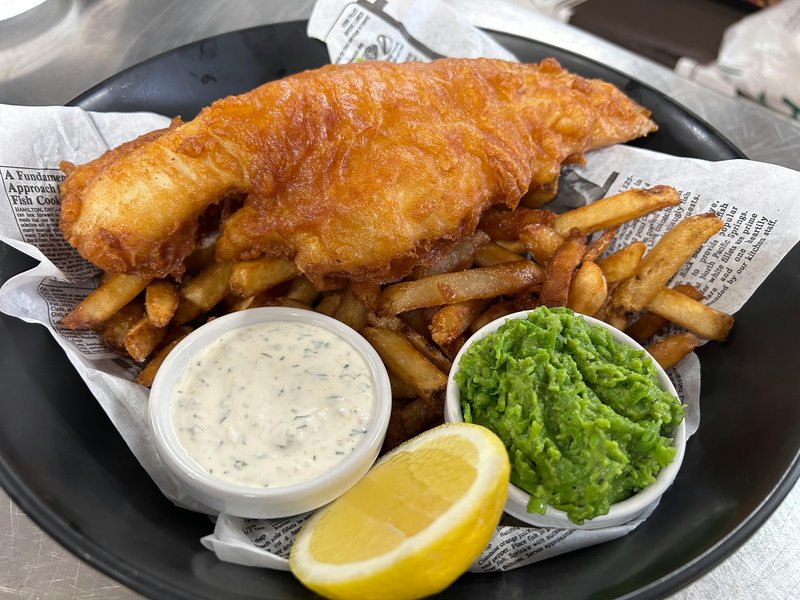
Fish and Chips
The British takeaway icon: cod or haddock in a beer-batter shell that shatters when you bite, alongside thick chunky chips fried twice for the crispest crust. Mushy peas and a wedge of lemon on the side; vinegar at the table.
Overview
The British takeaway classic, the meal eaten wrapped in paper on a seafront bench while the gulls work out their angle of attack. The chips are the longer half of the job: floury Maris Piper potatoes blanched first at low oil temperature to cook through, drained, then crisped at a hotter temperature for the second fry that gives them their proper craggy crunch. The fish (cod or haddock for the classic, pollock or hake for the equally-good alternatives) dunks in a cold beer batter and goes straight into the same hot oil, where the batter sets instantly into a shattering golden shell that keeps the fish steaming and white inside. Mushy peas on the side, a wedge of lemon if you're being fancy. Salt and malt vinegar at the table, newspaper underneath if you're going traditional.
Ingredients
Chips
- 1 kg Maris Piper potatoes (peeled, cut into 1 ½ cm thick chips)
- Vegetable oil (or beef dripping for deep-frying)
- Sea salt
Fish
- 4 skinless cod (or haddock fillets, about 150 g each)
- 2 tablespoons plain flour (for dusting)
- salt
- pepper
Beer batter
- 200 g plain flour
- 1 teaspoon baking powder
- ½ teaspoon salt
- 300 ml very cold beer (lager or a pale ale)
Mushy peas
- 400 g frozen peas
- 30 g unsalted butter
- 2 tablespoons crème fraîche
- 1 tablespoon mint (chopped, optional)
- salt
- pepper
To serve
- Lemon wedges
- Malt vinegar
- Tartare Sauce
Method
Stage 1 - First fry of the chips
- Soak the cut chips in cold water for 10 minutes, then drain and pat thoroughly dry.
- Heat the oil to 130°C in a deep fryer or heavy pan.
- Fry the chips in batches for 6-7 minutes until soft but uncoloured.
- Drain on a wire rack. Let rest while you make the batter and peas.
Stage 2 - Mushy peas
- Cook the peas in boiling salted water for 3 minutes. Drain.
- Mash with the butter and crème fraîche to a chunky purée. Stir in the mint and season.
- Keep warm.
Stage 3 - Batter the fish
- Whisk the flour, baking powder and salt in a bowl.
- Pour in the cold beer and whisk just until smooth (some lumps are fine; don't over-mix).
- Pat the fish fillets dry, season, and dust lightly with the extra flour.
Stage 4 - Second fry of the chips, then the fish
- Increase the oil to 190°C.
- Fry the chips again in batches for 2-3 minutes until deep golden and crisp. Drain, salt immediately, keep warm in a low oven.
- Dip each fish fillet in the batter and lower carefully into the oil. Fry for 5-6 minutes until the batter is deep golden and the fish is cooked through (it'll feel firm).
- Drain briefly on a wire rack and serve immediately.
Notes
- Twice-fried chips: The first fry cooks the inside; the second crisps the outside. A single fry at high heat gives raw centres and burnt edges.
- Beer must be cold: Cold batter against hot oil causes the dramatic crisping. Room-temperature batter goes flabby.
- Don't crowd the oil: Dropping more than 2 fillets at a time drops the temperature; the batter absorbs oil instead of crisping.
- Dripping is traditional: Beef dripping gives the proper chippy flavour and crisper chips. Vegetable oil works.
Storage
- Best eaten immediately. Fish + chips don't reheat well; the batter goes leathery and the chips soften.
- Mushy peas keep 2 days refrigerated.
Recipes mentioned here
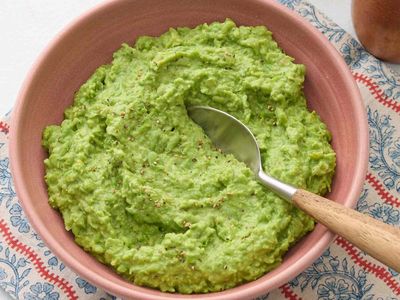
Mushy Peas
Dried marrowfat peas soak overnight in cold water with bicarbonate of soda (the soda softens the skins; without it the peas stay tough). The peas are drained, rinsed, then simmered slowly in fresh water with a pinch of salt until they break down into a thick green porridge, about 40 minutes. A teaspoon of butter, a pinch more salt and (optionally) a small spoon of mint sauce or chopped fresh mint stir through at the end. Eaten warm. Some chip-shop versions add a teaspoon of sugar; some Yorkshire households add a splash of malt vinegar at the table.
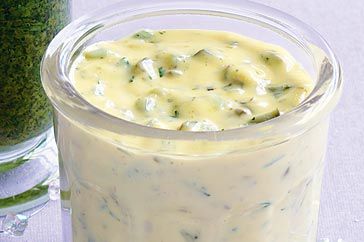
Tartare Sauce
A vibrant, sophisticated cold sauce combining hard-boiled egg yolks with fragrant oil, tangy vinegar, and a combination of capers, onion, and fresh chives. This classic French accompaniment to fried fish showcases elegant simplicity with layered, briny flavors.
More like this
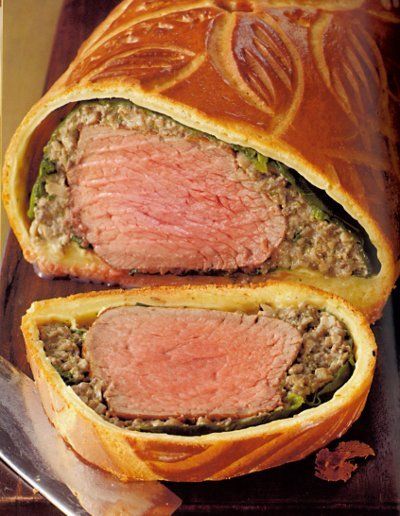
Beef Wellington en Brioche
A showstopping dish featuring a rare beef tenderloin encased in layers of mushroom duxelles, spinach, herb crêpes, and a golden, crispy pastry crust. Each slice reveals a beautiful cross-section of perfectly cooked beef, creamy mushroom filling, and elegant layers. This is fine dining on a plate, impressive enough for the most important dinner party.
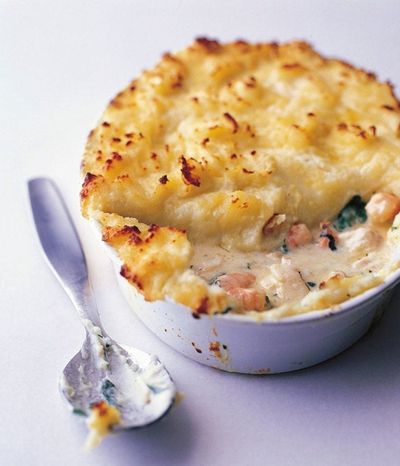
Fish Pie
The British family classic that turns up on a kitchen table on a cold Tuesday night, the one fish dish that even children who hate fish will eat. You poach a mix of fish (cod, smoked haddock, salmon, prawns) briefly in milk - just enough to set the flesh - then strain the milk off and turn it into a parsley-and-cheddar béchamel. The fish goes into a deep dish, the béchamel pours over to bind, and a thick layer of cheddar mash piles on top in rough peaks that catch and crisp in the oven. Bake until the top is golden and the sauce bubbles up around the edges. Eaten with peas or buttered greens, a glass of cold white wine, the kind of meal that turns the evening domestic in the best way.
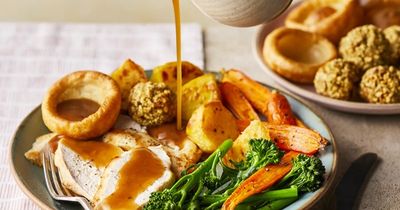
Sunday Roast Chicken
The British Sunday lunch, the meal that anchors the week for any household that still observes it. You rub a 1.6 kg bird with herb butter pushed under the skin, roast it hot for fifteen minutes to crisp the skin, then drop the temperature to finish through gently. The components time off the chicken's resting period: roast potatoes parboil and rough up before going into hot goose fat, Yorkshire puddings rise in screaming-hot tins of dripping, pan juices deglaze into gravy, peas warm at the last minute. The chicken comes out of the oven first, rests under a foil tent for fifteen minutes while everything else times in, then carves at the table while someone else stirs the gravy. Eaten slowly, with horseradish or a wedge of lemon on the side, and seconds expected.
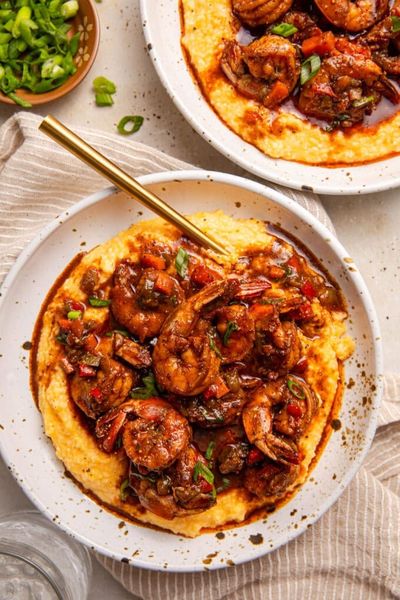
Brown Stew Shrimp and Sweet Potato Grits
A Caribbean-Southern crossover that works because both traditions cook in a similar register: butter, peppers, alliums, slow heat, savoury depth. The brown stew base on top of the dish is Jamaican, bell peppers, carrot, Scotch bonnet, ginger, browning sauce, that mahogany-coloured gravy with the unmistakable allspice-and-thyme signature, and the bed underneath is from Lowcountry Charleston, where sweet potato grits enriched with butter, half-and-half and gouda are a long-running modern Southern restaurant standard. The shrimp themselves are quick-cooked and sweet, picking up the brown stew sauce. Two textures stacked: silky-rich grits, brothy stew on top with bite from the diced peppers and carrot. Smell is sweet-onion-and-browning-sugar over the corn-sweet base of the grits. Not difficult but it's two pans running at once, so timing matters; the grits hold on a low warm setting while the shrimp cook quickly. A modern fusion rather than a traditional dish, popularised by Black American chefs in the 2010s exploring the points of overlap between Lowcountry and Caribbean cookery.