Chanar Dalna
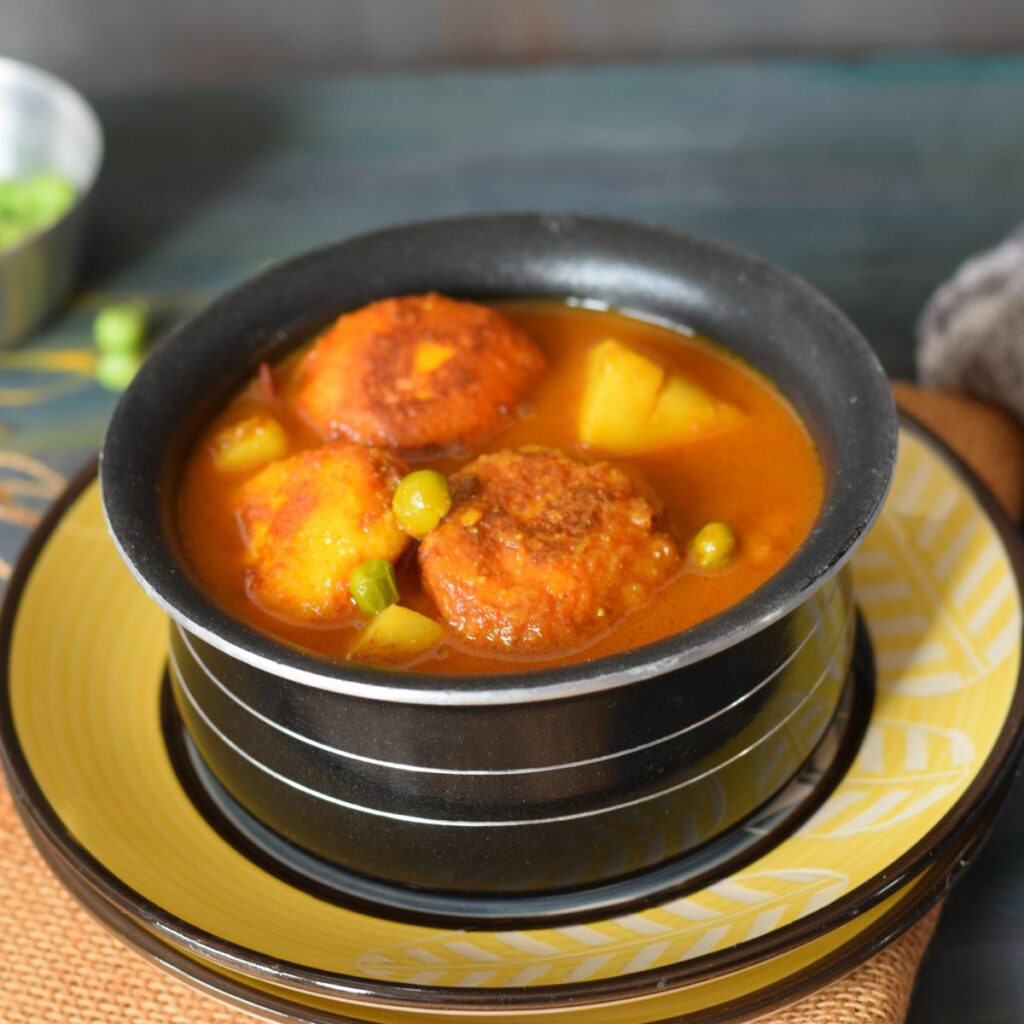
A Bengali vegetarian curry of fresh paneer cubes and pale gold potatoes simmered in a light, ginger-and-cumin-scented gravy. The Sunday curry of vegetarian Bengali households.
Overview
The vegetarian centrepiece of Bengali Sunday lunches and festival meals, the curry that arrives on the rice plate when fish is off the menu (a Hindu vegetarian day, Saraswati Puja, a temple feast). "Chanar" in Bengali refers to fresh-curdled paneer, "dalna" to a light soupy curry, and the dish is exactly what the name promises. You lightly fry cubes of chhena (or shop paneer if you must) and quartered potatoes until they're pale gold, then simmer them in a thin gravy of mustard oil, whole spices, freshly pounded ginger and ground cumin. There's no onion, no garlic and no tomato in the most traditional version. The dish leans entirely on its whole spices and the ginger paste, which keeps it festival-friendly across vegetarian Hindu households. Eat with a small mound of gobindobhog rice, a wedge of lime on the side, and the chhena half-collapsing into the spiced broth as you spoon.
Ingredients
Paneer and potatoes
- 400 g paneer (cut into 2 cm cubes; or homemade chenna)
- 3 medium potatoes (peeled, quartered)
- 1 teaspoon turmeric
- 4 tablespoons mustard oil
Whole spices
- 2 Indian bay leaves (tej patta)
- 5 cm piece cinnamon (cassia bark)
- 4 green cardamom pods (bashed)
- 4 cloves
- 1 teaspoon cumin seeds
- 1 dried red chilli (optional, broken)
Wet masala
- 2 tablespoons ginger paste (fresh, no garlic)
- 1 tablespoon ground cumin
- 1 teaspoon ground coriander
- 1 teaspoon Kashmiri chilli powder
- ¾ teaspoon turmeric
- 2 green chillies (slit lengthways)
Liquid and finish
- 500 ml water
- 1 teaspoon sugar
- Salt (to taste)
- 1 teaspoon Garam Masala
- 1 teaspoon ghee (to finish)
- A small handful of fresh coriander (chopped)
Method
Stage 1 - Fry the paneer
- Heat 2 tablespoons of the mustard oil in a heavy-based pan over medium-high heat until it just smokes, then reduce the heat slightly.
- Slide in the paneer cubes and fry for 3 to 4 minutes, turning, until golden on all sides.
- Lift out with a slotted spoon and drop into a bowl of warm water - this stops them going hard as they sit.
Stage 2 - Fry the potatoes
- In the same oil, fry the potato quarters for 5 to 6 minutes, turning, until lightly golden at the edges (turmeric-rub them first if you want extra colour).
- Lift out and set aside.
Stage 3 - Bloom the whole spices
- Add the remaining 2 tablespoons of mustard oil to the pan.
- Drop in the bay leaves, cinnamon, cardamom, cloves, cumin seeds and dried red chilli.
- Sizzle for 30 seconds until the cumin pops and the air smells of warm spice.
Stage 4 - Build the wet masala
- Lower the heat to medium.
- Spoon in the ginger paste - it will spit, so stand back.
- Cook for 1 to 2 minutes, stirring, until the raw edge is gone and the paste smells sweet.
- Sprinkle in the ground cumin, ground coriander, Kashmiri chilli powder and turmeric.
- Stir for 30 seconds, splashing in a tablespoon of water if the spices threaten to catch - they should bloom in the oil, not scorch.
Stage 6 - The dalna
- Drain the paneer from the warm-water bath and add it to the pan along with the par-fried potatoes and slit green chillies.
- Stir gently to coat in the masala.
- Pour in the water and add the sugar and salt.
- Bring to a gentle simmer, cover and cook for 12 to 15 minutes until the potatoes are completely soft and the gravy has lightly thickened.
- Stir once or twice (gently, so the paneer doesn't break) to stop anything catching.
Stage 7 - Finish
- Taste and adjust salt.
- Sprinkle over the garam masala and dot in the ghee.
- Cover and rest off the heat for 5 minutes.
- Top with chopped coriander.
Notes
- No onion, no garlic. Traditional chanar dalna is satvik-cooking-friendly - no onion or garlic. This is what gives it its distinctive clean, ginger-led flavour. Adding them is fine if you prefer, but the dish then drifts toward a generic paneer curry.
- Soak the fried paneer. The warm-water trick is genuinely important. Paneer goes leathery if it sits dry between frying and the gravy. Five minutes in warm water keeps it soft.
- Fresh ginger paste. Pre-made jar pastes work but a freshly pounded knob of ginger (or a quick processor blitz) is a noticeable lift in a dish this clean.
- Heat level. This is a mild curry. The slit green chillies infuse rather than dominate. For more punch, double them or add a pinch more Kashmiri chilli.
Serving
Serve with luchi (Bengali puffed bread), plain steamed basmati rice, or with a simple cholar dal on the side for a vegetarian thali. A spoonful of mango chutney on the rim of the plate is the classic finishing touch.
Storage
- Refrigerate up to 2 days. The paneer firms up slightly in the fridge; a gentle reheat in the gravy softens it again.
- Don't freeze; the paneer texture suffers and the gravy thins on thawing.
- Reheat gently over low heat with a splash of water to loosen the gravy.
More like this
Mangshor Jhol
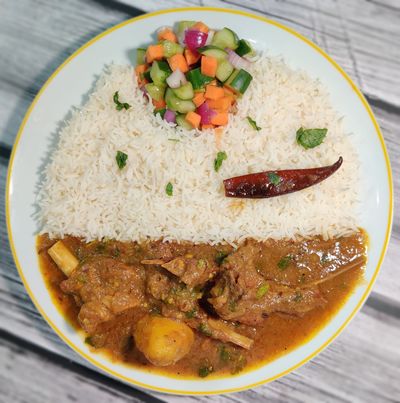
The wet-style mutton counterpart to the drier, slow-bhuna kosha mangsho - and the more everyday of the two. "Jhol" means a thin, soupy gravy and mangshor jhol is exactly that: bone-in goat or mutton cooked low and slow with potatoes in a light, aromatic broth that you ladle generously over rice. You heat mustard oil to smoking to take the raw edge off, temper whole bay and cinnamon in the hot fat, then brown the onions deeply and add a measured hand of turmeric to give the gravy its colour and weight. The bones contribute marrow to the broth as the meat tenderises over an hour or so, and the potatoes go in late enough that they soften without disintegrating. Eaten with a mound of plain steamed rice, a wedge of lime, and a thin slick of mustard oil scattered with raw onion on the side. A Sunday lunch dish for a Bengali household, served from the same pot it was cooked in.
Murgir Jhol
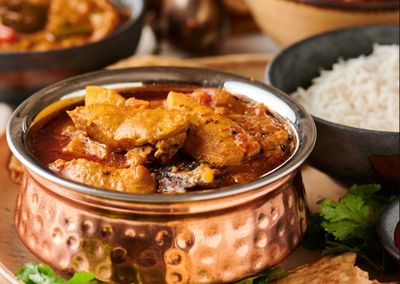
The everyday Bengali household chicken curry, the antithesis of the heavy, cream-rich curry-house style. "Jhol" means a thin, soupy gravy, and that's exactly what murgir jhol is: bone-in chicken and chunky golden potatoes simmered in a fragrant amber broth you eat with steamed rice, mopping up every drop. You heat mustard oil to smoking point to take the raw edge off, then temper whole bay, cinnamon, cardamom and clove in the hot fat. Browned onions, freshly pounded ginger and a measured hand of turmeric give the gravy its colour and warmth; tomato goes in sparingly, just enough to round the edges without turning the broth red. The chicken and potatoes cook together gently for about thirty minutes, the meat falling tender as the broth concentrates. Steamed gobindobhog rice on the side, a wedge of lime, perhaps a green chilli on the rim of the bowl for whoever wants more heat.
Doi Maach
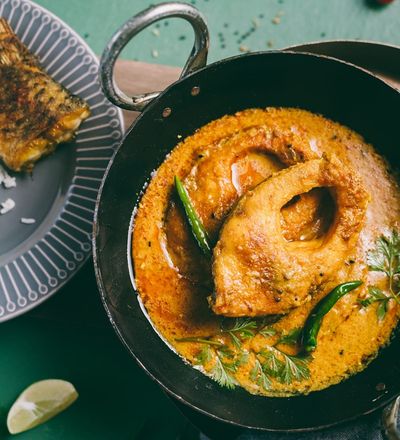
The celebration-day Bengali fish curry, the one you cook for a Saraswati Puja lunch or a weekend when family are visiting. "Doi" means yoghurt, "maach" means fish, and that's the dish in two words: pieces of firm-fleshed freshwater fish (traditionally rohu, katla or sometimes bhetki) first lightly fried in mustard oil until the skin is taut and gold, then poached gently in a thickened yoghurt sauce. The gravy is pale ivory rather than yellow or red, with the warming whole spices (cardamom, cinnamon, bay) doing the work that chilli powder does in northern curries. The critical move is timing: you whisk the yoghurt smooth and add it off the heat so it doesn't split, then the fish goes back in to finish poaching gently in the silky gravy. A touch more refined than a workaday machher jhol, eaten with steamed gobindobhog rice and a small spoon of ghee melted over the top.
Machher Jhol
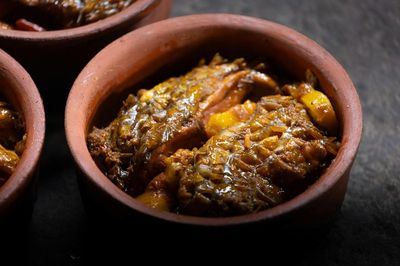
Machher jhol is the everyday fish curry of Bengal, eaten with steamed rice almost daily in households on both sides of the border. Unlike the richer, mustard-heavy shorshe ilish or the coconut-based malai curry, jhol is deliberately light: a thin, fragrant broth carrying potato wedges, sometimes ridge gourd or aubergine, and pieces of freshwater fish such as rohu, katla or pabda. The flavour rests on three pillars, mustard oil heated to its smoke point then cooled to mellow its bite, a quick tempering of kalo jeere (nigella seeds) and slit green chillies, and a freshly ground paste of cumin, ginger and a little turmeric. There is no onion-tomato masala bhuna here in the Punjabi sense; the broth stays clear and the fish remains the hero. Hindu Bengali kitchens often skip onion and garlic for everyday jhol, while Bangladeshi versions lean a touch heavier on ginger and sometimes add a spoon of mustard paste. The dish is forgiving for home cooks once the fish is fried correctly: the steaks must be salted, turmericked and shallow-fried in very hot mustard oil until the skin is taut and golden, otherwise they will disintegrate in the gravy. Served at room temperature over a mound of gobindobhog rice with a wedge of lime, machher jhol is the taste of Bengali home.