Plov
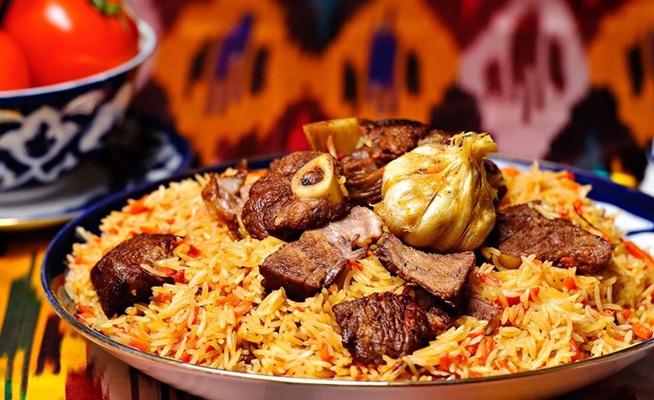
Azerbaijan's wedding rice: basmati steamed under a buttery saffron crust, served with slow-stewed lamb, dried apricots and chestnuts.
Overview
Azerbaijan's wedding rice, the centrepiece of any celebration worth the name, and a dish that takes most of a day to do properly. You soak basmati for an hour in salted water, drain it, par-boil for five minutes in heavily salted water, drain again. A wide heavy pot is buttered, and a sheet of lavash (or a saffron-soaked rice base) lines the bottom to form the qazmaq crust that's the prize at the end of the meal. The par-boiled rice piles on top, butter melts down through it, the pot covers and steams for forty minutes to an hour on low heat. Meanwhile you cook the qara separately: lamb shoulder cubes browned, onions softened slowly, dried apricots and chestnuts added with a splash of water, the whole stew simmering for ninety minutes until the lamb is meltingly tender. The plov comes to the table with the rice mounded on a platter, the qazmaq crust broken and shared at the table, and the qara spooned alongside. A meal that announces itself.
Ingredients
Rice
- 500 g basmati rice
- 2 tablespoons salt (for the par-boil)
- 100 g unsalted butter
- 1 large pinch saffron threads (~20 strands)
- 2 tablespoons boiling water
- 2 sheets lavash flatbread (for the crust)
Lamb topping (qara)
- 800 g boneless lamb shoulder (cut into 4 cm cubes)
- 3 onions (medium, finely sliced)
- 50 g butter
- 100 g dried apricots
- 100 g prunes (stoned)
- 80 g pre-cooked chestnuts (peeled)
- 1 teaspoon ground cinnamon
- ½ teaspoon ground turmeric
- 1 teaspoon salt
- ½ teaspoon ground black pepper
- 200 ml water
To serve
- Sumac
- Fresh tarragon, dill, watercress, spring onion
Method
Stage 1 - Soak and par-boil rice
- Rinse the basmati under cold water until the water runs clear.
- Soak in cold salted water for 1 hour.
- Bring a large pot of water to a rolling boil with 2 tablespoons salt.
- Drain the rice and tip into the boiling water; par-boil 5 minutes (the grains should bend but still have a hard core).
- Drain in a colander; rinse briefly with warm water.
Stage 2 - Saffron infusion
- Grind the saffron threads with a tiny pinch of sugar in a mortar.
- Pour over 2 tablespoons of boiling water; let steep 5 minutes.
Stage 3 - Build the qazmaq
- Melt half the butter (50 g) in a wide heavy-based pot over medium heat.
- Line the bottom with lavash sheets, pressing them down into the butter.
- Spoon the rice on top in a pyramid (don't press it down - air gives the qazmaq its lift).
- Drizzle the saffron infusion over the rice peak.
- Drop the remaining 50 g butter in small cubes over the top.
Stage 4 - Steam
- Wrap the pot lid in a clean tea towel (catches condensation, stops it dripping back onto the rice).
- Cover tightly; reduce heat to low.
- Steam 45 minutes - do not lift the lid.
Stage 5 - Lamb qara
- While the rice steams, brown the lamb cubes in butter over medium-high heat in a separate heavy pan; remove.
- Soften the onions in the same pan 10 minutes until pale gold.
- Return the lamb; add cinnamon, turmeric, salt, pepper.
- Add the dried apricots, prunes and chestnuts.
- Pour in 200 ml water; bring to a simmer.
- Cover; cook on low 75-90 minutes until the lamb is tender.
Stage 6 - Plate
- Spoon the saffron-stained top layer of rice onto a warm platter first.
- Heap the rest of the rice around it.
- Lift the qazmaq crust out (it should be amber-golden and crisp) and break into shards on a separate plate.
- Serve the qara in a deep bowl alongside.
Notes
- Qazmaq is the soul of plov: the crisp lavash-and-rice crust is what diners fight over. Lining with lavash gives a more even, snappable crust than the alternative saffron-rice base.
- Don't lift the lid during steaming: every peek loses steam and you risk a wet, uneven rice.
- Two pots, not one: the lamb stew never goes into the rice pot. Azerbaijani plov is plated, not mixed, unlike Uzbek osh.
Storage
- Rice and qara keep 3 days refrigerated. Reheat the rice covered with a splash of water in a 160°C oven 15 minutes; the qara in a small pot on low.
- The qazmaq crust loses its shatter after the first day; eat it the day of cooking.
More like this
Dolma (Azerbaijani Stuffed Vine Leaves)
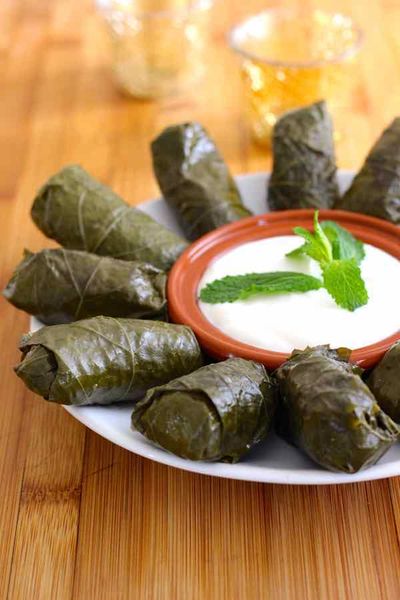
Azerbaijan's stuffed vine leaves, claimed as the national dish in 2017 and added to UNESCO's list of Intangible Cultural Heritage. You start by soaking brined vine leaves in warm water for twenty minutes to leach out the salt, then build a filling of raw lamb mince with rinsed short-grain rice, finely chopped onion, fresh mint and dill, butter, salt and pepper. Each leaf gets a teaspoon of filling and rolls into a tight cigar. The rolls pack in a single layer in a heavy pot, then a second and third layer perpendicular to the first, like a brickwork pattern that holds them together as they cook. Stock and a splash of sumac water pour in to barely cover, an inverted plate weighs everything down so the dolma keep their shape, and the lot simmers slowly for fifty minutes. Plated on a platter with thick garlic yogurt alongside for dipping.
Domoda
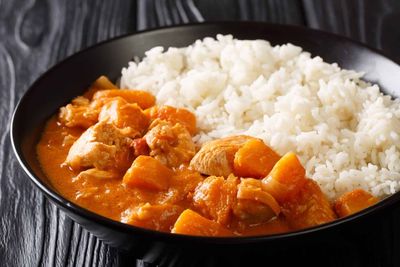
Chicken thighs (or lamb) are browned, onions and tomato cooked down with garlic and a single whole chilli, then the meat simmers in stock until tender. A loose peanut paste is stirred in for the final 20 minutes, kept thin enough to ladle. Sweet potato or pumpkin softens in the sauce. A spoon of lime juice at the end balances the richness.
Kabsa
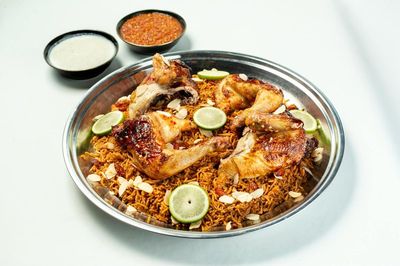
Saudi Arabia's national dish, the one platter you'll meet at almost every gathering from family lunch through wedding banquet. You brown chicken pieces or lamb shoulder hard in a heavy pot, then build a base of onion, garlic and ginger softened in the same fat, with tomato and a spoonful of baharat (or a dedicated kabsa spice mix) blooming until the kitchen fills with cardamom and cinnamon. The protein simmers in tomato and stock until it's tender and pulling away from the bone, then long-grain rice goes in to cook absorption-style in the same liquid, drinking up every layer of flavour the broth carries. You finish with almonds toasted in butter, raisins plumped briefly, and a fresh salsa of tomato, onion, chilli and parsley spooned on the side to cut the richness. Eaten communally from the centre platter, with hands or a long spoon.
Kabuli Pulao
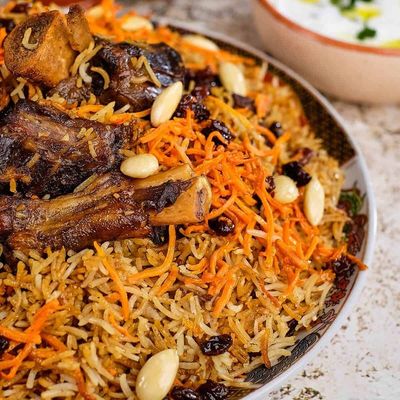
Kabuli pulao is Afghanistan's national dish, the centrepiece of every wedding, Eid and important Friday lunch: a layered pilaf of long-grain rice, slow-braised lamb, sweet carrot strands and butter-plumped raisins, all steam-finished together in one pot. You brown lamb shoulder hard, then braise it in spiced stock until the meat slips off the bone (that stock becomes the rice's cooking liquid). Carrots cut into matchsticks fry slowly in butter and sugar until they are golden and glassy. Raisins plump in butter. The rice parboils, then layers in the pot: lamb at the bottom, rice piled on top in a dome, drizzles of stock through the dome, lid clamped on tight. Twenty-five minutes of steam-cook and the rice emerges grain-separate and fragrant, ready to mound onto a platter with the carrots and raisins scattered across the top.