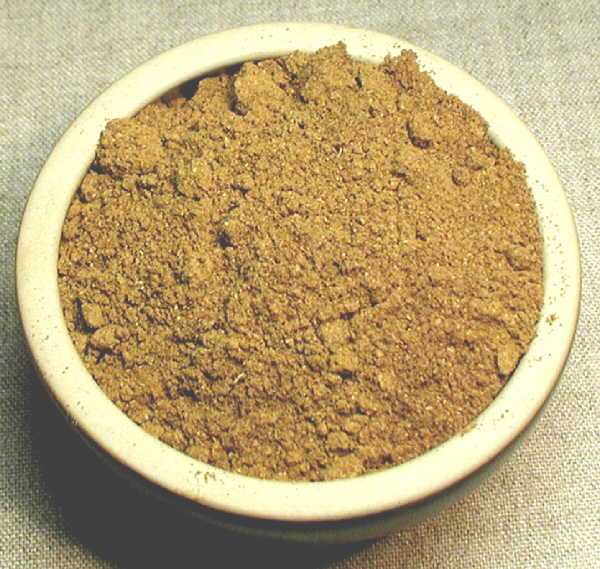
Quatre Épices (Four Spices)
France's 'four spices': ground pepper, clove, ginger and nutmeg in a specific ratio.
Overview
Quatre épices is the soul of French charcuterie, a refined, restrained blend that enhances meat without overwhelming it. The four components are equal parts by weight, creating perfect balance: pepper for heat, cloves and nutmeg for warmth, and ginger for subtle spice. It's less spicy than most other cuisines' spice blends; it's about sophistication and tradition rather than boldness. This is the spice of terrines, sausages, and dishes where flavors have been developed over centuries.
Ingredients
Four Equal Parts (By Weight)
- 1 part ground black pepper (approximately 1-2 teaspoons)
- 1 part ground cloves (approximately 1-2 teaspoons)
- 1 part ground nutmeg (approximately 1-2 teaspoons, freshly grated if possible)
- 1 part ground ginger (approximately 1-2 teaspoons)
Note: Scale all four ingredients equally; the proportions shown are approximate estimates that can be adjusted based on yield desired.
Method
Stage 1 - Measure All Components
- If starting with whole spices, grind or finely powder each separately:
- Grind black peppercorns in a spice mill or mortar to fine powder
- Grind cloves in a spice mill to fine powder
- Grate fresh nutmeg or use ground nutmeg
- Ensure ginger powder is fresh and finely ground
- If using pre-ground spices, verify they're fresh (check color and aroma).
Stage 2 - Measure Equal Quantities
- Measure each spice (cloves, pepper, nutmeg, ginger) in equal amounts by weight.
- Traditional ratio: 1 teaspoon of each creates approximately 4-5 teaspoons total blend.
- Adjust quantities based on your needs while maintaining the 1:1:1:1 ratio.
Stage 3 - Combine & Mix
- Pour all four spices into a small bowl.
- Using a spoon, stir very thoroughly for 1-2 minutes.
- The mixture should be completely uniform in color and texture.
- Break up any clumps of ground spice.
Stage 4 - Sift (Recommended)
- Sift through a fine mesh sieve for finer, more uniform texture.
- This ensures even distribution in meat preparations.
- Return any larger particles to the original mixture.
Stage 5 - Store
- Transfer to a small airtight jar.
- Label with preparation date and "Quatre Épices."
- Store in a cool, dark place away from light and heat.
Notes
- French Restraint: This blend is about subtlety and balance, not overwhelming heat or flavor.
- Equal Parts Essential: The 1:1:1:1 ratio is the foundation. Deviating changes the character fundamentally.
- Freshly Grated Nutmeg: If possible, grate fresh nutmeg rather than using pre-ground. The difference is significant.
- Pepper Freshness: Freshly ground black pepper is far superior to pre-ground. Consider grinding in a mortar when preparing this blend.
- Historical Application: This blend has been used in French charcuterie for centuries; respect the tradition with quality spices.
- Quantity Typically Small: Traditional uses call for only ¼ to ½ teaspoon in a medium pâté or terrine. It's not meant to dominate.
Variations
More Warmth: Increase ginger and nutmeg slightly (1 ¼:1:1 ¼:1). More Heat: Increase pepper to 1 ¼ teaspoons while keeping others at 1 teaspoon. Earthier: Some regional French versions use slightly less nutmeg to emphasize the clove and ginger. Traditional 18th Century: Some historical recipes used equal parts pepper, cloves, nutmeg, and Jamaican allspice instead of ginger.
Serving
Use in: French meat pâtés, terrines, sausages, charcuterie preparations, ragouts, slow-cooked meat stews Typical ratio: ¼ to ½ teaspoon per medium pâté or terrine (3-4 servings) Application: Mix into ground meat preparations or add to braising liquids Temperature: Works both in raw meat mixtures (for pâté) and in cooked applications (for ragouts)
Storage
- Store in small airtight jar in cool, dark place away from light and heat
- Properly stored, remains potent for 6-8 months
- This is a small-yield blend; make fresh every 2-3 months if using frequently
- The ground spices may settle or separate slightly; stir before each use
- Does not require refrigeration
- The individual spices (especially pepper and nutmeg) lose potency fastest
- Check aroma and color before using in important culinary preparations
- Label with preparation date
- Freshness is paramount for French cuisine where subtlety matters
Quatre épices (literally "four spices") is a classic French spice blend used primarily in charcuterie, meat pâtés, sausages, terrines, and ragouts. It appears across French cuisine in soups, slow-cooked meat dishes, and traditional preparations where subtle sophistication matters.
More like this
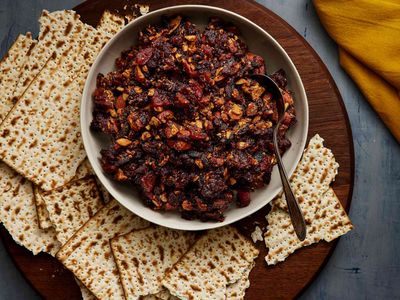
Charoset
The Ashkenazi version, simplest and most common in northern Europe and the United States: tart apples chopped fine, walnuts crushed coarse, cinnamon, a little brown sugar, and sweet kosher red wine to bind. Stirred together and left for the flavours to meld. Some households add a pinch of ground ginger or a squeeze of lemon. There are dozens of regional variants (Sephardi versions use dates and figs); this one is the most familiar at a North American seder.
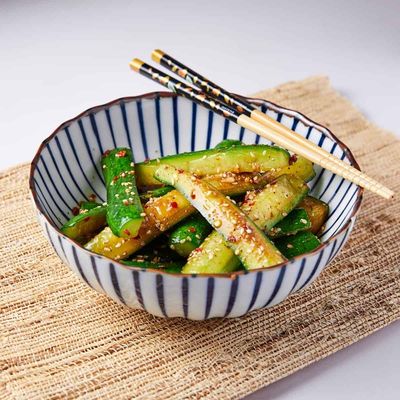
Chinese Pickled Cucumber
Cucumbers are cut into spears (or smashed-and-torn for a rougher texture), salted heavily in a colander 30 minutes to weep, then patted dry. A brine of rice vinegar, sugar, light soy, water, sliced ginger, Sichuan peppercorns and dried red chillies brings to a gentle simmer just to dissolve the sugar; cools to room temperature. The drained cucumber goes into a jar; the cooled brine pours over to submerge; refrigerated for 1 hour minimum (overnight ideal). Eats cold straight from the jar.
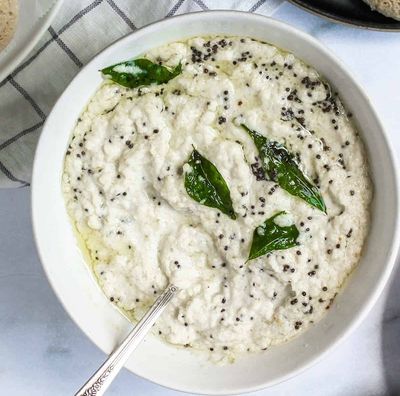
Coconut Chutney
Fresh coconut is ground with green chilli, ginger, roasted gram and a small splash of water into a smooth paste. The chutney is finished with a tempering of mustard seeds, dried red chilli, curry leaves and asafoetida in hot oil, poured over the white chutney for a striking visual and aromatic contrast.
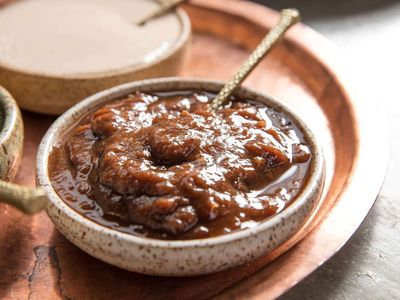
Lahori Imli Chutney
Lump tamarind is soaked in hot water and strained for a thick brown extract. The extract is cooked over low heat with palm jaggery (or dark brown sugar), ginger, salt and a mix of spices (cumin, fennel, black salt, chilli) until it thickens to a syrup that coats a spoon. The chutney sits between syrup and jam, with a slick of oil if you cook it long enough. Cools to a thick, glossy dipping consistency.