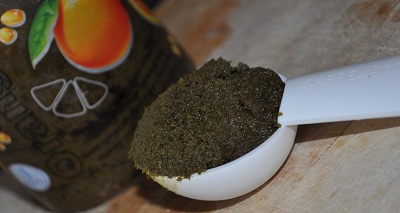
Green Balti Masala Paste
A fresh green masala paste: ginger, garlic, green chilli, coriander and mint pounded into a vivid herb-and-spice base for lighter curries.
Overview
Green Balti masala paste combines Indian spices with fresh herbs, creating a vibrant paste used in British-Indian curries. Unlike Thai green pastes, this one includes fenugreek (for nutrition and earthiness), fresh mint (for cooling contrast), and turmeric (for color and warmth). It's preserved with vinegar like Balti masala paste, allowing batch preparation and long refrigerated storage. The color is striking and the flavor is complex, earthy from spices, bright from fresh herbs.
Ingredients
Fresh Herbs & Aromatics
- 6 garlic cloves (peeled and chopped)
- 2 tablespoons fresh ginger (finely grated or minced)
- 40 grams fresh mint leaves (packed)
- 40 grams fresh coriander leaves (packed)
Spices
- 1 teaspoon fenugreek seeds
- 3 teaspoons fine sea salt
- 3 teaspoons ground turmeric
- 2 teaspoons chilli powder
- ½ teaspoon ground cloves
- 1 teaspoon ground cardamom seeds
Liquids & Oil
- 120 ml white wine vinegar
- 120 ml vegetable oil
- 50 ml sesame oil (traditional, though vegetable oil works)
- vegetable oil (for sealing jars)
For Storage
- Sterilized glass jars
Method
Stage 1 - Prepare Fenugreek
- Place the fenugreek seeds in a bowl.
- Cover completely with cold water.
- Leave to soak overnight (or at minimum 8 hours).
- The seeds will swell and develop a gelatinous, jelly-like coating, this is correct.
- Drain thoroughly just before use, discarding the soaking water.
Stage 2 - Prepare Fresh Ingredients
- Wash fresh mint and coriander thoroughly and pat very dry (moisture invites mold during storage).
- Remove leaves from stems and discard or save stems for stock.
- Loosely pack the leaves; you should have approximately 40 grams of leaves (by weight).
Stage 3 - Blend to Purée
- Place the soaked and drained fenugreek seeds, garlic, fresh ginger, fresh mint, fresh coriander, salt, turmeric, chilli powder, cloves, and cardamom seeds in a blender.
- Add the white wine vinegar.
- Blend on high speed until the mixture becomes a completely smooth purée.
- You may need to stop and scrape down the sides of the blender halfway through.
- The result should have no visible herb or spice particles.
Stage 4 - Rest the Paste
- Transfer the purée to a bowl.
- Allow the mixture to stand at room temperature for at least 10 minutes, preferably 30 minutes.
- This resting allows flavors to develop and the fenugreek's gel coating to distribute throughout the paste.
Stage 5 - Cook the Paste
- Heat the vegetable oil and sesame oil together in a large karahi or wok over medium heat until shimmering.
- Carefully add the entire herbal paste mixture to the hot oil.
- Immediately begin stirring constantly to prevent sticking.
- Continue stir-frying, never stopping your stirring, for approximately 5 minutes.
- The water content will cook off, and the paste will darken slightly from fresh green to more muted green-brown.
- Stir continuously throughout.
Stage 6 - Test for Doneness
- Remove the pan from heat and allow to rest for 3-4 minutes.
- Look for clear oil separation at the top of the paste; if present, the paste is done.
- If oil doesn't clearly separate, add a little more oil and return to heat for another minute, stirring constantly.
- Remove from heat and cool slightly.
Stage 7 - Jar & Preserve
- Prepare sterilized glass jars.
- Spoon the warm paste into jars, filling to within 1 cm of rim.
- Heat additional vegetable oil.
- Once the paste cools to warm, pour a thin but complete layer of hot oil over the top to seal.
- Seal tightly with lids.
- Refrigerate immediately.
Notes
- Fenugreek Soaking: Essential for hydration and gel development. This creates a binder that helps the paste hold together.
- Herb Drying: Very important for long storage; any moisture leaves promote mold growth. Pat herbs completely dry after washing.
- Sesame Oil: Adds authentic flavor and aroma; regular vegetable oil works but the result is less characteristic.
- Oil Seal: Complete coverage is essential to prevent mold. Check jars after a few days.
- Storage Temperature: Always refrigerate; fresh herbs and oil can support bacterial growth at room temperature.
- Blender vs. Mortar: This paste is thick and herb-heavy; a blender makes more sense than a mortar for achieving smoothness.
Variations
With Cilantro Only: Omit mint; use all 80 grams coriander instead. Spicier: Increase chilli powder to 3 teaspoons. Extra Turmeric: For deeper golden color and earthiness, use 4 teaspoons turmeric. Milder Cloves: Reduce to ¼ teaspoon if clove flavor is too strong for your taste.
Serving
Use in: British-Indian curries, green vegetable curries, mild curries with fresh herb character Typical ratio: 3-4 tablespoons per 400 ml water or stock Cooking: Fry in hot oil with onions before adding liquid and main ingredients Temperature: Requires cooking in hot oil before use
Storage
- Refrigerate in sealed jars with oil overlay for up to 2 months
- Check during first week for any mold on surface (indicates jar wasn't sterilized or oil seal isn't complete)
- Always use clean spoons; avoid contaminating the jar with wet utensils
- If any mold or off-odor appears, discard entire jar
- Do not freeze; freezing damages the texture and herbs
- The oil seal must be undisturbed; don't puncture through it multiple times
This vivid green curry paste draws its color from fresh coriander and mint rather than green chillies. It's beautiful, aromatic, and distinctly different from Thai green pastes, with an Indian spice foundation and British-Indian preservation technique.
More like this
Caribbean Chicken Curry Stew
In many Caribbean stew dishes there is an initial step of burning sugar in oil which is used to brown the meat in. This adds a very unique sweetness to the stews from this region and this sweetness paired with the unmistakable flavour (and heat) from the wonderful scotch bonnet chilli is simply astounding. This curry uses curry powder for a fragrant and delicious result that captures the essence of Caribbean cooking.
Lamb Naga Phall
An extremely hot British curry-house phall featuring Naga chillies and Mr Naga pickle for intense heat balanced with rich flavors. This dish is not for the faint-hearted; serve with cooling accompaniments like rice, naan, and cold lager.
Chicken Ceylon
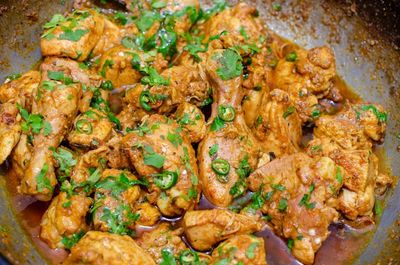
A bright and spicy Sri Lankan-inspired curry with a curry-house spin, featuring aromatic spices, coconut, and fresh curry leaves. It works beautifully as a banquet dish and can be extra hot with extra bird’s eye chillies and chilli powder. The subtle sweet-tang tuning makes it a favorite with rice and mild dhal.
Chicken Methi Curry
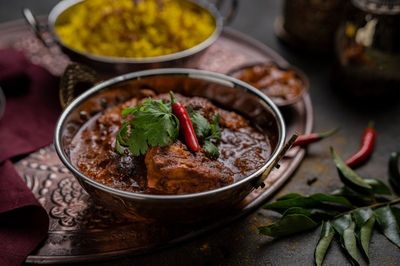
Fenugreek-forward chicken methi curry with a rich base sauce and a tangy cream finish. Fresh fenugreek leaves are ideal, but dried kasoori methi can provide the signature aroma, especially in supermarkets where fresh leaves are scarce. This curry is aromatic with anise notes and a subtle bitterness balanced by yoghurt.