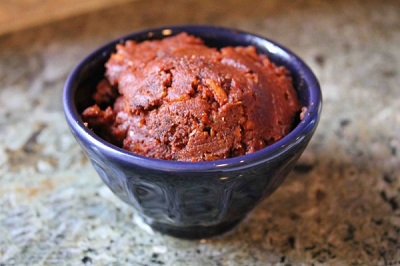
Balti Masala Paste
A wet balti paste: dry-roasted whole spices ground with garlic, ginger and oil.
Overview
Balti masala paste is a one-of-a-kind category: it's made from pre-ground spice powder (Balti masala) rehydrated with vinegar and oil, creating a consistent base for curries. The vinegar preservation technique allows this paste to be made in large batches and jarred for months of storage. The paste's mild spice profile makes it a foundation that cooks build on with additional ingredients. This is British-Indian cooking at its most practical and efficient.
Ingredients
Base Pastes & Liquids
- 200 grams Balti masala powder (pre-made spice blend)
- 200 ml white wine vinegar
- 200 ml vegetable oil
- Water (as needed for consistency)
For Storage & Serving
- vegetable oil (for sealing jars)
- Sterilized jars (for bottling)
Method
Stage 1 - Hydrate Spice Powder
- Place the Balti masala powder in a large bowl.
- Add the white wine vinegar.
- Gradually add water, mixing with a spoon as you go, until the mixture reaches a creamy paste consistency.
- The paste should be pourable but thick, like heavy cream.
- Leave the mixture to stand at room temperature for at least 10 minutes.
- This resting allows the spice powder to fully hydrate and develop flavor.
Stage 2 - Cook the Paste
- Heat the vegetable oil in a large karahi, wok, or heavy-bottomed frying pan over medium heat until shimmering.
- Carefully add the entire hydrated paste to the hot oil.
- Immediately begin stirring continuously to prevent sticking to the bottom of the pan.
- Continue stir-frying, never stopping your stirring, as the water content cooks out.
- This should take approximately 5 minutes, though timing varies by heat level.
- Stir constantly throughout the cooking time.
Stage 3 - Test for Doneness
- After 5 minutes of continuous stirring, remove the pan from the heat.
- Allow the paste to rest for 3-4 minutes.
- The key sign of completion is whether oil floats clearly to the top of the paste.
- If oil separates nicely and floats on top, the paste is done and ready to bottle.
- If you don't see clear oil separation, add a little more oil (about 1-2 tablespoons) and return to heat.
- Stir for another minute or so until oil clearly separates, then remove from heat.
Stage 4 - Jar & Preserve
- Prepare sterilized glass jars (wash and dry, or run through a dishwasher).
- Carefully spoon the hot paste into clean jars, filling to within 1 cm of the top.
- Heat up a small amount of additional vegetable oil in a pan (about 50 ml).
- Once the paste has cooled to warm, pour a thin layer of the hot oil over the top of the paste to seal it.
- The oil acts as a barrier against air and bacteria, preventing mold.
- Seal the jars tightly with lids.
- Refrigerate for storage.
Notes
- Vinegar Preservation: The acid in the vinegar acts as a natural preservative when the jar is properly sealed with oil on top.
- Oil Separation: This is the sign that water has evaporated and the spices are properly "cooked." If you skip this, the paste will mold.
- Sterile Jars: Essential for food safety when storing paste long-term. Any bacteria or contaminants will grow in the sealed jar.
- Oil Seal: The oil layer must completely cover the paste surface; gaps will allow mold to develop. Check after a few days.
- Storage Inspection: Check the sealed jars every few days for the first week. If mold appears on the surface, discard immediately.
- Temperature: This paste must always be refrigerated; room temperature storage risks bacterial growth despite the vinegar preservation.
Variations
Spicier: Use a hotter Balti masala powder (if available) or add 1 teaspoon chilli powder to the paste during cooking. With Tomato: Replace up to 50 ml vinegar with tomato purée for deeper savory notes. Cider Vinegar: Use cider vinegar instead of white wine vinegar for slightly different tang.
Serving
Use in: Balti curries, British-Indian curries, curry sauces Typical ratio: 3-4 tablespoons paste per 400 ml water or stock (curry liquid is thinner than Indian curries) Cooking: Fry the paste in oil briefly with onions before adding liquid and curry ingredients Temperature: Requires cooking in hot oil before use
Storage
- Refrigerate in sealed jars with oil overlay for up to 2 months
- The oil seal acts as a preservative once the jar is opened, don't disturb it excessively
- Always use clean spoons when removing paste from the jar (no contamination from wet utensils)
- If mold appears, discard the entire jar
- Do not freeze; freezing damages the emulsion between oil and spices
- Check regularly during the first 1-2 weeks for any sign of spoilage
The Balti is a mild, well-spiced paste that forms the base for most British-Indian Balti curry dishes. Using vinegar as the binding liquid (rather than all water) naturally preserves the paste in sealed jars, a practical advantage for batch preparation.
More like this
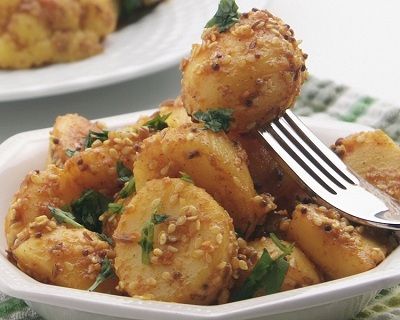
Bombay Potatoes
Bombay Potatoes is comfort food at its finest. Small potatoes are partially cooked, then coated in a richly spiced oil infused with seeds and aromatics. Some potatoes are mashed to create a creamy base, while others remain whole for texture. The result is a warm, golden, deeply spiced side dish that's utterly satisfying. This is a vegetarian staple of Indian home cooking.
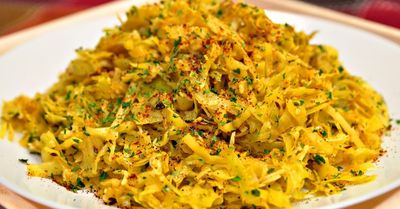
Cabbage Foogath
A foogath is the Goan version of a coconut-stir-fry vegetable: a temper of mustard seeds, dried red chilli, urad dal and curry leaves in coconut oil, sliced onion and garlic cooked briefly, then the vegetable tossed in over high heat. Fresh grated coconut is folded through at the end. The cabbage keeps a slight crunch and gets a nutty-sweet finish.
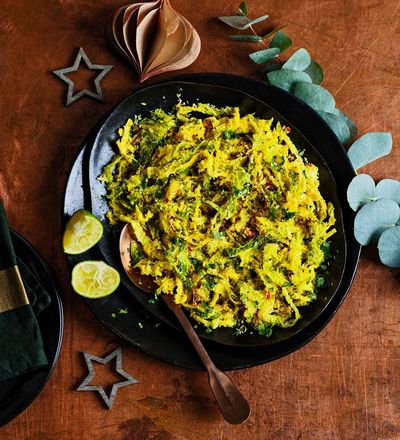
Cabbage Thoran
Cabbage is finely shredded into ribbons. A temper of mustard seeds, urad dal, dried red chilli and curry leaves is bloomed in coconut oil, the shredded cabbage tossed in over high heat, and a coconut paste of fresh coconut, green chilli, garlic and cumin folded through. The dish stays dry and the cabbage retains a slight crunch.
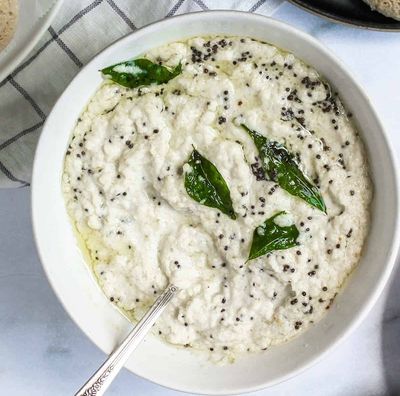
Coconut Chutney
Fresh coconut is ground with green chilli, ginger, roasted gram and a small splash of water into a smooth paste. The chutney is finished with a tempering of mustard seeds, dried red chilli, curry leaves and asafoetida in hot oil, poured over the white chutney for a striking visual and aromatic contrast.