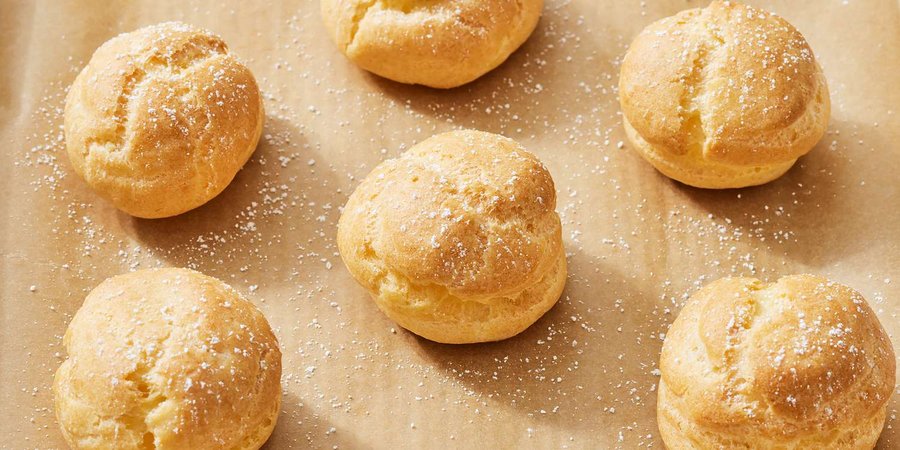
Pâte à Choux (Choux Pastry)
Choux pastry is enormously versatile, which makes it a marvelous, indispensable component of all types of cooking and patisserie.
Overview
Pâte à choux is a unique pastry made without fat in the dough itself, relying instead on steam for leavening to create light, hollow shells. Its versatility allows it to be piped into countless shapes for both sweet and savory preparations. The characteristic crispy exterior and hollow interior make it an essential technique in pastry work. IMPORTANT: The 'drying out' stage is critical for success.
Ingredients
- 125 ml water
- 125 ml milk
- 100 grams butter (cut into small pieces)
- 3 grams fine salt
- 5 grams sugar
- 150 grams flour
- 4 eggs
Method
- Preheat the oven to 220°C
- Put the water, milk, diced butter, salt and sugar in a saucepan, set over a high heat and boil for 1 minute, stirring with a spatula.
- Take the pan off the heat and, stirring all the time, quickly add the sifted flour.
- The next stage - the 'drying out' - is vitally important if you want to make good choux paste.
- When the mixture is very smooth, replace the pan over the heat and stir with the spatula for 1 minute.
- The paste will begin to poach and some of the water will evaporate. Be careful not to let the paste dry out too much, or it will crack during cooking and your buns or éclair will not be perfectly smooth.
- Tip the paste into a bowl.
- Immediately beat in the eggs, one at a time, using a spatula. If you do not want to use it immediately, spread one-third of a beaten egg over the surface to prevent a skin forming, which can happen after a few hours.
- Choose an appropriate plain nozzle to pipe out your chosen shape - small or large choux buns or éclair.
- Pipe out the paste on baking parchment or a greased baking sheet.
- If you like, glaze the shapes and make them lightly with the back of a fork, dipping it into the glaze each time.
- Bake in a preheated oven, then open the door slightly (1-2 cm) after about 4-5 minutes and leave it ajar.
- Cooking time will vary from 10-20 minutes, depending on the size of the buns.
Notes
- The 'drying out' stage on the heat is essential; it evaporates moisture and allows the paste to develop the structure needed for proper rise
- Stir continuously during the drying stage to cook evenly; the mixture should form a ball that comes away from pan sides
- Add eggs one at a time, ensuring each is fully incorporated before adding the next; this creates a smooth, pipeable consistency
- Opening the oven door slightly after 4-5 minutes allows steam to escape gradually, preventing collapse while ensuring crisping
Serving
Fill choux buns with crème pâtissière, whipped cream, or ice cream; top with caramel sauce or chocolate glaze. Form éclairs for elegant desserts, or use for savory applications with cheese and herb fillings. Arrange in pyramid (Paris-Brest style) for dramatic presentations, bound with caramel.
Storage
Choux pastry is best filled and served fresh, though unfilled buns may be stored in an airtight container for 1 day. Refresh in a 180°C oven for 5 minutes to re-crisp. Filled choux should be consumed within 2-4 hours as the crispy exterior absorbs moisture from fillings over time. Do not refrigerate or freeze filled choux.
More like this
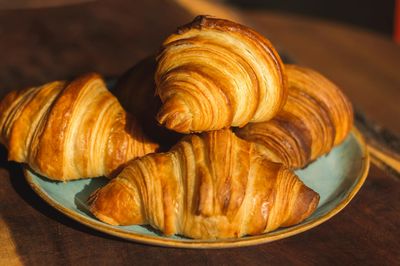
Croissants
Croissant dough is a laminated dough that requires patience and precise technique to achieve its characteristic flaky layers. The interplay between enriched dough and butter layers, combined with careful folding and resting, creates the golden, buttery texture that defines a perfect croissant. This dough demands attention to temperature control and timing throughout its preparation.
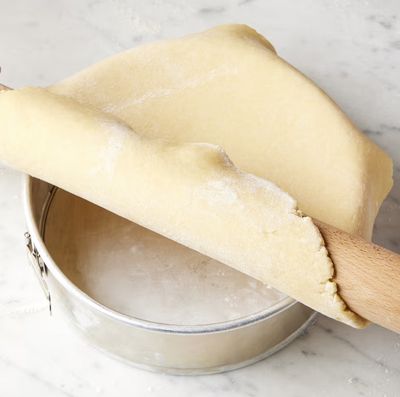
Pâté à Foncer (Flan Pastry)
Pâté à foncer is a tender, crumbly pastry traditionally used as the base for flans and tartlets. Its delicate texture and neutral flavor provide an elegant foundation that doesn't compete with fillings. The technique of rubbing fat into flour by hand creates the characteristic short, crumbly texture that distinguishes this pastry.
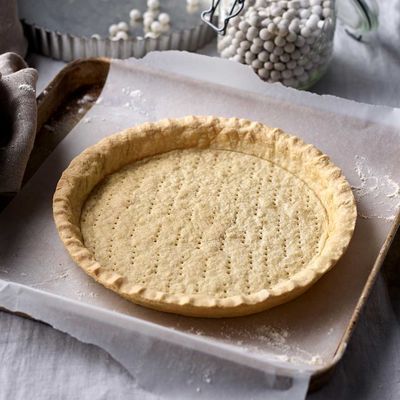
Pâte Brisée (Shortcrust)
Pâte brisée is a classic French shortcrust pastry that serves as the foundation for elegant tarts and tartlets. Its tender, crumbly texture and neutral flavor provide a perfect base that complements both sweet and savory fillings without competing. The simple technique of rubbing fat into flour creates its characteristic short, delicate crumb.
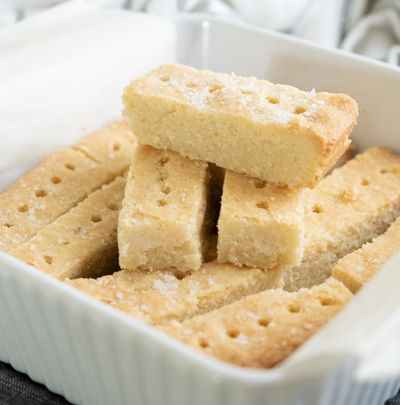
Pâte Sablée (Shortbread Dough)
Pâte sablée is an exceptionally delicate, shortbread-like dough prized for its crumbly texture and the way it melts on the tongue. The technique of adding flour last ensures the dough remains short and tender rather than developing gluten strength. Its versatility allows it to be used for tartlet cases, petit fours, or as a base for numerous desserts.