religious
Eid al-Adha
The big Eid. Whole-roast lamb, biryanis by the cauldron, kebabs over coals, mandi and kabsa with their mountains of rice. The festival of sacrifice, on the meat-heavy side of the table.
Eid al-Adha - the Festival of Sacrifice - commemorates the willingness of Ibrahim (Abraham) to sacrifice his son in obedience to God. The story is shared with Judaism and Christianity; the food is distinctively Muslim and distinctively meat-heavy. Where Eid al-Fitr is the sweet morning that closes Ramadan, al-Adha is the long afternoon of a feast cooked from the qurbani - the sacrificial animal - divided between the family, neighbours and the poor.
The dishes are big and unhurried. Biryani in the largest pot in the kitchen, layered with mutton or beef and slow-steamed for an hour. Mandi or kabsa from the Arabian peninsula, where a whole spice-rubbed lamb sits on a mound of saffron rice. Lamb karahi from the Punjab. Whole roast lamb on a spit or in a low oven. Adana kebab from Turkey, seekh kebabs from the subcontinent, all charred over coals. Haleem - the slow-cooked wheat-and-meat porridge - for the cold morning before guests arrive.
The desserts are present but not central; a small plate of baklava, a glass of cardamom rice pudding. The meal is about the meat.
Recipes in this collection
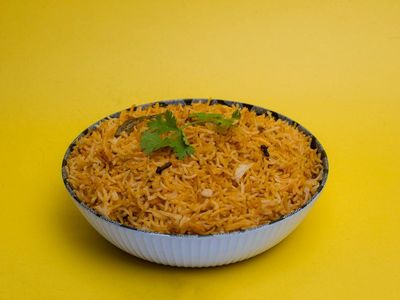
Sindhi Biryani
Mutton on the bone marinates for 2 hours in yogurt, ginger-garlic paste, ground spices (red chilli, turmeric, coriander, cumin, garam masala), mint, coriander and salt. Sliced onions fry slowly in oil to deep gold, then crispy, and drain on paper (some go in the marinade, some on top of the biryani). The marinated mutton browns; tomatoes go in; the meat braises for 45 minutes until tender. Basmati rice parboils with whole spices and salt to 70% done; drains. The layering: mutton at bottom, half the rice, fried onions and prunes and green chillies, the remaining rice, more onions, saffron-milk and ghee on top. Dum cook for 25 minutes sealed.
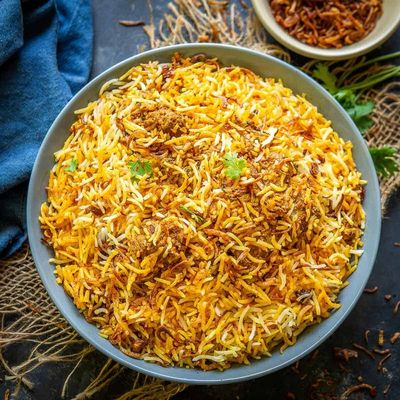
Hyderabadi Mutton Biryani
Bone-in mutton (or lamb) marinates for 4 hours in yogurt, ginger-garlic paste, deep-fried onion (birista), garam masala, chilli and saffron. Basmati rice par-boils for 4 minutes with whole spices to 70% done. Half the rice layers on top of the marinated mutton at the bottom of a heavy pot; saffron milk, mint, more birista and ghee drizzle on top; the rest of the rice on top of that. Sealed (cover + dough or foil tight), cooked on the lowest heat 1 hour. The meat cooks from raw inside the steaming rice. Opened at the table.
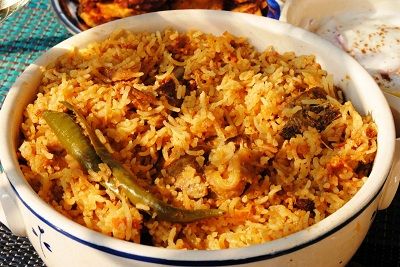
Biryani
Biryani represents the height of Indian culinary technique: multiple components prepared separately with precision, then assembled in layers where flavors permeate through steam cooking. This isn't a one-step rice dish; rather, it's an architectural construction where yogurt-marinated lamb develops tenderization and flavor, then cooks slowly with warm spices and tomato, while basmati rice is independently flavored with saffron infusion and whole spices. Upon assembly, the two elements marry through steam, creating a unified dish where lamb and rice are inseparable in flavor. Traditionally cooked during festivals and royal celebrations, biryani requires patience and multiple steps but rewards with sophistication.
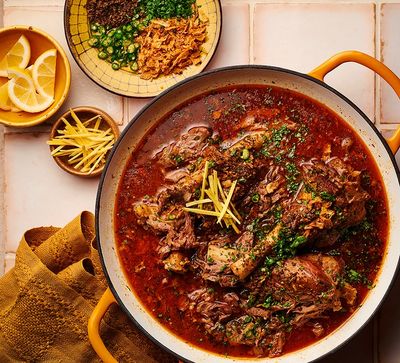
Lamb Nihari
Lamb shanks (or bone-in shoulder pieces) brown in mustard oil and ghee with sliced onion. Ginger-garlic paste, ground spices (red chilli, turmeric, coriander, cumin, fennel) and a whole-spice nihari masala go in. The meat braises in a covered pot 4 hours stovetop (or 1 hour pressure cooker) until very tender. The cooking liquid strains; a wheat-flour slurry whisks in to thicken; the meat returns; the stew finishes 30 minutes. A sizzling tarka of fried onion and ghee finishes. Garnished hot.
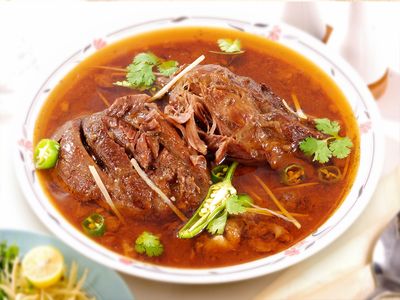
Beef Nihari
Beef shank with bones browns in ghee; onions cook to deep golden; whole spices bloom. Stock simmers everything for 3-4 hours until the meat is fork-tender. A wheat-flour slurry whisks in to thicken to a glossy, slightly silky gravy. Tarka of fried garlic and Kashmiri chilli pours over hot. Served with naan and a heavy plate of garnishes.
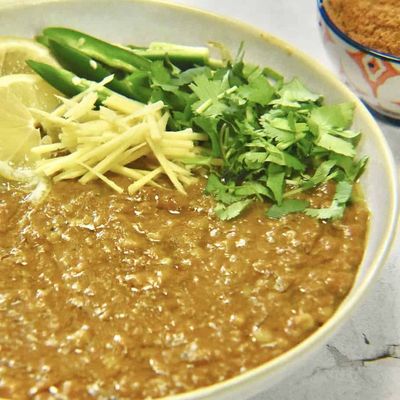
Haleem
Cracked wheat (daleya), pearl barley, chana dal, masoor dal, moong dal and urad dal soak overnight together. Mutton on the bone (or beef shin) simmers separately with ginger-garlic paste, ground spices, onion and salt for 2 hours until tender. The drained grains and lentils join; everything simmers 2 more hours, beating periodically with a wooden masher (or blitzing in batches with a stick blender) until the meat strands break apart and integrate with the grain. The base goes intensely smooth, almost the texture of porridge. Off heat, fried onions, ghee-and-cumin tarka, julienned ginger, lemon, chilli and herbs finish each bowl.
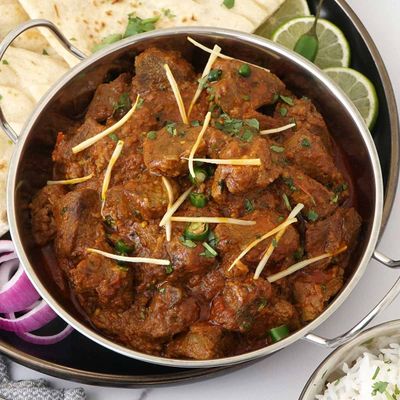
Lamb Karahi
Cooked in a karahi (two-handled wok-like pan) over high heat: lamb chunks simmer with tomatoes, fresh ginger matchsticks and green chillies, with cracked black pepper and ground cumin going in late. No onion in the sauce. Punjabi origin, fiercely fresh-tasting, the antithesis of long-cooked British curry-house style.
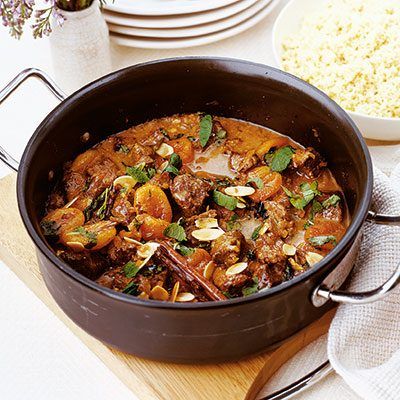
Lamb Tagine with Apricots and Almonds
Lamb shoulder cubes brown deeply, then simmer slow with onion, garlic and a Moroccan spice blend (ras el hanout, ginger, cinnamon). Stock and a splash of honey go in; dried apricots join in the second half so they soften without dissolving. Toasted almonds and coriander on top.
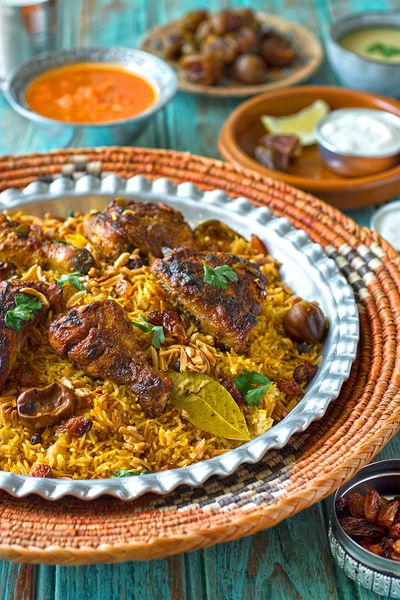
Mandi
Lamb shoulder is rubbed with a Yemeni spice mix (hawaij), browned, then steam-roasted at low heat for two hours until it shreds. The cooking juices are strained off; long-grain rice cooks in them with saffron, raisins and a bay-and-cardamom aromatic mix. The cooked lamb is laid on top of the rice; a piece of glowing charcoal is placed in a small heatproof bowl on top of the rice, drizzled with oil, and the whole thing is covered tight for 5 minutes to absorb the smoke. Lift, serve.
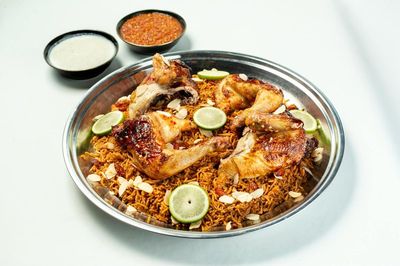
Kabsa
Saudi Arabia's national dish, the one platter you'll meet at almost every gathering from family lunch through wedding banquet. You brown chicken pieces or lamb shoulder hard in a heavy pot, then build a base of onion, garlic and ginger softened in the same fat, with tomato and a spoonful of baharat (or a dedicated kabsa spice mix) blooming until the kitchen fills with cardamom and cinnamon. The protein simmers in tomato and stock until it's tender and pulling away from the bone, then long-grain rice goes in to cook absorption-style in the same liquid, drinking up every layer of flavour the broth carries. You finish with almonds toasted in butter, raisins plumped briefly, and a fresh salsa of tomato, onion, chilli and parsley spooned on the side to cut the richness. Eaten communally from the centre platter, with hands or a long spoon.
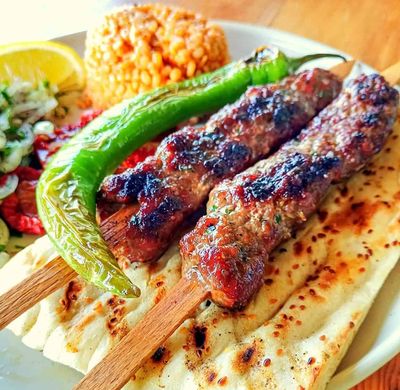
Adana Kebab
Lamb shoulder and lamb tail fat (or extra fatty trim) chop fine with a heavy knife or zırh (curved blade), proper Adana is hand-cut, never minced through a grinder. The texture has visible pieces of meat and fat the size of small peas. Knead with salt, ground sumac, hot red Aleppo / Maraş chilli flakes (acı biber) and crushed garlic for 6-8 minutes until tacky and clinging to the bowl. Chill for 2 hours. Press a fistful onto a wide flat skewer, working from the centre outward, shaping a 25 cm × 3 cm flat sausage with finger-tip dimples down the length. Grill over hot charcoal 5-6 minutes per side. Slide off skewer onto warm lavash. Rest for 2 minutes; serve.
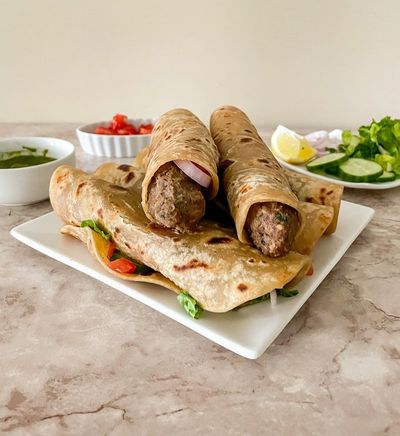
Seekh Kebab Roll
Lamb mince (with enough fat for tenderness; 20%) combines with grated onion (squeezed dry), ginger, garlic, green chilli, fresh coriander, mint, garam masala, ground cumin, ground coriander, salt and a small spoon of besan (chickpea flour, helps the mince cling to the skewer). Mixed vigorously for 3 minutes to develop the proteins. Rested for 1 hour. Shaped into long sausages on metal skewers (or wooden skewers soaked for 30 min). Grilled hard over charcoal (or under a screaming-hot grill) 8-10 minutes turning often, until charred and just-cooked. Pulled off the skewers onto warm parathas; rolled with sliced onion, fresh coriander, mint chutney; eaten by hand.
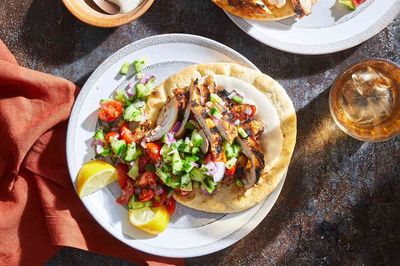
Chicken Shawarma
Chicken thighs marinate 6+ hours in baharat, turmeric, paprika, cumin, garlic, yogurt, lemon, olive oil. Stacked or spread on a tray (the home shortcut), roasted hot 25 minutes turning once, finished briefly under the grill until charred edges. Sliced thin and stuffed into pita with all the accompaniments.
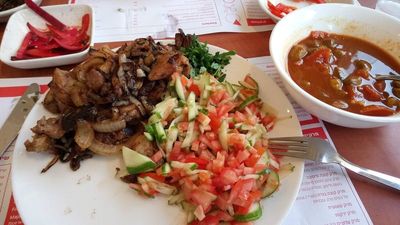
Jerusalem Mixed Grill
Chicken thigh, liver and heart sear hard in a wide pan with onions; spices bloom; everything cooks together until the meat is just done and the onions are deeply caramelised. Stuffed into pita with hummus, salad, tahini, pickles. The signature is the spice blend, cumin, turmeric, paprika, black pepper, cardamom, and the onion-to-meat ratio (a lot of onion).
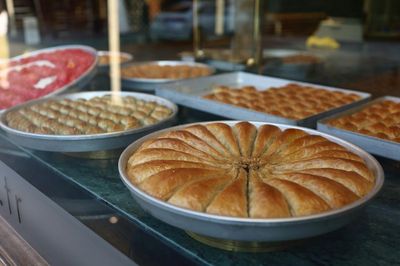
Baklava
A Middle Eastern delicacy of honey-soaked, crispy-layered filo pastry studded with pistachios and warm spices, cut into diamonds and served at room temperature. This globally beloved pastry achieves its legendary texture through careful assembly and the crucial overnight soaking that allows the honey syrup to penetrate all layers while maintaining crispness.
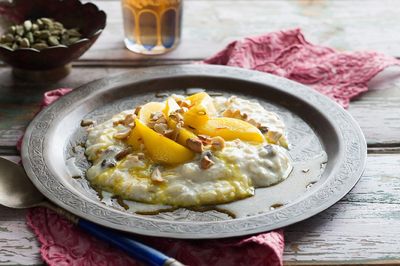
Cardamom Rice Pudding (Kheer)
An elegant and refined rice pudding infused with the warm, floral notes of cardamom, set in a caramel-coated mold like a crème caramel for elegant presentation. The subtle spice and tender rice create a comforting yet sophisticated dessert that feels both nostalgic and luxurious.