festival
Diwali
The festival of lights: a table built around sweets, paneer, and the rich smell of ghee and cardamom.
Diwali cooking centres on two things: a generous vegetarian feast and a parade of sweets. The savoury side leans into the slow-cooked staples - dal simmered until it's almost a sauce, paneer in spinach gravies, biryanis layered with saffron and ghee, breads pulled fresh from the tawa. The sweets are the whole point for many households: jalebis still warm from the syrup, rasmalai in saffron-laced milk, kheer thickened slowly with cardamom and cashews.
The savoury and the sweet sit at the same table, often eaten in any order anyone fancies. Snacks like samosas and dahi bhalla anchor the meal mid-afternoon as guests arrive, and the kheer and gulab jamun outlast everyone else.
It's a vegetarian-friendly festival but biryani earns its place too - the Hyderabadi style with whole spices and a saffron crown is the showpiece dish.
Recipes in this collection
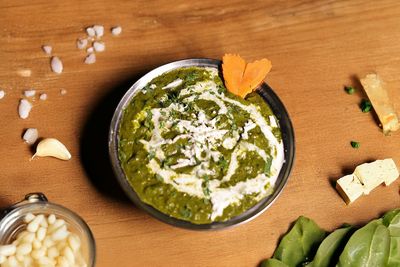
Palak Paneer
Spinach is blanched for one minute then plunged into iced water (a step that locks the colour bright green). The drained spinach is blended with green chilli into a smooth puree. A masala of onion, ginger, garlic and tomato is built and the puree stirred in. Cubes of paneer, lightly pan-fried, are added at the end so they sit on top of the gravy rather than dissolving into it. Finished with cream and kasuri methi.
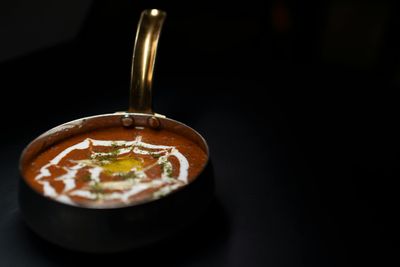
Dal Makhani
Whole black urad lentils and a small handful of red kidney beans are soaked overnight, then pressure-cooked or simmered until completely tender. A tomato-and-spice masala is built separately with onion, garlic, ginger and a careful hand with the spices. The lentils are folded into the masala and simmered, low and slow, for two hours, while butter and cream are stirred through in the final stage. The lentils break down into a glossy, almost-velvet finish.
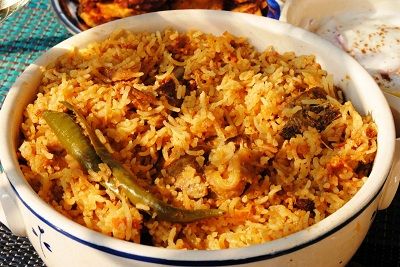
Biryani
Biryani represents the height of Indian culinary technique: multiple components prepared separately with precision, then assembled in layers where flavors permeate through steam cooking. This isn't a one-step rice dish; rather, it's an architectural construction where yogurt-marinated lamb develops tenderization and flavor, then cooks slowly with warm spices and tomato, while basmati rice is independently flavored with saffron infusion and whole spices. Upon assembly, the two elements marry through steam, creating a unified dish where lamb and rice are inseparable in flavor. Traditionally cooked during festivals and royal celebrations, biryani requires patience and multiple steps but rewards with sophistication.
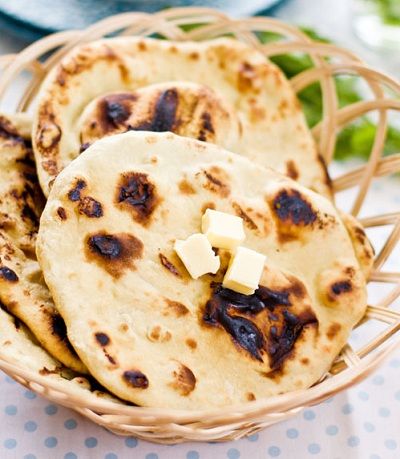
Naan
A grill-cooked version of the traditional tandoor naan: large, light and slightly sweet, with a chewy crumb and a sesame and onion-seed crust. Yoghurt and a touch of sugar in the dough give it the soft, almost briochey texture that the tandoor's blast of heat usually produces. It's the wrap that should hold a kebab, or sit alongside a Balti on the table.

Samosa Pakistani
Pastry dough: plain flour, ghee, salt, ajwain seeds, and warm water are kneaded into a stiff oil-rich dough; rests for 30 min. Filling: ground beef (or lamb) sautées with onion, garlic, ginger, green chilli and a Pakistani spice blend (garam masala, cumin, coriander, chilli powder, turmeric). Frozen peas join; the mixture simmers dry; cooled fully. Dough divides into 10 balls; each rolls into a thin oval, cut in half to make 2 half-moons. Each half-moon forms a cone (one flat edge becomes the seam, sealed with flour paste). Cone fills with cooled filling. Top edge of cone seals with flour paste. Deep-fried 175°C 3-4 minutes per side until amber-crisp.
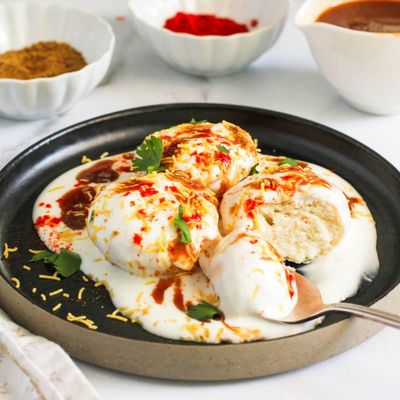
Dahi Bhalla
Dried urad dal (white, sometimes labelled "white lentils" or "split urad") soaks overnight, then blends with ginger, green chilli and a small amount of water into a smooth thick batter. Whipped vigorously for 5 minutes to incorporate air (this is what makes the fritters light). Asafoetida and salt season; baking soda activates right before frying. Fritters drop into 175°C oil; fry for 3-4 minutes until amber. Lifted into a wide bowl of lukewarm water; soaked for 10 minutes; squeezed gently between palms to remove most water. Plated in shallow bowls; flooded with sweet salted spiced yogurt; topped with chutneys, chaat masala, pomegranate, fresh coriander, a sprinkle of crushed papri or sev for crunch.
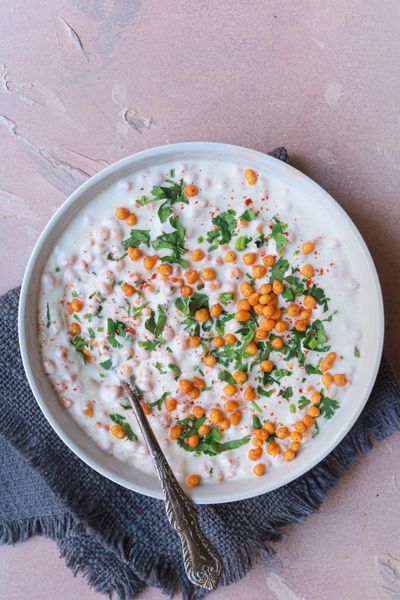
Boondi Raita
Plain yogurt whisks with a little water (or milk) to a smooth pourable raita texture. Ground roasted cumin, finely chopped mint, salt, sugar (a pinch, balances the sour), and Kashmiri red chilli powder mix in. The boondi (ready-made; sold at Pakistani / Indian shops) folds in 5-10 minutes before serving, too early and they go soggy. Garnished with a sprinkle of cumin and chilli.
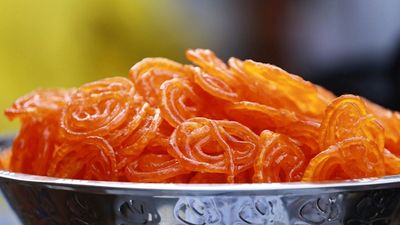
Jalebi
A loose batter of plain flour, gram flour, yoghurt and water ferments 8-12 hours at room temperature (or 24 hours in the fridge), the slight tang from the yoghurt and the bubbles from the fermentation give the characteristic crisp-shattering bite. A 1-thread sugar syrup is scented with saffron, cardamom and a squeeze of lemon. The batter goes into a piping bag (or squeezy bottle); piped into hot oil in spirals from the centre outwards; fried for 30-40 seconds per side; lifted out and dropped straight into warm syrup for 30 seconds; lifted again. Eaten immediately while still hot and crisp.
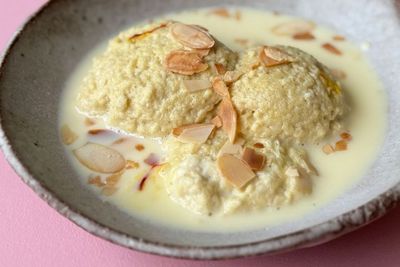
Rasmalai
Whole milk boils, then curdles with lemon juice; the curds drain to chhana (fresh paneer). The chhana kneads for 8-10 minutes until smooth and lump-free, this is what gives the dumpling its sponge. Small flattened discs poach gently in sugar syrup; they double in size. A separate pan reduces a second batch of milk by half with cardamom, saffron, almonds and sugar to a rich rabri. The squeezed dumplings float in the cool rabri to absorb the spiced milk overnight.
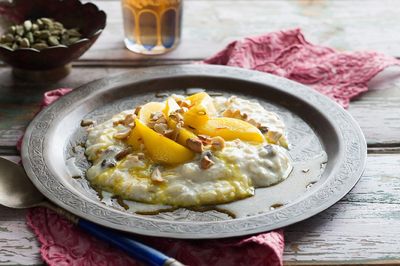
Cardamom Rice Pudding (Kheer)
An elegant and refined rice pudding infused with the warm, floral notes of cardamom, set in a caramel-coated mold like a crème caramel for elegant presentation. The subtle spice and tender rice create a comforting yet sophisticated dessert that feels both nostalgic and luxurious.
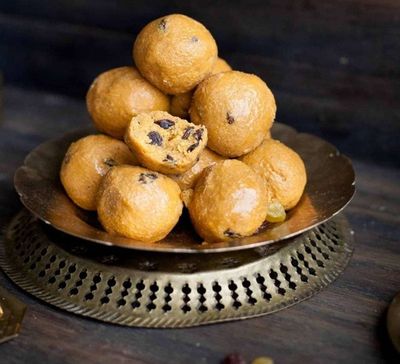
Besan Ladoo
Coarse besan toasted in ghee for a long, slow half-hour, until the colour deepens from pale yellow to a warm honey-brown and the smell turns from raw to roasted-cashew. Off the heat, cooled to barely-warm, then folded with powdered sugar, cardamom and slivered pistachios. Rolled into walnut-sized balls and left to set. The result is dense, fudgy, faintly grainy - the texture is part of the charm.
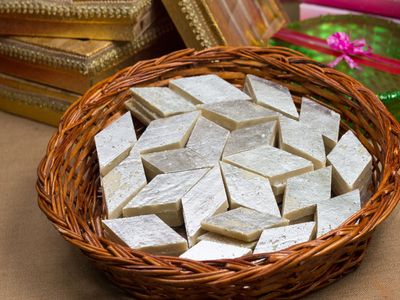
Kaju Barfi
Cashews soaked briefly to soften, ground to a fine pale powder, then folded into a sugar syrup that's been taken to the right consistency - one-string, which means a thread should form when you pinch a drop between thumb and forefinger and pull them apart. Stirred over a low heat until the mixture pulls cleanly from the pan, then kneaded warm, rolled to 5 mm, cut. Edible silver leaf is the traditional finish; rose petals are the home-cook substitute.
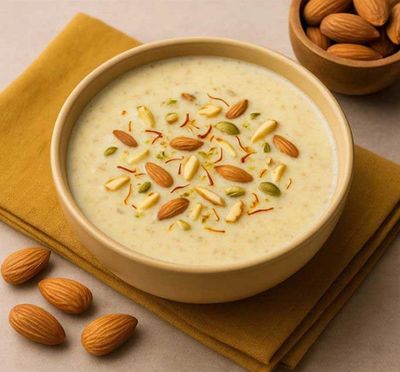
Badam Kheer
Almonds blanched, peeled, ground to a smooth paste, then folded into milk that's been reduced to two-thirds of its volume. Sugar to taste, saffron bloomed in warm milk for the colour, cardamom for the warmth. Simmered gently - never boiled - until the consistency thickens to a pourable cream, then garnished with pistachio slivers and a drift of rose petals.
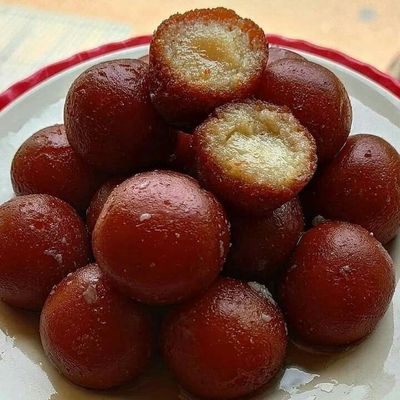
Gulab Jamun
Khoya (or a milk-powder shortcut) blends with a small amount of plain flour, semolina, baking powder and ghee to a smooth, soft dough. Small balls fry slowly in low-temperature oil until uniformly deep gold. They drop straight into warm rose-cardamom syrup and soak 30+ minutes, the whole point is the soaked, syrup-heavy bite.