Bigos
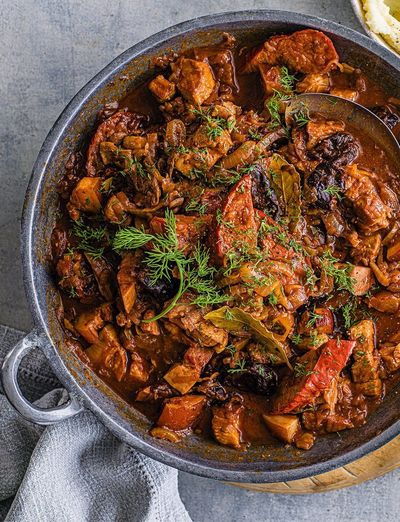
Pork shoulder, beef, smoked sausage and bacon all brown separately, then meet sauerkraut, fresh cabbage, dried porcini, prunes, tomato and red wine in a heavy pot. Simmers for 3 hours minimum; reheats over 2-3 days, getting better each round.
Tap a chip to add another filter, or use Clear all below.
Pork shoulder, beef, smoked sausage and bacon all brown separately, then meet sauerkraut, fresh cabbage, dried porcini, prunes, tomato and red wine in a heavy pot. Simmers for 3 hours minimum; reheats over 2-3 days, getting better each round.
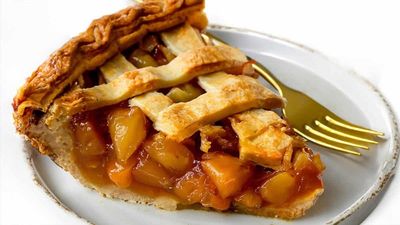
Buttery shortcrust rests then rolls; one disc lines a pie dish, fills with sliced spiced apples, the second disc tops it. Egg-washed, sugared, vented, baked golden. The juices thicken with cornflour as they cook so the bottom doesn't go soggy.
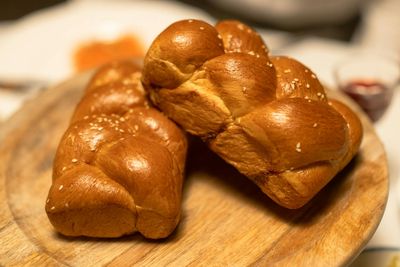
Strong bread flour worked with eggs, honey, oil, salt and warm water until the dough is smooth and elastic. Two long rises, the first slack and the second tight after braiding. A six-strand braid if you're showing off, three-strand if you want the loaf made before the candles. Brushed with egg yolk for the lacquer-deep crust, scattered with sesame or poppy seeds, baked until the bottom sounds hollow when tapped.
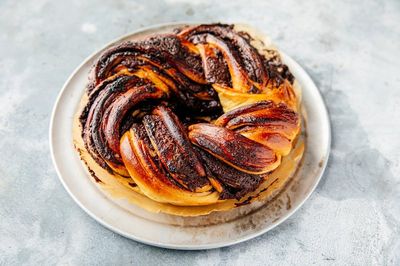
Brioche-style dough: bread flour, yeast, milk, eggs, butter, sugar, salt. Kneads 10 min till elastic; rises 1 ½ hours. Chocolate filling: dark chocolate + butter melted with cocoa, sugar, cinnamon, cools to spreadable. Dough divides in half; each rolls to a rectangle 40 × 25 cm; filling spreads to edges; rolls up tight; cuts lengthways down the middle; the two halves twist around each other (the iconic babka braid). Lifts into a buttered loaf tin; rises for 45 min; bakes for 35 min at 180°C. Sugar syrup brushes over hot.
Eggs hard-boil and cool. Onions cook slowly in oil or schmaltz until deeply golden and sweet. Both chop together with a fork or knife (not a food processor, the texture matters); salt and pepper season. Serve at room temperature.
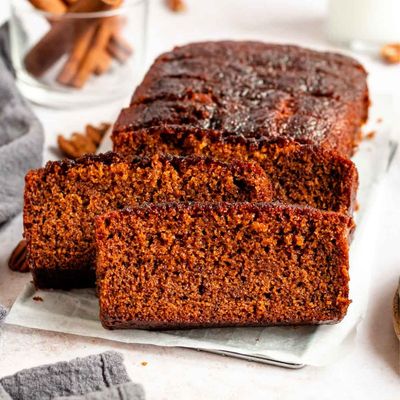
A simple oil-based cake built around a generous pour of dark honey, brewed coffee for moisture and depth, and a quartet of spices (cinnamon, ginger, clove, allspice). Mixed in one bowl, baked low and slow. The crumb is dark and dense without being heavy; the flavour deepens overnight, which is why most Jewish households bake it a day or two ahead of the meal.
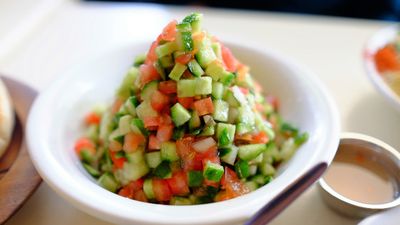
Vegetables are diced into uniform 5 mm cubes, knife work matters. Lemon juice, olive oil and salt are the only dressing; sometimes a teaspoon of sumac or a clove of crushed garlic. Eaten freshly made; doesn't keep, the cucumbers weep.
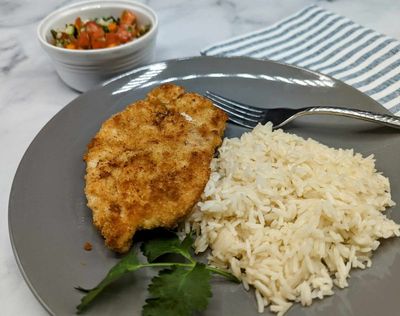
Chicken breasts butterfly and pound to 5 mm thick. Dredge through seasoned flour, beaten egg, then panko breadcrumbs mixed with paprika, garlic powder and a pinch of cumin. Shallow-fry in 1 cm of oil at 175°C 2-3 minutes per side until deep gold and crisp. Drain on paper. Lemon wedges.
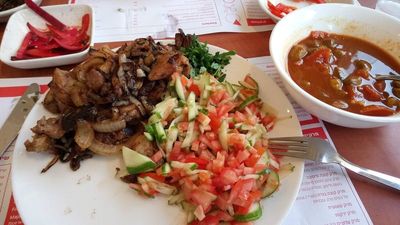
Chicken thigh, liver and heart sear hard in a wide pan with onions; spices bloom; everything cooks together until the meat is just done and the onions are deeply caramelised. Stuffed into pita with hummus, salad, tahini, pickles. The signature is the spice blend, cumin, turmeric, paprika, black pepper, cardamom, and the onion-to-meat ratio (a lot of onion).
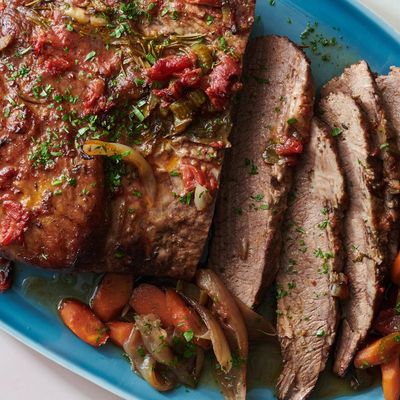
This is the brisket that anchors every Ashkenazi holiday table - Rosh Hashanah dinner, the Passover seder, a Friday-night Shabbat. You sear the meat hard until the surface is mahogany, then build a slow braise on its rendered fat: onions caramelised down to gold, garlic and tomato paste deepened with paprika and brown sugar, wine and stock pulling the lot together. The brisket goes back in fat-side up and the pot disappears into a low oven for three hours plus, until a fork meets no resistance. The trick almost every recipe insists on is the overnight rest. You cool the meat in its sauce, slice it cold against the grain (warm brisket shreds, cold brisket slices clean), then reheat the slices in the sauce before serving. Spoon the onion-rich gravy generously over mashed potato, kasha or buttered egg noodles.
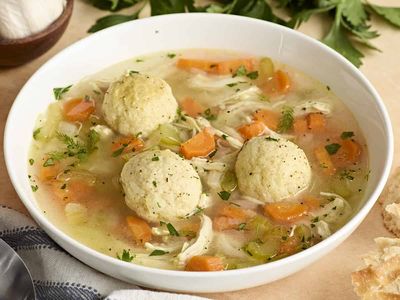
Two parallel jobs: a long-simmered chicken broth made from a whole bird with onion, carrot and celery, skimmed clean and finished with dill; and the matzo balls themselves, made from matzo meal, eggs, schmaltz and seltzer, rested in the fridge for the gluten to relax. The balls poach in salted water (never the broth, or the broth clouds), then sit in the hot broth at serving time. Light, comforting, traditional.
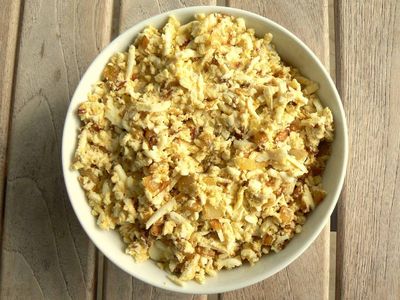
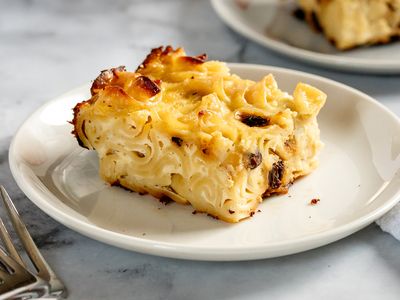
Wide egg noodles cooked just past al dente, drained and tossed in butter so they don't clump. A custard of cream cheese, sour cream, eggs, sugar and cinnamon is whisked smooth and folded through the noodles with golden raisins. The mixture goes into a buttered baking dish, gets a generous topping of crushed cornflakes (or cinnamon-sugar crumbs) and a dot of butter, then bakes low and slow until the custard sets and the top is mahogany-brown. Cut into squares while warm.
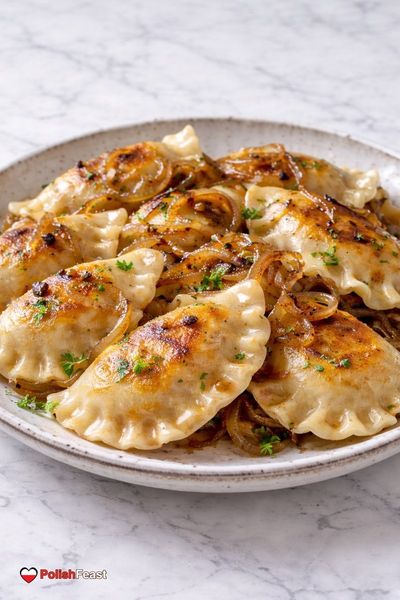
A simple flour-egg-warm-water dough rests then rolls thin. Discs cut, filling spooned, sealed by hand. Pierogi boil in salted water until they float, then optionally fry in butter to crisp the edges. Caramelised onions go on top with a generous spoon of sour cream.
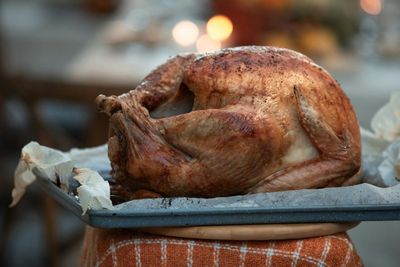
A whole roast turkey is the centrepiece of the American Thanksgiving table and most American Christmas tables too. It is one of the simplest large roasts to cook well as long as you accept two truths: a turkey breast is done at 65°C internal while a turkey thigh is done at 75°C, so you cannot cook them both to perfection by clock alone, and the bird benefits enormously from being dry-brined the day before so the skin dries out and the meat seasons through. The recipe below is the standard American home approach: a 24-hour dry brine with salt, then a herb butter loaded under and over the skin, then roasted at moderate heat (initially low to gently cook the thighs, finished hot to crisp the skin and bring the breast up to temperature). The pan drippings become a quick gravy at the end. This version specifically fills a manifest gap on the Thanksgiving editorial collection where Sunday Roast Chicken has been standing in. Use a 5-6 kg bird for 8-10 people with leftovers; scale brine and butter proportionally for a larger or smaller turkey. Difficulty is moderate; the active work is short but you must commit to the overnight brine and to using a meat thermometer.
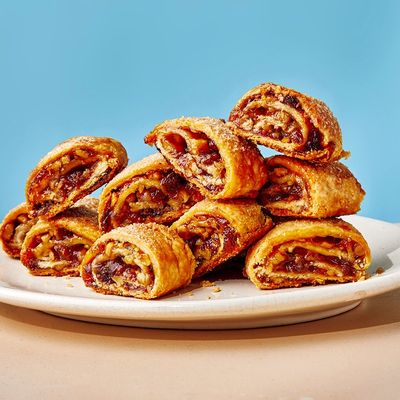
Rugelach dough: equal weights butter and cream cheese, beaten together, with flour and salt, like a cream-cheese shortcrust. Chills for 2 hours. Filling (chocolate version): cocoa, sugar, butter, sometimes chopped chocolate. Dough divides into 4 portions; each rolls into a circle 28 cm across; spreads with filling; cuts into 8 triangular wedges like a pizza. Each wedge rolls up from the wide edge toward the point. Brushes with egg wash; dusts with sugar. Bakes for 22 minutes at 180°C.
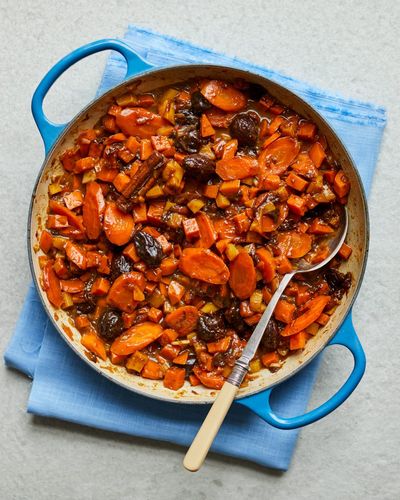
Carrots, sweet potatoes and prunes are layered in a baking dish with butter or oil, honey, brown sugar, orange juice and a stick of cinnamon. Covered and roasted low until the vegetables soften and absorb the sweet braising liquid, then uncovered for the last fifteen minutes so the top catches and the juices reduce to a syrup. The dish is sweet on purpose: it is the food of a hopeful festival.