Aloo Paratha

Aloo Paratha

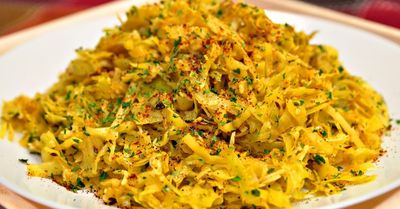
Whole-wheat (atta) flour is mixed with salt and just enough warm water to make a soft dough; rests for 20 minutes. Potatoes boil whole, peel hot, mash with cumin, garam masala, ginger, green chilli, amchoor and coriander. The dough divides into balls. Each ball flattens into a small disc; a heaped spoon of potato sits in the middle; the dough pleats up around the filling and pinches closed; flattens again carefully; rolls out gently to a 20 cm disc. Each cooks on a hot tawa or non-stick pan with ghee, 2 minutes per side, until crispy and gold.

Sides 1 hour 25 minutes Serves4
Aloo Posto

Aloo Posto

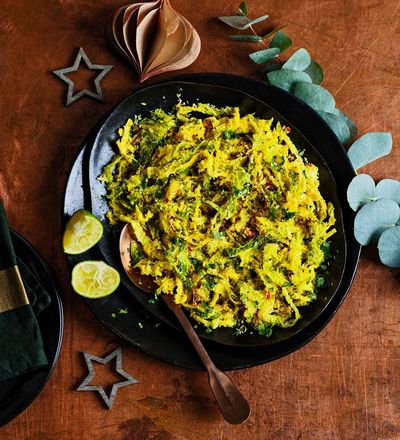
Aloo posto is the dish that Bengalis abroad miss most. Posto, white poppy seed, is so essential to the cuisine of West Bengal that there are entire menus built around it: aloo posto, posto bora (poppyseed fritters), jhinge posto, even ilish posto with hilsa fish. The seeds are soaked, ground to a fine, creamy paste, and cooked just enough to lose their raw note while keeping their pale colour and nutty perfume. This is one of the simplest preparations in the repertoire, and yet a much-debated one: how fine should the paste be (very fine), should onion be added (in West Bengal generally not, in Bangladeshi versions sometimes yes), how much green chilli is right (one or two slit, not pounded), and crucially, what oil (always mustard, always heated to smoke point first). The tempering is austere: just kalo jeere (nigella seeds) and a slit chilli. There is no garam masala, no cumin, no turmeric. The dish is meant to be quiet, almost pale, eaten with a small mound of plain rice and a dollop of ghee on a hot Kolkata afternoon. It is technically a side dish but in a traditional Bengali thali order it is often served as a course on its own, between the leafy greens and the dal, before the fish curry arrives. For a home cook the only real challenge is grinding the posto fine enough; a small spice grinder or wet-dry blender does the job perfectly.
Sides 1 hour 5 minutes Serves4
Atchara

Atchara

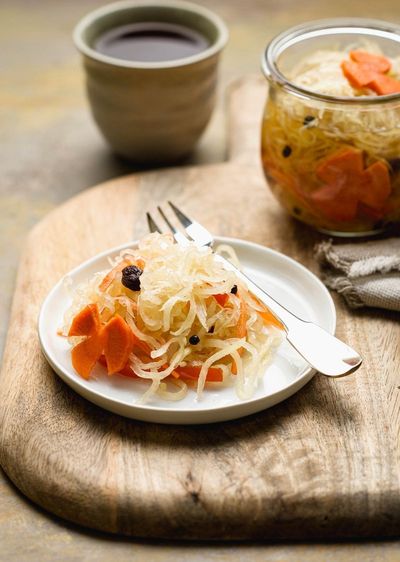
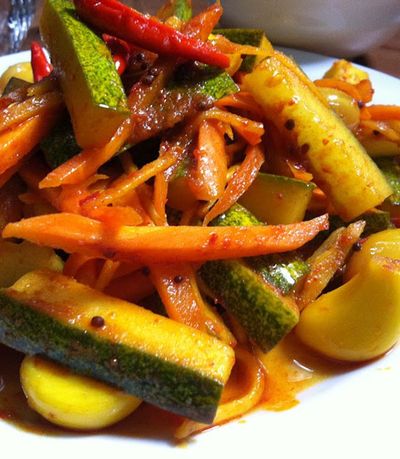
Green papaya is peeled, seeded and shredded on a coarse grater. Carrot, ginger, garlic, red pepper, onion and raisins are all prepared in matching shreds. The vegetables are salted and rested for 1 hour to draw water; rinsed and squeezed dry. A syrup of cane vinegar, sugar and whole peppercorns simmers for 5 minutes. Hot syrup is poured over the vegetables in a sterilised jar. The jar is sealed, cooled and refrigerated overnight before eating. Improves over the following week.

Sides 1 hour 40 minutes Serves1
Balachaung

Balachaung

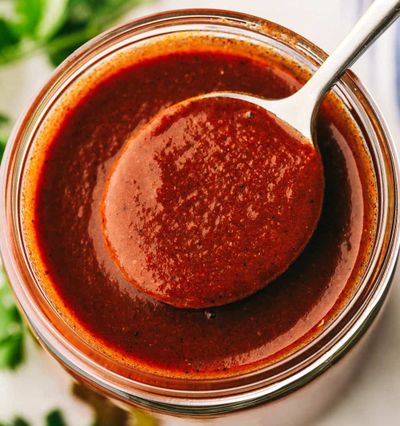
The Burmese dried-shrimp relish that sits in a jar in every Yangon kitchen, the seasoning you reach for to lift a plate of plain rice into something memorable. You pulse-grind dried shrimp to a coarse floss, then fry a pile of sliced garlic and shallot in oil until they're deep golden and crisp. The dried shrimp joins them and toasts to a fragrant rust colour. Chilli powder, fish sauce, tamarind, sugar and a splash of water turn the lot into a sticky red-brown relish. Cook until the oil clears (twelve to fifteen minutes), cool, store in a jar. Eat by the spoonful with rice, or as a side to grilled meat or fish.

Sides 40 minutes Serves12
Begun Bhaja

Begun Bhaja

Begun bhaja is the simplest, oldest and most loved of Bengali sides. Begun is the Bengali word for aubergine, bhaja means fried, and the dish is exactly what it sounds like: thick, round slices of aubergine, salted and turmericked, then shallow-fried in mustard oil. It is served on the rice plate alongside the dal, traditionally as the second course after shukto, and is eaten by pressing a slice with the back of the thumb onto a small mound of rice and dal. The dish has only four ingredients and yet there are countless mistakes a cook can make: slicing the aubergine too thin (it disintegrates), not resting it after salting (it spits in the oil and stays soggy), under-heating the mustard oil (it tastes raw and acrid), or flipping the slices too soon (they tear). Done properly, the slice should have a thin crisp shell from the natural sugars caramelising on contact with hot oil, and a yielding silky centre. Some households dust the slices with a little rice flour or semolina for an extra-crisp coat; the purist version uses nothing at all. The variety of aubergine matters too: the long pale lavender Bangladeshi begun or the round dark-purple kalo begun both work, but the slim Japanese aubergine does not give enough flesh. Begun bhaja is humble, fast and beloved across all classes and both sides of Bengal, served in Kolkata bhater hotels (rice canteens) and at Dhaka wedding feasts alike.

Sides 40 minutes Serves4
Borani Banjan

Borani Banjan

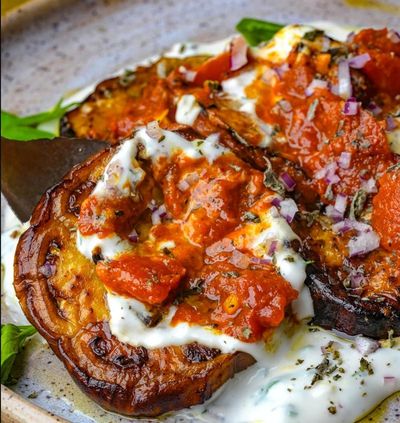
Borani banjan is an Afghan aubergine dish that does the same work as a moussaka or a melitzanosalata: pan-fried aubergine slices, a quick spiced tomato sauce, and a generous lid of garlic-and-mint yogurt that bridges all the warm and cold elements. The aubergine slices salt and sweat for half an hour first (which keeps them from drinking too much oil) before they fry hard in olive oil until golden and silky. Onion and tomato cook to a quick sauce with turmeric and a kick of chilli. The aubergine and sauce layer in a wide dish, then the chaka (yogurt whisked with garlic and salt) spoons over the whole thing while it is still warm. Scatter dried mint and drizzle olive oil to finish. Eat warm or at room temperature, with bread.

Sides 1 hour 20 minutes Serves4
← Prev Page 1 of 6 Next →