Amok Trey

Amok Trey

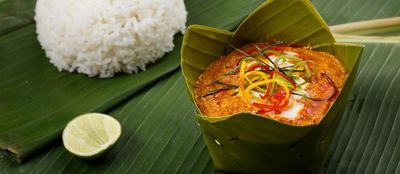
Cambodia's national dish, the centrepiece of any Khmer feast and the proper-occasion food across the country. You start by pounding kroeung fresh in a mortar (the paste of lemongrass, galangal, turmeric, garlic, shallots, kaffir lime zest and coriander root that defines Khmer cooking, and that no shop-bought paste comes close to matching). The kroeung fries briefly to bloom its aromatics, coconut cream and stock loosen it, and eggs whisk in to set the eventual custard. Chunks of firm white fish fold through with chopped greens (traditionally noni leaves, with spinach or chard standing in), and the whole mix spoons into banana-leaf cups (or small ramekins). Twenty minutes in a steamer turns the custard just-set around the soft fish, and the banana leaves perfume everything. Served from the parcels with steamed rice and a wedge of lime.
Cambodian 55 minutes Serves4
Authentic Cajun Gumbo

Authentic Cajun Gumbo

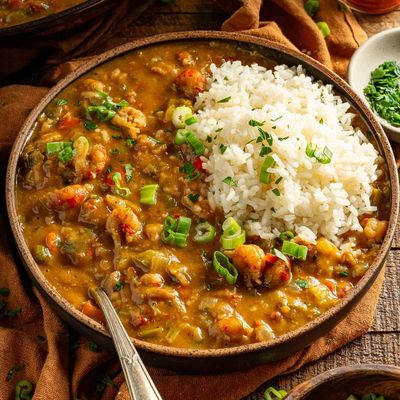
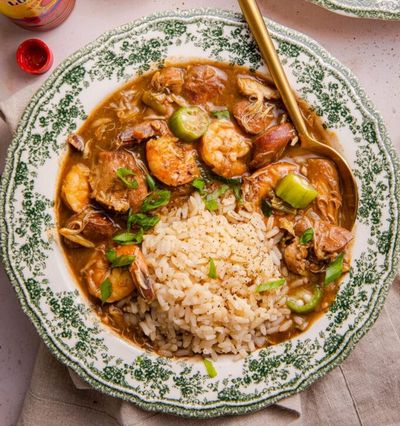
The "everything" Louisiana gumbo, chicken thighs, andouille, lump crab and shrimp all in one pot, and the dish where the technique matters more than the recipe. The roux is the single defining step and the line between Cajun gumbo and every other stew on earth: a full cup of oil and a full cup of flour cooked at medium-low for around 30 minutes, stirred without stopping, until the colour goes from blond to peanut butter to milk chocolate to dark chocolate. That's not flavour theatre; the long-cooked roux produces a deeply nutty, slightly bitter, profoundly savoury base that thickens the gumbo and gives it the distinctive almost-charred note no shortcut can replicate. Around the roux: the Cajun "holy trinity" of onion, bell pepper and celery; filé powder (ground sassafras leaves) added off heat as a second thickener; okra adding a third (and contributing its own slight slip); plus the four proteins, each adding a different layer. Flavour is dark, smoky, herbaceous, and slightly briny from the seafood. Smell is the roux toasting. Not difficult on technique but tremendously demanding on patience and attention; 30 minutes of unbroken stirring is the gateway, and if you walk away or rush it the roux burns and you start over. A dish that runs deep through Cajun and Creole Louisiana, with origins in the French settlers, the Choctaw (who contributed filé), West Africans (who contributed okra), and Spanish colonial traditions of Louisiana from the 1700s onwards.

Cajun 1 hour 45 minutes Serves8-10
Balachaung

Balachaung

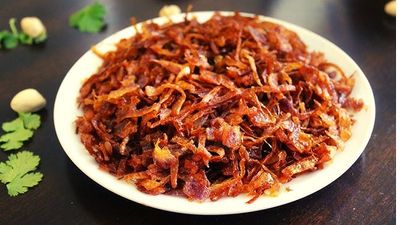
The Burmese dried-shrimp relish that sits in a jar in every Yangon kitchen, the seasoning you reach for to lift a plate of plain rice into something memorable. You pulse-grind dried shrimp to a coarse floss, then fry a pile of sliced garlic and shallot in oil until they're deep golden and crisp. The dried shrimp joins them and toasts to a fragrant rust colour. Chilli powder, fish sauce, tamarind, sugar and a splash of water turn the lot into a sticky red-brown relish. Cook until the oil clears (twelve to fifteen minutes), cool, store in a jar. Eat by the spoonful with rice, or as a side to grilled meat or fish.

Sides 40 minutes Serves12
Brown Stew Shrimp and Sweet Potato Grits

Brown Stew Shrimp and Sweet Potato Grits

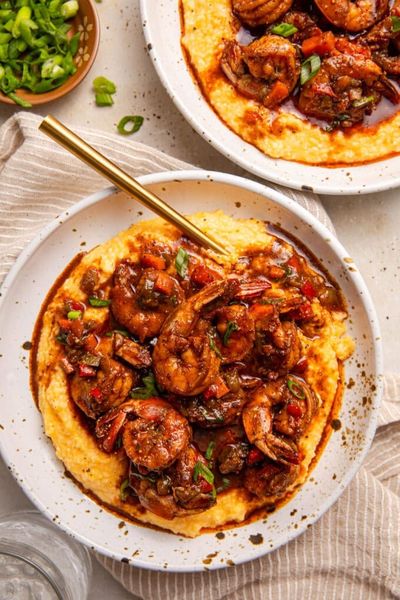
A Caribbean-Southern crossover that works because both traditions cook in a similar register: butter, peppers, alliums, slow heat, savoury depth. The brown stew base on top of the dish is Jamaican, bell peppers, carrot, Scotch bonnet, ginger, browning sauce, that mahogany-coloured gravy with the unmistakable allspice-and-thyme signature, and the bed underneath is from Lowcountry Charleston, where sweet potato grits enriched with butter, half-and-half and gouda are a long-running modern Southern restaurant standard. The shrimp themselves are quick-cooked and sweet, picking up the brown stew sauce. Two textures stacked: silky-rich grits, brothy stew on top with bite from the diced peppers and carrot. Smell is sweet-onion-and-browning-sugar over the corn-sweet base of the grits. Not difficult but it's two pans running at once, so timing matters; the grits hold on a low warm setting while the shrimp cook quickly. A modern fusion rather than a traditional dish, popularised by Black American chefs in the 2010s exploring the points of overlap between Lowcountry and Caribbean cookery.

Jamaican 1 hour Serves4
Burmese Tea-Leaf Snack Mix

Burmese Tea-Leaf Snack Mix

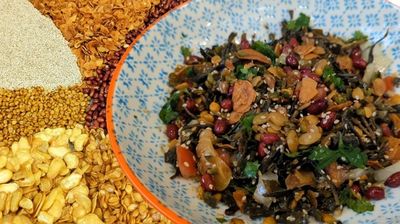
The older, more ceremonial form of lahpet, the version that predates the salad. Unlike lahpet thoke (the salad), there's no cabbage, no tomato, no fresh dressing - the fermented tea leaves stay pungent and concentrated, and the fried elements supply texture and salt. You keep all the components separate on a divided plate until they reach the table, so the crispy bits don't soften, and each guest builds their own bite from the spread. Eaten as an afternoon teashop snack with a small cup of green tea, or traditionally at the close of formal meals as a sign of welcome and reconciliation - a Burmese custom that dates back centuries and still turns up at weddings.

Snacks 25 minutes Serves6
Cataplana de Marisco

Cataplana de Marisco

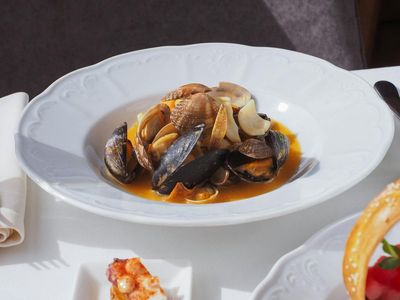
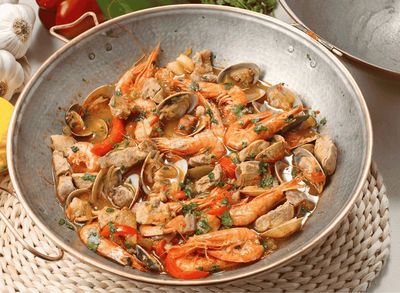
A cataplana is a hinged copper clamshell pan, and the seafood stew named after it is one of those dishes where the cookware does the work. You build a base of onions, peppers, sliced chouriço, smoked paprika, tomato and white wine in the bottom of the cataplana, then layer clams, mussels, prawns and chunks of firm white fish on top, clamp the lid shut, and steam it all for less than ten minutes. The lid lifts at the table to release a cloud of paprika-and-wine-scented steam, which is the entire point of the dish. If you do not have a cataplana, any wide pan with a tight lid does the same job. Coriander and lemon at the end, crusty bread for the broth, and vinho verde for everything else.

Portuguese 55 minutes Serves4
Chingri Malai Curry

Chingri Malai Curry

Chingri malai curry is one of those rare Bengali dishes that crosses the river: equally beloved in Kolkata's bonedi households and in the coastal kitchens of Khulna and Chittagong. The name is often misread as a reference to Malaysia (Malay), and there is a folk tradition that the dish came back with Bengali traders from the Malay Peninsula, but in practice malai here simply means cream, in this case the rich first-pressed coconut milk that gives the gravy its body. The prawns must be large, ideally tiger prawns or the freshwater bagda chingri, kept whole with heads and tails on for maximum flavour. The cooking is short and the spice profile delicate: a tempering of whole garam masala in ghee and a little mustard oil, a base of finely ground onion paste rather than chopped onion, a gentle bloom of ginger and turmeric, and then the prawns barely poached in coconut milk so they remain juicy. Sugar plays a quiet but important role, just enough to round the salt and amplify the coconut's sweetness. The result is a curry that is luxurious without being heavy, fragrant without being sharp. It is rich enough to be served with plain basmati or gobindobhog rice and nothing else, though a small wedge of lime on the side is welcome. Overcooked prawns are the only real danger; once you have mastered the timing, this is one of the easier showstoppers in the Bengali repertoire.

Bengali 50 minutes Serves4
Crawfish Étouffée

Crawfish Étouffée

A Louisiana classic, the dish whose name means "smothered" in French, and that's exactly what's happening at the table: tender crawfish tails smothered in a rich gravy spooned over white rice. You start with a blond roux (butter and flour cooked just to the colour of peanut butter, lighter than gumbo's nearly-burnt mahogany), then soften the Cajun trinity of onion, celery and bell pepper in it until everything goes glossy. Tomato paste, Cajun spice and stock loosen the mixture, and the lot simmers down to a thick velvety gravy. Crawfish tails (or prawns if you can't find them) go in near the end and cook just briefly so they stay tender rather than turning rubbery. Spring onion and parsley scatter over at the finish. Ladled over white rice in a bowl, with crusty bread and a glass of cold beer alongside.

Cajun 1 hour Serves4
Crawfish Pies

Crawfish Pies

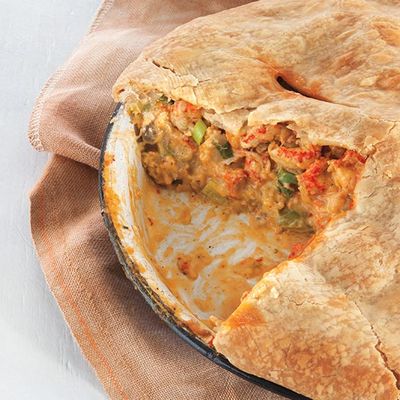
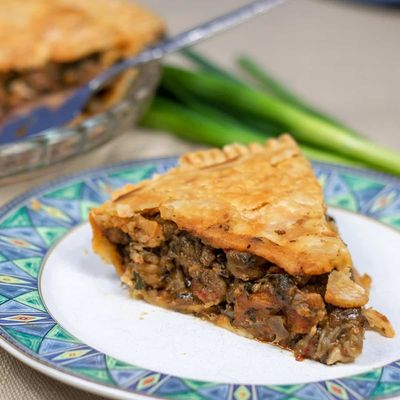
A Louisiana hand pie, the Cajun answer to a Cornish pasty and the snack you'd buy at a Lafayette festival booth alongside a beer. You make a flaky shortcrust enriched with a little butter and lard (or all butter if you'd rather), cold and rested. The filling is a small batch of crawfish étouffée: a blond roux first, then the trinity of onion, celery and bell pepper, garlic, tomato, Cajun spice, stock and crawfish tails, simmered down until thick enough to hold its shape on a spoon. Cool the filling completely so it can be spooned into pastry circles, folded into half-moons, crimped sharp at the edge, brushed with egg wash and either deep-fried or baked. The fried version is the classic, with the pastry blistered amber-gold and the filling steaming inside. Eaten warm from the paper with a dab of remoulade and a cold drink.

Snacks 1 hour 45 minutes Serves12
Doenjang Jjigae

Doenjang Jjigae

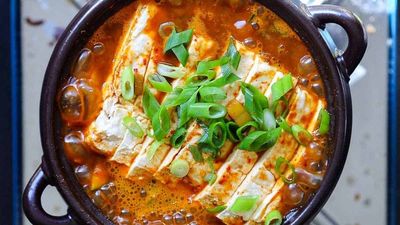
A quick anchovy-and-kelp stock makes the broth backbone (the Korean kitchen standard, taking 10 minutes). Doenjang (about 3 tablespoons) whisks into the hot stock with a small spoonful of gochujang for warmth, never aggressive heat. The vegetables go in by sturdiness: potato first, then courgette and mushrooms, then onion and chilli, finally cubed tofu and clams (or anchovies) at the end. Simmers for 12-15 minutes total. A little minced garlic stirs in at the very end so it doesn't dull. Brought to the table in the cooking pot, still bubbling.

Korean 40 minutes Serves4
Fire-Roasted Jerk Shrimp

Fire-Roasted Jerk Shrimp

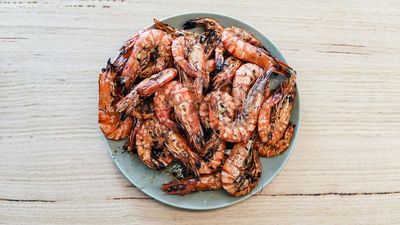
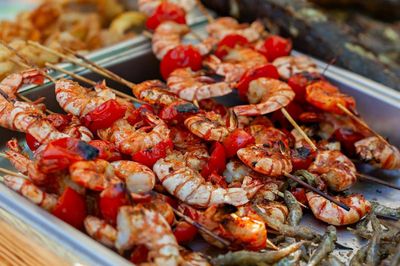
A fast, fragrant, hands-on dish: medium shrimp roasted hard in a beer-and-butter pool, with the jerk flavours (Scotch bonnet, allspice, thyme, garlic, scallion) bloomed into the fat at 260°C. The shrimp themselves are quick-cooked and sweet; the real treasure is what's at the bottom of the dish, a spiced, foaming butter that gets sopped up with hot toasted Cuban bread or baguette. Allspice (called pimento across the Caribbean) is the herbal warmth, Scotch bonnet brings the fruity-fierce heat, and beer adds a yeasty undertone that lifts the butter. Smell hits the kitchen the moment the dish leaves the oven and is genuinely the best part of dinner. Absurdly easy, everything goes cold into one dish, into the oven, 5 minutes, done. The dish is adapted from the Bahama Breeze restaurant chain, where it's a long-running menu staple, but the core technique (shrimp roasted in spiced butter, dipped with bread) is shared across the Bahamas as a casual party-snack format.

Bahamian 20 minutes Serves2
← Prev Page 1 of 5 Next →