Andouille Skewers

Andouille Skewers

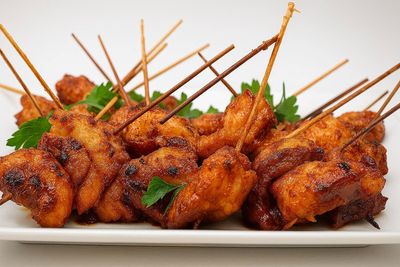
A Cajun cookout skewer, the kind of thing that comes off the grill at a Louisiana backyard barbecue while the gumbo is finishing on the back burner. You take andouille (the heavily smoked, garlicky Cajun pork sausage) and cut it into thick coins, then thread them onto pre-soaked wooden skewers (or metal) with chunks of red and green pepper, red onion, and a few halved cherry tomatoes. Brush with a quick Cajun glaze of melted butter, garlic, brown sugar, hot sauce and Cajun seasoning. Onto a hot grill over high heat for just long enough to char the vegetables and bring the sausage shiny and sticky. Eaten straight off the skewer with a beer in the other hand, the smoke still hanging in the air.

Snacks 27 minutes Serves8
Arroz de Pato

Arroz de Pato

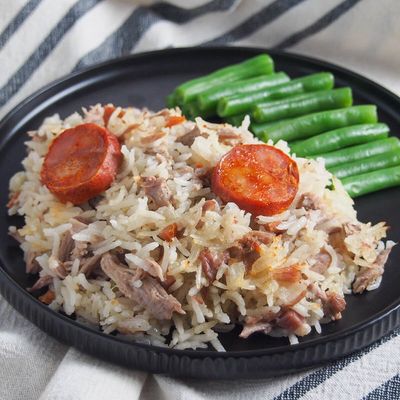
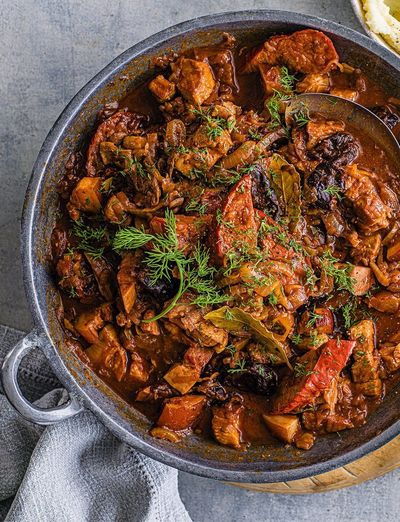
Arroz de pato is Portugal's answer to paella, except baked rather than simmered, and the rice picks up a top crust of crisped chouriço at the end. You poach a whole duck for two hours with onion, bay, cloves and lemon peel until the meat falls apart, then strip the meat off the bones and put the bones back to extract another half hour of flavour from the stock. The strained duck stock cooks the rice, the shredded meat folds back in, and the whole thing goes into a baking dish under a layer of paper-thin chouriço slices. Twenty minutes in a hot oven and the top emerges deeply burnished, the chouriço slices crisp at their edges and slick at their centres. Sunday lunch, ideally with a heavy red from the Douro.

Portuguese 3 hours 25 minutes Serves6
Aussie Burger with Beetroot

Aussie Burger with Beetroot

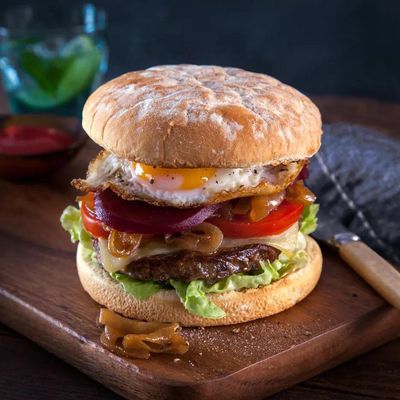
The Aussie burger, sometimes called "the lot", is a milk-bar institution that emerged in Australia in the mid-twentieth century when European immigrants and returning soldiers reshaped the corner takeaway. What distinguishes it from any American or British burger is the insistence on tinned pickled beetroot, a slice of canned pineapple, a fried egg and rashers of streaky bacon, all stacked under a thick beef patty on a toasted bun. The beetroot is non-negotiable: it stains the bread, it stains your fingers, it leaks down your wrist, and it is the entire point. The combination sounds chaotic but works because each layer plays a clear role: sweet pineapple against salty bacon, earthy beetroot against rich egg yolk, sharp tomato chutney cutting through melted cheese. The patty itself is generously sized, hand-shaped, and seasoned simply so the toppings can do the talking. Difficulty is low; the only real skill is timing several pans at once so the egg, bacon and patty all arrive hot together. This is not delicate food. It is built to be eaten leaning forward over a paper wrapper with napkins and a cold drink. Serve it at a backyard barbecue and watch grown adults negotiate the architecture of the bite.

Australian 40 minutes Serves4
Authentic Cajun Gumbo

Authentic Cajun Gumbo

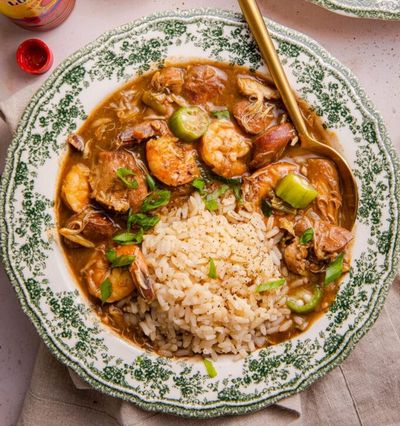
The "everything" Louisiana gumbo, chicken thighs, andouille, lump crab and shrimp all in one pot, and the dish where the technique matters more than the recipe. The roux is the single defining step and the line between Cajun gumbo and every other stew on earth: a full cup of oil and a full cup of flour cooked at medium-low for around 30 minutes, stirred without stopping, until the colour goes from blond to peanut butter to milk chocolate to dark chocolate. That's not flavour theatre; the long-cooked roux produces a deeply nutty, slightly bitter, profoundly savoury base that thickens the gumbo and gives it the distinctive almost-charred note no shortcut can replicate. Around the roux: the Cajun "holy trinity" of onion, bell pepper and celery; filé powder (ground sassafras leaves) added off heat as a second thickener; okra adding a third (and contributing its own slight slip); plus the four proteins, each adding a different layer. Flavour is dark, smoky, herbaceous, and slightly briny from the seafood. Smell is the roux toasting. Not difficult on technique but tremendously demanding on patience and attention; 30 minutes of unbroken stirring is the gateway, and if you walk away or rush it the roux burns and you start over. A dish that runs deep through Cajun and Creole Louisiana, with origins in the French settlers, the Choctaw (who contributed filé), West Africans (who contributed okra), and Spanish colonial traditions of Louisiana from the 1700s onwards.

Cajun 1 hour 45 minutes Serves8-10
Bacon Fried Cabbage and Sausage

Bacon Fried Cabbage and Sausage

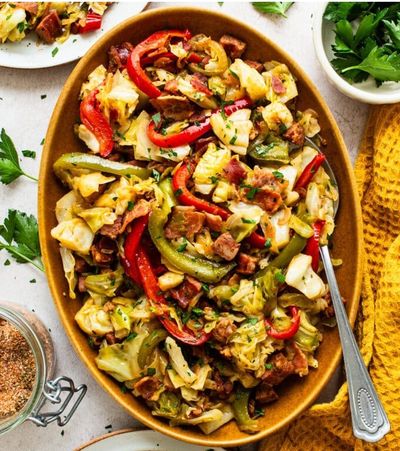
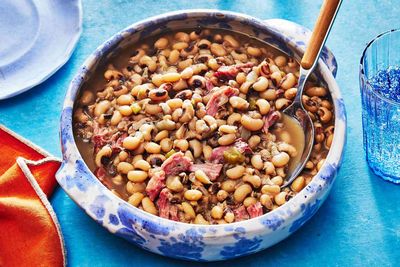
A heartier descendant of Southern fried cabbage and its more substantial sibling, this version is a complete dinner rather than a side. Bacon fat is the carrier through every step: it crisps first, then andouille browns in the rendered fat, then onion and bell peppers caramelise, then cabbage steams down. The result tastes deeply smoked and just slightly sweet (from the brown sugar and the caramelised onion), with a sharp Dijon-and-vinegar tang cutting through the richness and Cajun seasoning bringing warmth across the back. Texturally it's a stir-up: tender cabbage with crisp bacon edges, andouille bite-pieces with their snap intact, peppers softened but not collapsed. Smell when the bacon hits the pan starts the dish off correctly. Not difficult but a 35-minute project that wants the pan to stay hot throughout. A Southern weeknight dinner across the Carolinas and Georgia, traditionally with cornbread on the side to mop the bacon juices; the dish lives in the same neighbourhood as Hoppin' John and red beans and rice without being either.

American 50 minutes Serves6
Bangers and Mash

Bangers and Mash

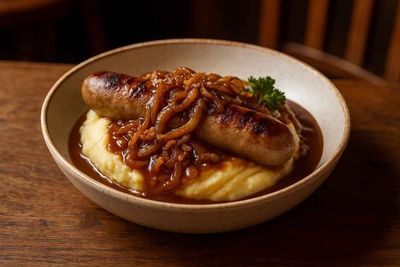
British pub comfort food in its truest form, the dish you order when the weather is grim and you want something to push the day's mood around. You slow-pan-fry good sausages so the skins blister and the fat renders properly, build a soft butter-and-milk mash that tastes of potato rather than dairy, and ladle over a dark onion gravy stiffened with mustard and a few thyme leaves. The onions need long, low cooking until they're collapsed and almost jammy; rushing them is the only way to ruin the dish. Eaten on a winter Tuesday with a pint of bitter or a glass of red, the mash mountain pushed slightly to one side so the gravy can pool around it.

British 45 minutes Serves4
Beef Wellington

Beef Wellington

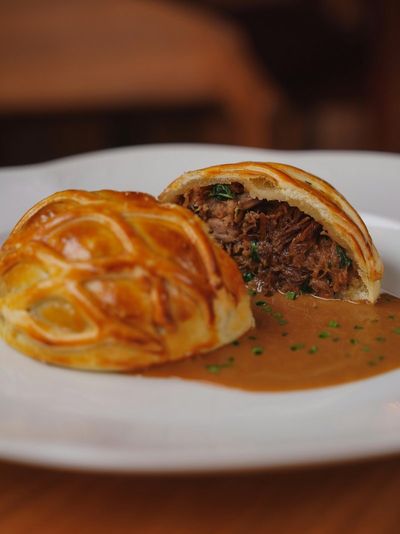
The defining British dinner-party showpiece, somewhere between French haute cuisine and English roast tradition, made famous in the modern era by Gordon Ramsay even if the Iron Duke himself probably never ate it. You sear a centre-cut beef fillet hard for colour, smear it with English mustard, wrap it in a tight blanket of mushroom duxelles and prosciutto, then encase the lot in all-butter puff pastry and roast at high heat. The pastry insulates the beef so it cooks gently to medium-rare while the crust crisps to deep mahogany above. The one technical trick the recipe insists on is drying the duxelles thoroughly so the pastry stays crisp underneath rather than going soggy from leaking mushroom water. Sliced at the table into thick rosy rounds, with a red-wine jus and roasted root vegetables on the side, the kind of plate that makes the evening feel like a special occasion before anyone says it.

British 1 hour 55 minutes Serves6
Bifana

Bifana

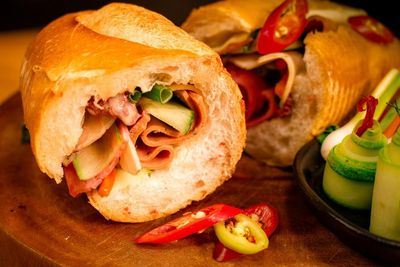
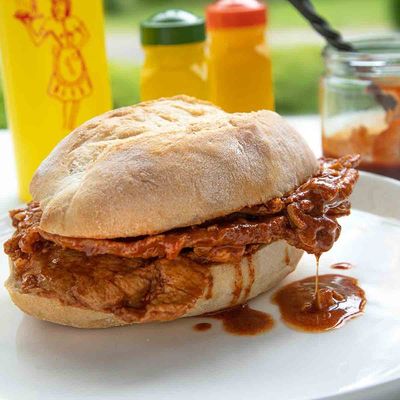
Bifanas are Portugal's national lunch sandwich, sold at every counter from Lisbon to Porto. Slices of pork loin (paper-thin, across the grain) marinate for a couple of hours in white wine, garlic, paprika, bay and black pepper, then go into a screaming-hot pan with olive oil and a knob of butter for sixty seconds a side. The marinade reduces in the pan to a salty, winey sauce, which gets ladled over a halved papo-seco roll along with the pork. Add mustard, or a squirt of piri-piri, and you've nailed it. Eaten standing at the counter with a glass of Sagres beer, or in Porto with a Super Bock.

Portuguese 2 hours 30 minutes Serves4
Boerewors

Boerewors

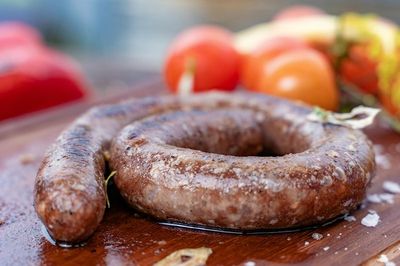
Boerewors, literally "farmer's sausage" in Afrikaans, is the national sausage of South Africa and the obligatory centrepiece of any braai. South African law actually defines it: minimum 90 per cent meat (beef the dominant component, often with pork or lamb for fat), no more than 30 per cent fat overall, no offal, and a defined spice profile led by toasted ground coriander. That coriander is the signature; combined with clove, nutmeg, allspice and black pepper, and brought together with a splash of malt or brown vinegar, it produces a flavour quite unlike any European sausage. The sausage is always coiled rather than linked, and grilled in a single long spiral that can be turned in one piece with a pair of long forks. Difficulty for the home cook is very low if you can buy ready-made boerewors from a South African butcher, deli or online supplier, which is the practical route for most. Making it from scratch needs a meat grinder and sausage stuffer but the spicing is straightforward. Cooking is the part everyone gets wrong: boerewors is a coarse-ground sausage with chunks of fat in the meat, and it cooks at medium heat, never high. Too hot and the casing splits, fat renders out and the sausage shrivels; just right and it stays plump, juicy, with a deep mahogany crust. The classic accompaniments are pap (a stiff white maize porridge), tomato-and-onion relish (sous), or stuffed into a fresh bread roll with tomato chutney and crispy fried onions as a boerie roll.
South African 35 minutes Serves6
Boudin Balls

Boudin Balls

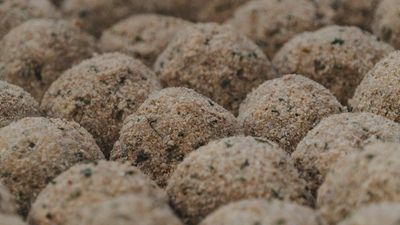
Boudin filling combines pork shoulder, pork liver (optional, traditional), cooked rice, onion, celery, garlic, parsley, green onion, cayenne, salt, pepper. Either bought ready-made boudin (casings removed) or made from scratch by simmering then mincing pork shoulder with the aromatics. Filling rolls into walnut-sized balls; chills for 30 min so they hold shape. Dredges in flour, egg, then seasoned breadcrumbs. Deep-fries for 3-4 minutes at 175°C.

Snacks 1 hour 7 minutes Serves16
Bratwurst with Sauerkraut

Bratwurst with Sauerkraut

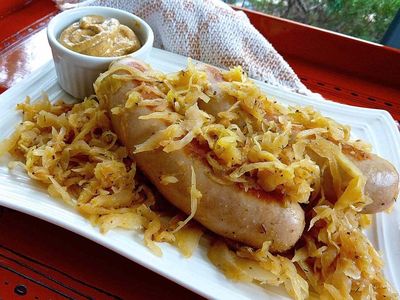
Bratwurst is less a single sausage than a whole family of them, with each German region defending its own version: long thin Nürnberger, plump Thüringer, the white veal Weisswurst of Bavaria, the smoked Frankfurter that became the American hot dog. What unites them is a fine grind of pork (often with veal), gentle seasoning of marjoram, white pepper, mace and a little caraway, and traditional natural casings. Authentic preparation matters: a raw bratwurst should never be slapped onto a screaming grill, because the high fat content scorches the outside before the inside cooks and the casing splits losing all the juice. The German method is a gentle two-stage cook: poach the sausages in barely simmering water or weak beer for 8-10 minutes until the inside is just set, then finish on a medium-hot grill for 3-4 minutes per side to colour the casing and add a touch of smoke. The accompanying sauerkraut is not the cold pickle from the jar but a warm braise: jarred kraut squeezed, then simmered with onion, bacon fat or butter, caraway seed, a bay leaf and a splash of white wine or apple juice for 25 minutes until soft and mellow. Difficulty is low; the only thing to get right is not boiling the sausages (a hard boil makes them swell and burst) and not impaling them on a fork (every puncture is a juice leak). Mustard is non-negotiable: sweet Bavarian süßer Senf for Weisswurst, sharp medium Düsseldorf or Löwensenf for everything else.

German 50 minutes Serves4
← Prev Page 1 of 9 Next →