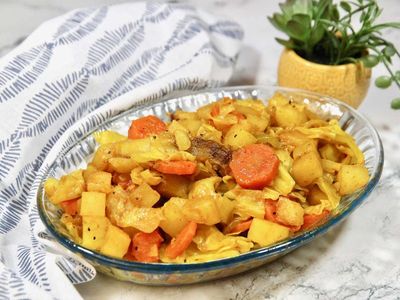
Atakilt Wat

Atakilt Wat

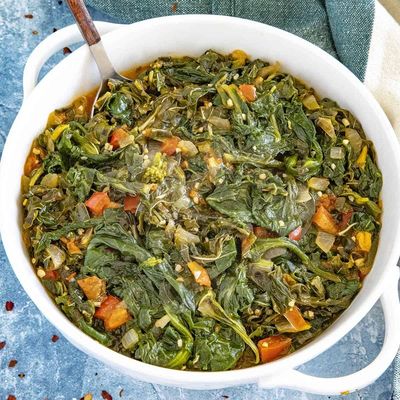
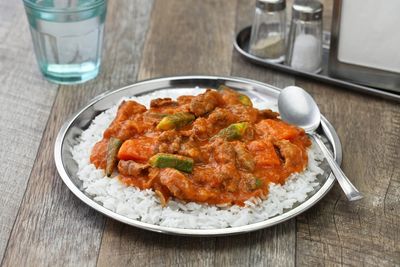
Ethiopia's spiced cabbage stew, the gentle vegetable side that sits between the fiercer berbere-loaded curries on a shared platter and cools whoever's eating against the heat. You soften onions in oil with turmeric until they're pale gold, then bloom garlic, ginger and a small amount of berbere in the same fat - small because this is the mellow dish, not the fierce one. Carrots and potatoes go in first to soften; cabbage joins later. Cover, drop the heat, and let the lot steam-cook for forty minutes until the volume has halved, the vegetables have melted into each other, and the cabbage has almost disappeared into the sauce. Eaten with injera and a few spoonfuls of doro wat or misir wat alongside for contrast.

Ethiopian 50 minutes Serves4
Bread Pudding (Creole)

Bread Pudding (Creole)

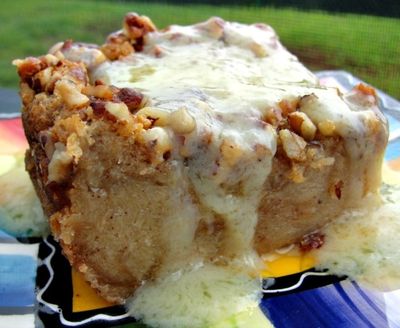
Stale French bread (a day-old baguette is perfect) tears into 3 cm chunks. Custard: whole milk, eggs, sugar, vanilla, cinnamon, nutmeg, lemon zest. Raisins steep in 4 tablespoons bourbon for plump. Bread soaks in custard 30 minutes; raisins fold in. Tips into a buttered 25 × 18 cm dish; dots with butter. Bakes for 45-50 minutes at 175°C till the top is bronzed and the centre is set but still custardy. Whiskey sauce: butter melts with sugar; cream and bourbon stir in; warmed but not boiled. Pours over the pudding at the table.

Desserts 1 hour 40 minutes Serves8
Brown Stew Chicken

Brown Stew Chicken

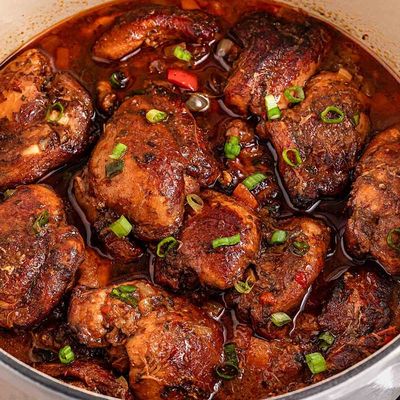
The Sunday-lunch counterpart to goat curry across Jamaica; not curry-driven but built on a deep mahogany gravy that gets its colour from caramelised brown sugar and a few teaspoons of bottled "browning sauce" (Grace is the canonical brand, a concentrated burnt-sugar syrup that's a kitchen staple in every Jamaican household). The chicken is bone-in, marinated overnight in a wet rub of onion, bell pepper, scallions, allspice, ginger and thyme, then browned hard and slow-braised until the meat slips off the bone. Flavour is savoury and slightly sweet with a deep thyme back-note and a whisper of Scotch bonnet heat from the whole pierced fruit in the pot. The gravy is what you actually want; thick, dark, sweet-savoury, glossy with rendered chicken fat, the kind of gravy you'd happily eat over plain rice as its own meal. Smell is browning sugar, thyme, and the unmistakable allspice signature. Patient cooking but easy: marinate the day before, then 30 minutes of active prep and 2 hours of unattended braise. The pairing with [[rice-and-peas]] is non-negotiable across Jamaican households.

Jamaican 4 hours 30 minutes Serves4
Buttermilk Fried Chicken

Buttermilk Fried Chicken

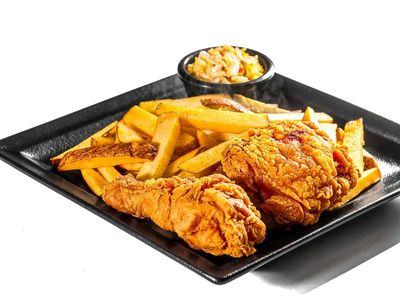
The Southern Sunday dinner that defined a region. You start the night before, sinking bone-in chicken pieces into a buttermilk brine spiked with hot sauce and garlic so the acid tenderises the meat and the seasoning works its way deep. The next day comes the double-dredge: a roll through heavily-seasoned flour, a brief dip back in the buttermilk, then another roll through the flour, which is what gives the finished bird its craggy, almost lacy crust. Into 175°C oil for twelve to fifteen minutes per piece, turned every few minutes so the crust browns evenly. You're done when the coating is deep mahogany and a thermometer in the thigh reads 75°C. Drain on a wire rack rather than paper so the steam escapes and the crust stays shattering. Eat hot with a stack of pickles, a soft biscuit and a bottle of hot sauce on the table; cold the next day at the kitchen counter is its own justified American ritual.

American 40 minutes Serves4
Doro Wat

Doro Wat

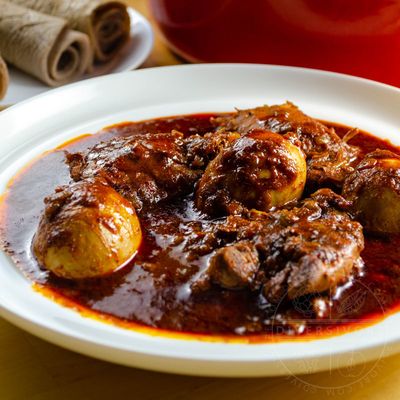
Ethiopia's national dish, the spiced chicken stew that turns up at every wedding, Easter feast and Christmas table, and the one dish a cook is judged on. The foundation is the onion - you cook it down slowly for nearly an hour into a deep dark base, and this is the step that decides whether the wat is great or merely acceptable. Berbere (the Ethiopian spice blend of chilli, fenugreek, ginger and a dozen others) and niter kibbeh (spiced clarified butter, the dish's defining fat) fold in. Chicken thighs and legs simmer in the deep red sauce, and hard-boiled eggs join late, scored with a knife so they take on the colour and the flavour. Eaten communally from a single platter, with injera flatbread torn into pieces to scoop the stew. No cutlery, no individual plates, hands clean before the meal.

Ethiopian 2 hours Serves4-6
Egusi Soup

Egusi Soup

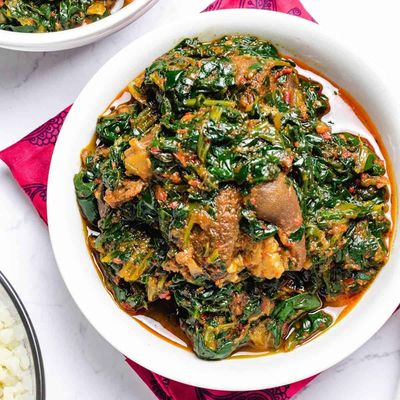
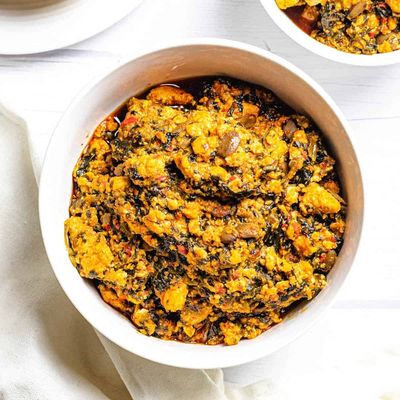
Beef or goat is parboiled with onion, stock cube and salt to make a base stock. Smoked fish hydrates in hot water and is picked clean. Egusi seeds are ground (or already-ground egusi powder is used) into a thick paste with a little water. Onion, garlic, ginger and Scotch bonnet blitz into a hot pepper paste. Palm oil heats until just smoking; the pepper paste fries in it 5 minutes. Egusi paste goes in and "fries" 10 minutes until it forms small clumps. Stock and meat join; everything simmers for 20 minutes. Smoked fish, ground crayfish and locust beans add depth. Chopped spinach (or bitter leaf) goes in for the last 5 minutes. Salt to season.

Nigerian 1 hour 40 minutes Serves6
Jamaican Goat Curry

Jamaican Goat Curry

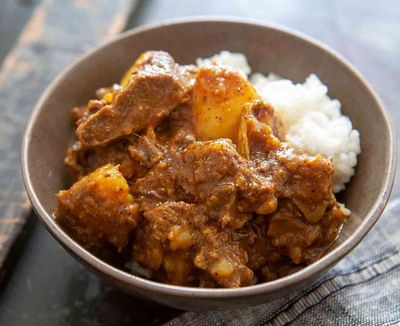
A deep, brick-yellow gravy stained with turmeric and allspice (called pimento in Jamaica, confusingly, nothing to do with the pepper of the same English name). The taste is layered: the curry powder hits first, then the slow heat of Scotch bonnet, then a sweet-piney back-note from allspice and thyme that's unmistakably Caribbean rather than Indian. The goat is the point; bone-in shoulder or leg, braised until the bones loosen and the connective tissue melts into the gravy and gives it body without any flour or roux. Patient cooking but not difficult: brown the meat, bloom the curry powder until it darkens to brown, then leave it alone for two hours. The whole pierced Scotch bonnet sits in the pot scenting the gravy and is fished out before it ruptures, so the heat stays controllable. Came to Jamaica via Indian indentured labourers in the 1840s, then got reshaped by what the island already had: thyme, pimento, scotch bonnet, and the Saturday-evening habit of putting a pot on to braise for Sunday lunch. Day-2 goat curry is better than day-1, which is why every Jamaican grandmother starts it on a Saturday.

Jamaican 4 hours 55 minutes Serves4-6
Jerk Chicken

Jerk Chicken

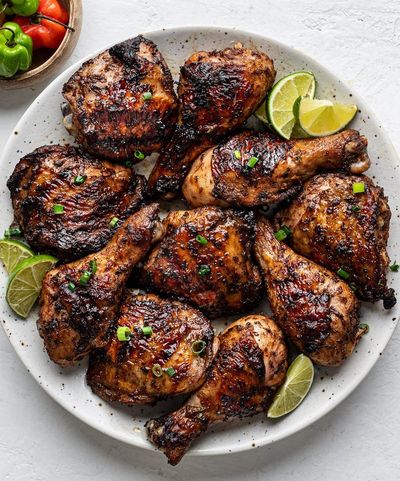
A wet jerk paste: scotch bonnet chillies, garlic, ginger, spring onions, thyme, allspice (whole or ground), brown sugar, soy sauce, lime, oil, salt and pepper, pureed in a blender. The chicken (bone-in skin-on thighs and drumsticks, or spatchcocked whole bird) marinates for 12 hours minimum. Slow-grilled over indirect heat with a pile of pimento wood chips or allspice berries on the coals for the signature smoke; alternatively, an oven-bake at 180°C with a final blast under the grill, supplemented with allspice in the marinade.

Jamaican 13 hours 5 minutes Serves4
Jollof Rice with Chicken

Jollof Rice with Chicken

Chicken pieces simmer with onion, thyme, curry powder, salt and bay until tender; the cooking stock becomes the rice's liquid. A blender purées tomatoes, red peppers, scotch bonnets, onion, and ginger to a smooth red sauce. Vegetable oil cooks tomato paste until it darkens; the blended sauce reduces in for 15-20 minutes; bay leaves and curry powder bloom; the rice goes in with chicken stock, simmers covered until tender. The chicken roasts crispy under a hot grill, then perches on top.*

Nigerian 1 hour 40 minutes Serves6
Misir Wat

Misir Wat

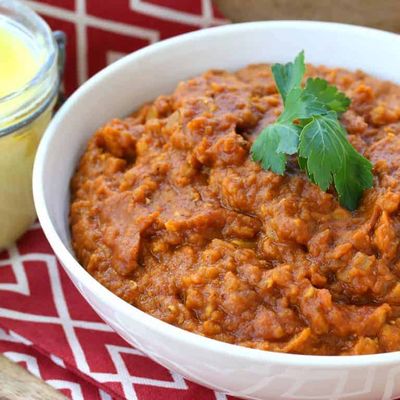
Ethiopia's red lentil stew, the vegan everyday main that turns up on every fasting-day table and most non-fasting ones too. You cook onions slowly in oil or niter kibbeh until they melt and turn jammy - this is the same long, patient onion cook that doro wat relies on. Berbere blooms in, tomato paste deepens, lentils go in with water and simmer until they're soft and the stew has thickened to a coating consistency. A squeeze of lemon at the end brightens the deep berbere-rich base. Bright orange from the spice, eaten by mopping with injera, made vegan with oil or richer with niter kibbeh. Either way, the dish that anchors an Ethiopian meal.

Ethiopian 1 hour 5 minutes Serves4
Pecan Pralines

Pecan Pralines

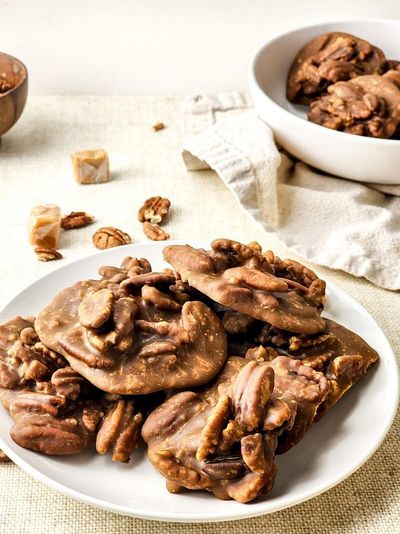
Pecan halves toast in a dry pan till fragrant. Brown sugar, caster sugar, double cream, butter and a pinch of salt simmer together in a heavy saucepan, fitted with a candy thermometer, until they reach 116°C (soft-ball stage). Off heat; vanilla and pecans stir in. The mixture is beaten with a wooden spoon for 30-60 seconds till it begins to thicken and lose its gloss (this is the crystallisation point). Drops by tablespoons onto parchment immediately. Sets in 15 minutes.

Desserts 35 minutes Serves20
← Prev Page 1 of 2 Next →