Deviled Eggs

Deviled Eggs

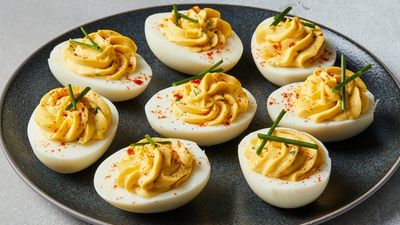
Deviled eggs are one of America's most enduring party foods, a fixture of Easter brunches, Thanksgiving tables, summer barbecues, and Sunday potlucks from coast to coast. The dish itself is much older than its American identity. Stuffed eggs flavoured with mustard, vinegar, and spices appear in Roman writings and remained popular across medieval Europe, but the term "deviled", meaning seasoned hot and spicy, took hold in eighteenth-century England and crossed the Atlantic with Anglo settlers. By the twentieth century, the American version had crystallised into the formula we recognise today: hard-boiled eggs split lengthwise, yolks scooped out and whipped smooth with mayonnaise, mustard, and a splash of vinegar, then piped or spooned back into the whites and finished with a dusting of paprika. The taste is luxurious in its simplicity. Creamy and rich, with a gentle tang and just enough mustard heat to justify the name, set against the cool, slightly springy bite of the white. Difficulty is genuinely low, but two details lift them from good to memorable: cooking the eggs just enough so the yolks are fully set but never grey-ringed, and seasoning the filling assertively, since cold dulls flavour. They are best made the day they will be eaten, although the eggs themselves can be boiled and peeled a day ahead.
Sides 25 minutes Serves6
Eton Mess

Eton Mess

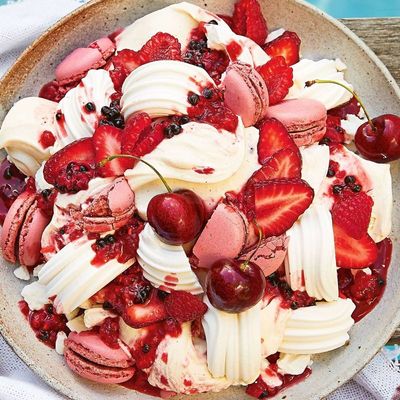
Strawberries are hulled and quartered (or sliced thick). Half are macerated in a wide bowl with sugar and a splash of balsamic vinegar (or lemon juice) for 30 minutes, they release a glossy pink syrup. The other half stay whole-ish and crisp. Cream is whipped with vanilla and icing sugar to soft peaks (not stiff peaks, too firm and the mess loses its silkiness). Ready-made meringue nests (or homemade) are crushed into rough pieces. At the moment of serving: cream goes into a wide bowl or glasses, the macerated strawberries and their syrup are folded through with broken strokes (leaving streaks, not blended); the unmacerated berries are scattered over; the meringue is crushed in last; everything assembles in messy layers. Eaten within 10 minutes, meringue softens fast.

Desserts 45 minutes Serves4
Roast Lamb with Rosemary and Garlic

Roast Lamb with Rosemary and Garlic

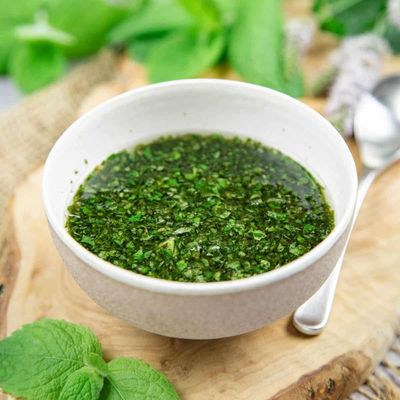
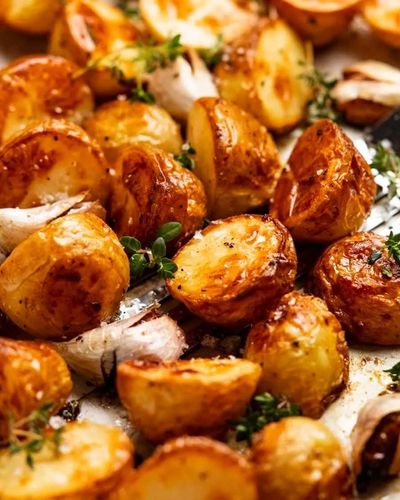
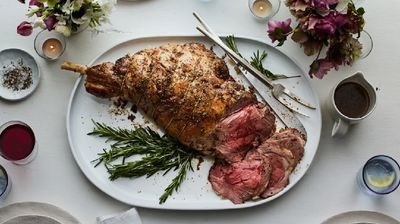
Australia's Sunday lamb, the centre of the long-lunch table and the smell that fills the kitchen all afternoon. You stud a 2.2 kg bone-in leg with slivers of garlic and rosemary pushed deep against the meat, rub the whole thing with oil, salt and pepper, and start it in a very hot oven for twenty-five minutes to lock in a crust. The temperature drops to 180°C from there and the lamb roasts on until a probe in the thickest part reads 60°C internal for blushing pink. Then comes the part most home cooks skip and shouldn't: a twenty-five-minute rest while you build the gravy in the deglazed pan with stock, a spoon of redcurrant or quince jelly for sweetness, and a splash of red wine. The lamb carves into juicy, rose-coloured slices that fall away in long pieces from the bone. Roast potatoes, mint sauce, a green vegetable on the side, the wine you opened earlier already in the glass.

Australian 2 hours 50 minutes Serves6-8
Roast Leg of Lamb

Roast Leg of Lamb

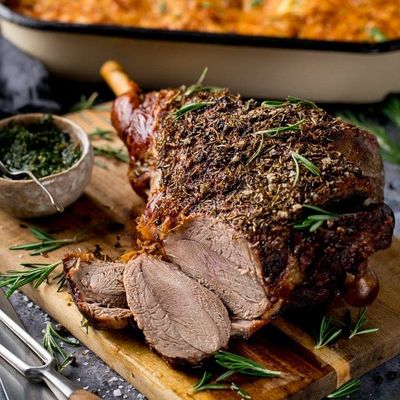
The Sunday lamb of the British table, the centrepiece of an Easter lunch and the dish a mother-in-law judges you on. You bring a 2-2.5 kg bone-in leg to room temperature first (essential - cold meat into a hot oven cooks unevenly), score the fat, then stud the leg with slivers of garlic and tuck rosemary tips into the cuts. Smear with oil, salt and a paste of crushed garlic. The lamb starts hot to colour the skin, then drops to a low roast and pulls when a probe in the thickest part reads 55°C for pink or 60°C for medium. A full twenty-minute rest is non-negotiable; this is when the juices settle back into the meat and the slices stay pink rather than weeping grey. While it rests you build a simple jus from the pan drippings, deglazed with wine and reduced down. Roast potatoes, mint sauce, peas; a glass of claret in your hand and the family gathered.

British 3 hours 10 minutes Serves8
Simnel Cake

Simnel Cake

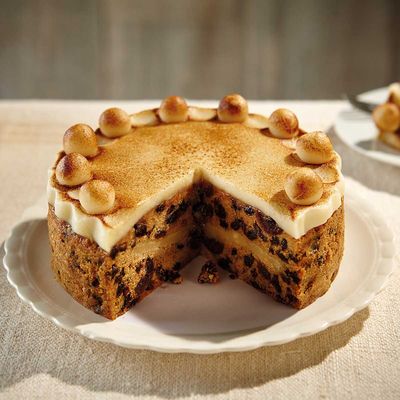
A relatively light fruit cake (less dense than Christmas cake) flavoured with mixed peel, currants, sultanas, glace cherries and a generous spoon of mixed spice. Half the batter goes into the lined tin, then a disc of rolled marzipan, then the rest of the batter. Baked low and slow so the marzipan layer melts slightly and the cake bakes through evenly. Once cool, the top is brushed with warm apricot jam, a second marzipan disc is laid on, and eleven small balls of marzipan are arranged around the rim. The top is flashed under a hot grill to colour the marzipan amber.

Desserts 3 hours Serves12
Yorkshire Puddings

Yorkshire Puddings

A batter of equal volumes of plain flour, eggs and whole milk (and a pinch of salt) is whisked to a smooth thin consistency, like single cream. Rested for 30 minutes (overnight is even better). A muffin tin or pudding tin is given a teaspoon of beef dripping (or vegetable oil) in each well; the tin goes into a screaming-hot 230°C oven for 8 minutes until the fat is smoking. The batter is poured into the smoking-hot fat, it should hiss and bubble immediately. Back in the oven for 22 minutes, undisturbed (never OPEN THE DOOR). The Yorkshires rise dramatically into puffed golden cups. Served immediately, they collapse as they cool.

Sides 57 minutes Serves4